20.2 - Human Impact on Biodiversity
Biodiversity and reducing it
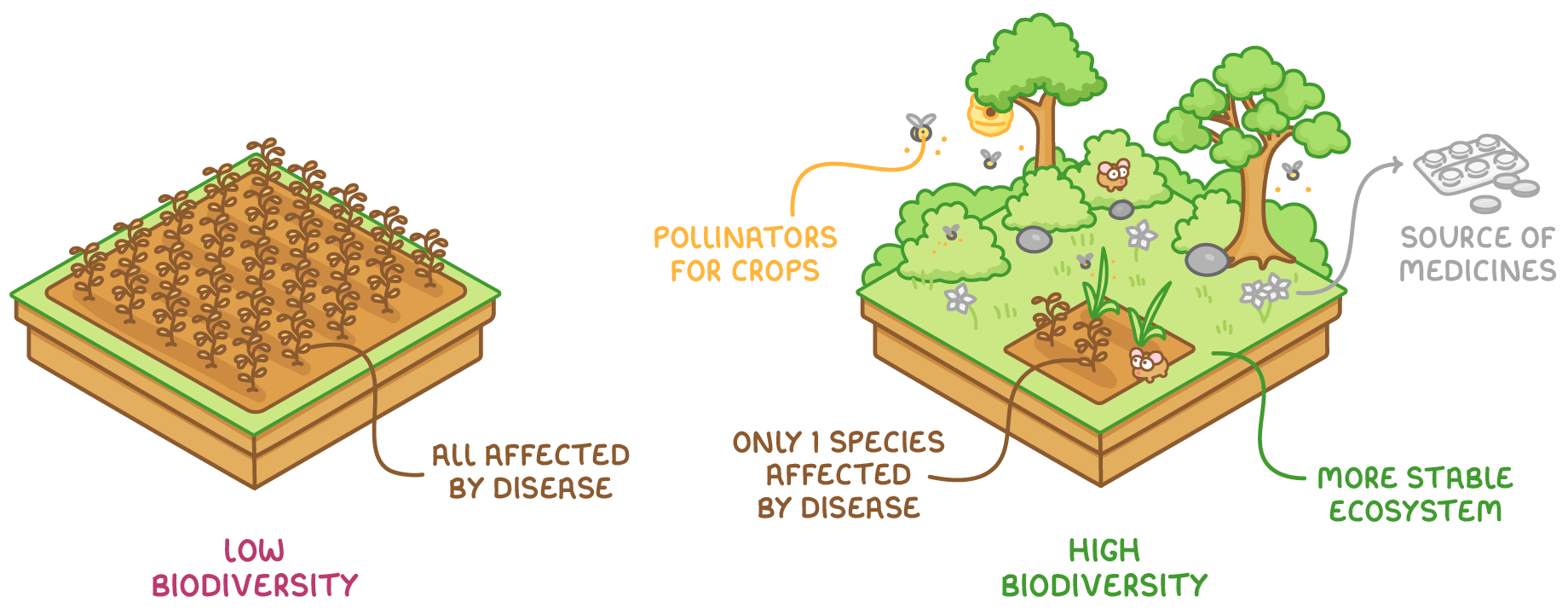
- Biodiversity is the variety of all the different species of organisms living on Earth, or within a particular ecosystem, together with the number of individuals within each species.
- A woodland or rainforest - full of animals, plants, fungi, and bacteria - has a far higher biodiversity than a single ploughed field.
Why a high biodiversity matters
- More stable ecosystems - When many species live together, losing any one of them (to disease, for example) is less damaging. The other species have many other feeding and supporting relationships to fall back on, rather than depending heavily on the one that's gone.
- Crops need pollinators - A great many of our crops depend on animal pollinators.
- Source of medicines - More than half of new medicines are derived in some way from living organisms.
- Every species lost is a possible food source or medicine lost with it, so the future of the human species relies on maintaining a good level of biodiversity across the planet.
The problem
- Many human activities are reducing biodiversity:
- Using up resources
- Destroying habitats
- Producing pollution and waste
- As biodiversity falls, so does the stability and the benefits it provides.
Non-biodegradable plastics in ecosystems
- Most plastics are non-biodegradable - the decomposing microorganisms that break down natural waste can't break down the chemicals plastics are made from.
- So discarded plastic isn't removed by decay and stays in the environment for a very long time.
- Plastic bags and bottles build up in landfill, litter the land, and wash into rivers and oceans.
Harm in water
- Animals mistake plastic for food and eat it, which can:
- Block their guts
- Poison them with chemicals that leak out
- Because plastic inside one animal is passed on when it's eaten, the plastic moves up the food chain.
- Larger pieces entangle, trap or strangle marine animals.
Harm on land
- Plastic accumulates in landfill, taking up space and breaking down only very slowly.
- Buried waste can leach toxins into the surrounding soil, making it less suitable for plants.
- Burning plastic to dispose of it releases toxic gases and carbon dioxide into the air.
TermDefinition
BiodiversityThe variety of all the different species of organisms on Earth, or within an ecosystem.
Non-biodegradableDescribes a substance that cannot be broken down by decomposing microorganisms.