Health, Disease & Medicine - exam practice
Health, Disease & Medicine
Question 1 of 4
A patient has been diagnosed with cardiovascular disease.
The doctor asked him a number of questions to assess the risk factors that might have contributed to the development of cardiovascular disease.
What is meant by risk factor?
State two risk factors that might have contributed to the patient developing cardiovascular disease.
The doctor checked the patient's BMI.
He measured the patient's height and weight, and then checked the chart below.
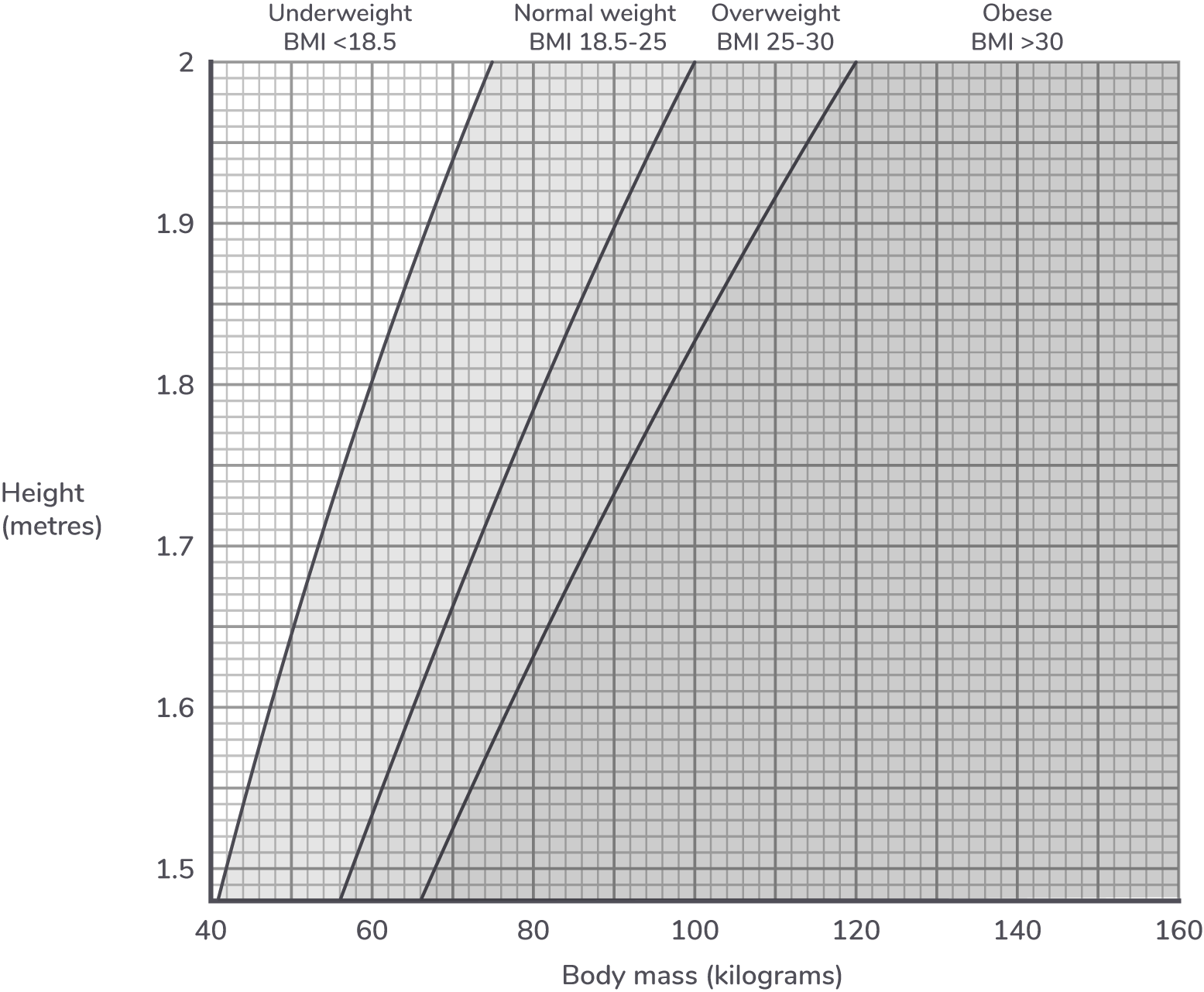
The man weighs 110 kg and is 1.80 m tall.
Which is the patient's BMI category?
Use the equation to calculate the patient's BMI.
Give your answer to 3 significant figures.
The doctor wants to check the man's blood sugar levels as he suspects the man could have type 2 diabetes.
Suggest why the doctor wants to check if the man has type 2 diabetes.
Coronary heart disease (CHD) is one of the UK's leading causes of death.
CHD is responsible for around 66,000 deaths in the UK each year.
Describe how coronary heart disease affects the flow of blood to the heart.
A woman has been told that she is overweight and has a high risk of developing CHD.
Suggest two lifestyle choices that she can make to reduce the risk of developing CHD.
A doctor is planning to test a new diet for weight loss.
She selects 100 obese people to take part in the test.
All the obese people are between 30 and 40 years of age.
State two other factors the scientist should control when selecting the volunteers for her trial.
Devise a plan the doctor could use to test the effectiveness of the new diet using the 100 obese volunteers.
A student is studying the relationship between blood cholesterol levels and the risk of cardiovascular disease.
The student reviews a graph that shows the relationship between blood levels of cholesterol and deaths from coronary heart disease.
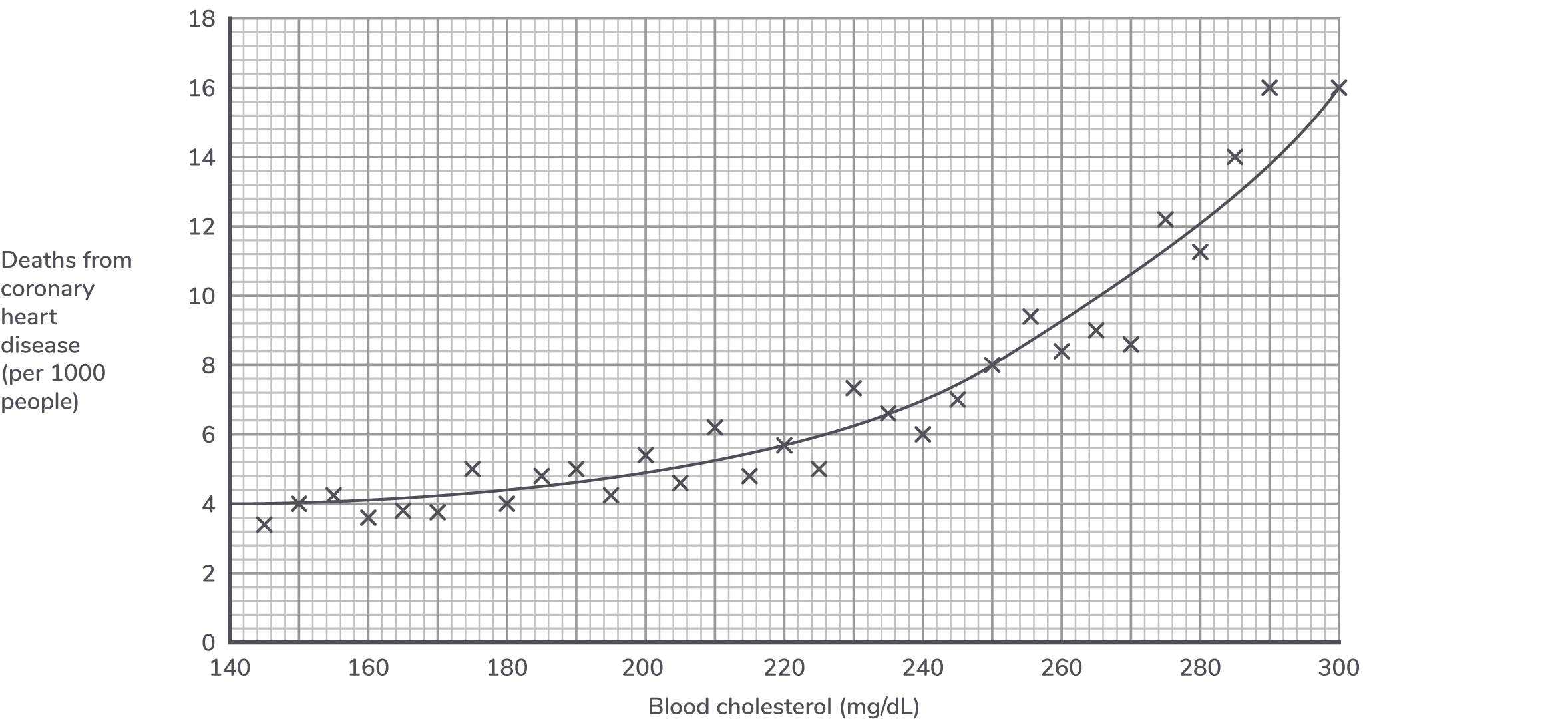
Use data from the graph to describe the relationship between cholesterol levels and number of deaths from CHD. Use examples from the graph to support your description.
Calculate the percentage change in deaths from CHD when cholesterol levels increase from 150 to 250 mg/dL.
Explain why high cholesterol might increase the risk of developing cardiovascular disease.
People with a genetic condition called hypercholesterolemia (HC) have an abnormal protein on the cell membrane of their liver cells.
The normal version of the protein picks up cholesterol from the blood and transports it into the liver cells, where cholesterol is broken down.
Explain why people with HC are more likely to develop heart disease.
In the past, doctors have given antibiotics to patients suffering from mild, non-serious bacterial infections.
Explain how the overuse of antibiotics has led to the evolution of antibiotic-resistant bacteria.
There is no effective treatment against resistant strains of bacteria.
What must be done to ensure we will be able to continue treating bacterial infections in the future?
Do not refer to the use of antibiotics for non-serious infections your answer.