11.5 - Meiosis
What meiosis is
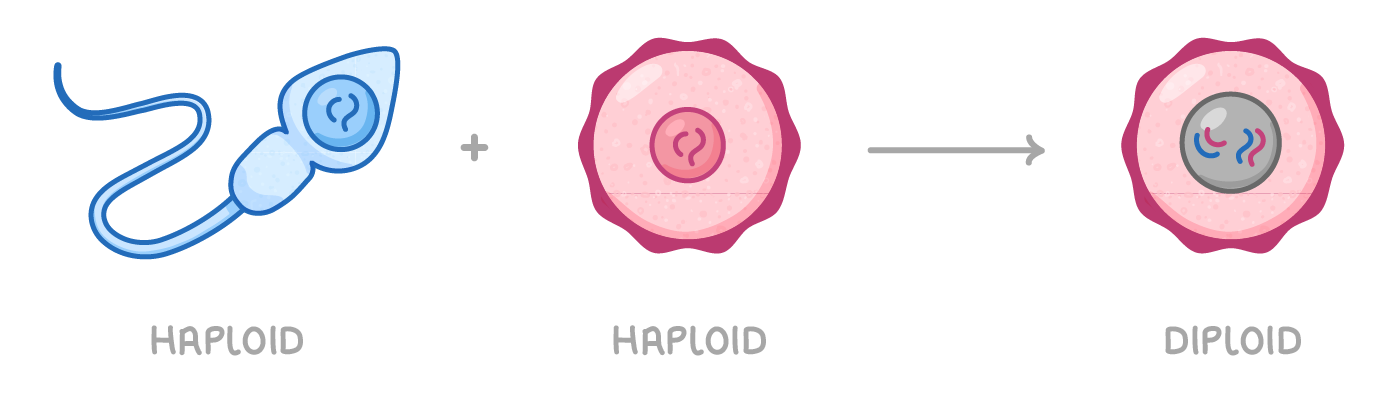
- A gamete is a sex cell (an egg or a sperm). Gametes carry only half the number of chromosomes of an ordinary body cell.
- A body cell is diploid - it has two copies of each chromosome.
- A gamete is haploid - it has just one copy of each chromosome.
Why halving the number matters
- At fertilisation, two gametes join and the new cell gets one set of chromosomes from each.
- These add back up to the full diploid number.
- So the chromosome number stays the same from one generation to the next, instead of doubling each time.
How meiosis produces gametes
- Meiosis is a special type of cell division that produces genetically different gametes with half the chromosome number.
- It only happens in the reproductive organs - the ovaries and testes in humans.
- It's called a reduction division because it reduces the chromosome number from the diploid number down to the haploid number.
The process runs as follows:
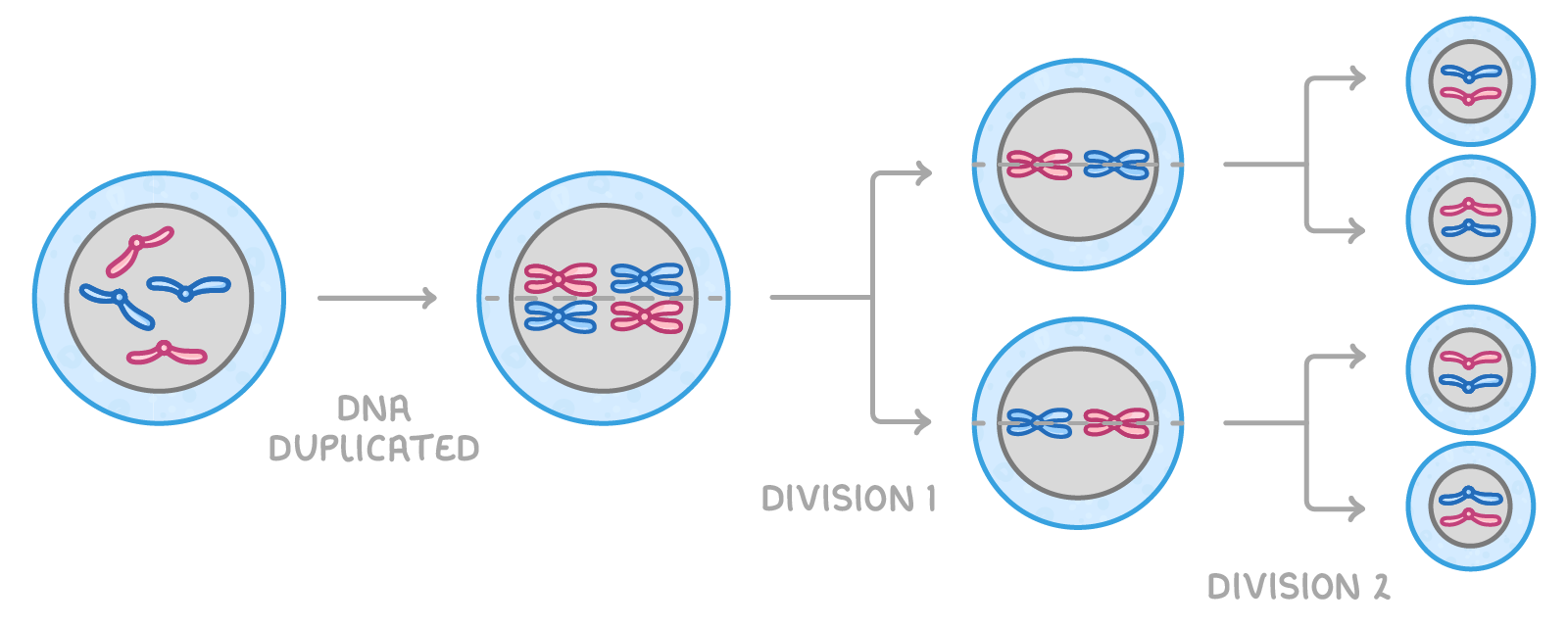
- Before meiosis begins, in a period called interphase, the cell duplicates its DNA - each chromosome becomes an X shape in which each half is an exact copy of the other.
- The cell then divides twice, one division straight after the other.
- The result is four daughter cells, each a gamete with only a single set of chromosomes - half the number the original cell started with.
How meiosis creates variation
- Meiosis produces four genetically different haploid cells from one cell.
- They differ because of a process called independent assortment.
Independent assortment
- Body cells carry chromosomes in pairs - one of each pair from the mother, the other from the father.
- During gamete formation, either chromosome of a pair can end up in a given gamete.
- This happens independently for every pair - which chromosome from one pair enters a gamete has no bearing on which enters from any other pair.
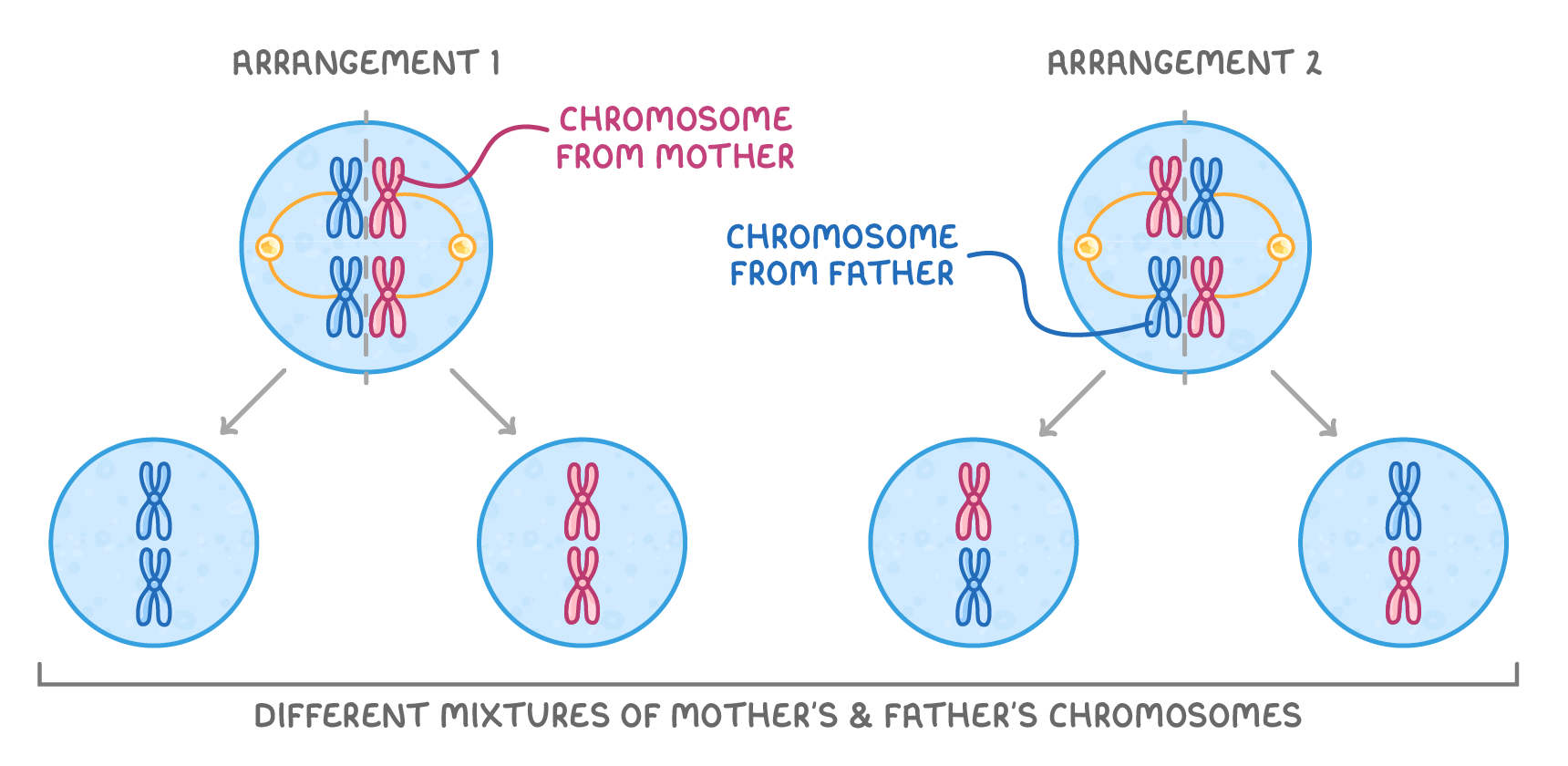
The pairs can line up either way round, so gametes get different combinations.
Why this causes variation
- Humans have 23 pairs of chromosomes, all assorted independently.
- This produces millions of possible combinations of chromosomes in one person's gametes.
- So the gametes a person makes are hugely varied, and at fertilisation the offspring inherit new, different combinations of chromosomes.
- Independent assortment is therefore a major cause of variation between individuals.
Comparing mitosis and meiosis
- Mitosis and meiosis are both types of cell division, but they differ in several clear ways.
- In short: mitosis copies a cell to give identical diploid cells, while meiosis halves the chromosome number to give varied haploid gametes.
Key differences
| Feature | Mitosis | Meiosis |
|---|---|---|
| Number of divisions | One division | Two divisions, one after the other |
| Number of daughter cells | Two | Four |
| Chromosome number | Full set - diploid, same as the parent cell | Half the set - haploid |
| Genetics of daughter cells | Genetically identical to each other and to the parent cell | All genetically different from one another |
TermDefinition
Gamete
Diploid
Haploid
Fertilisation
Meiosis
Reduction division
Independent assortment