2.2 - Biological Molecules
Carbohydrates are made of simple sugars
- Carbohydrates are one of the main groups of large biological molecules.
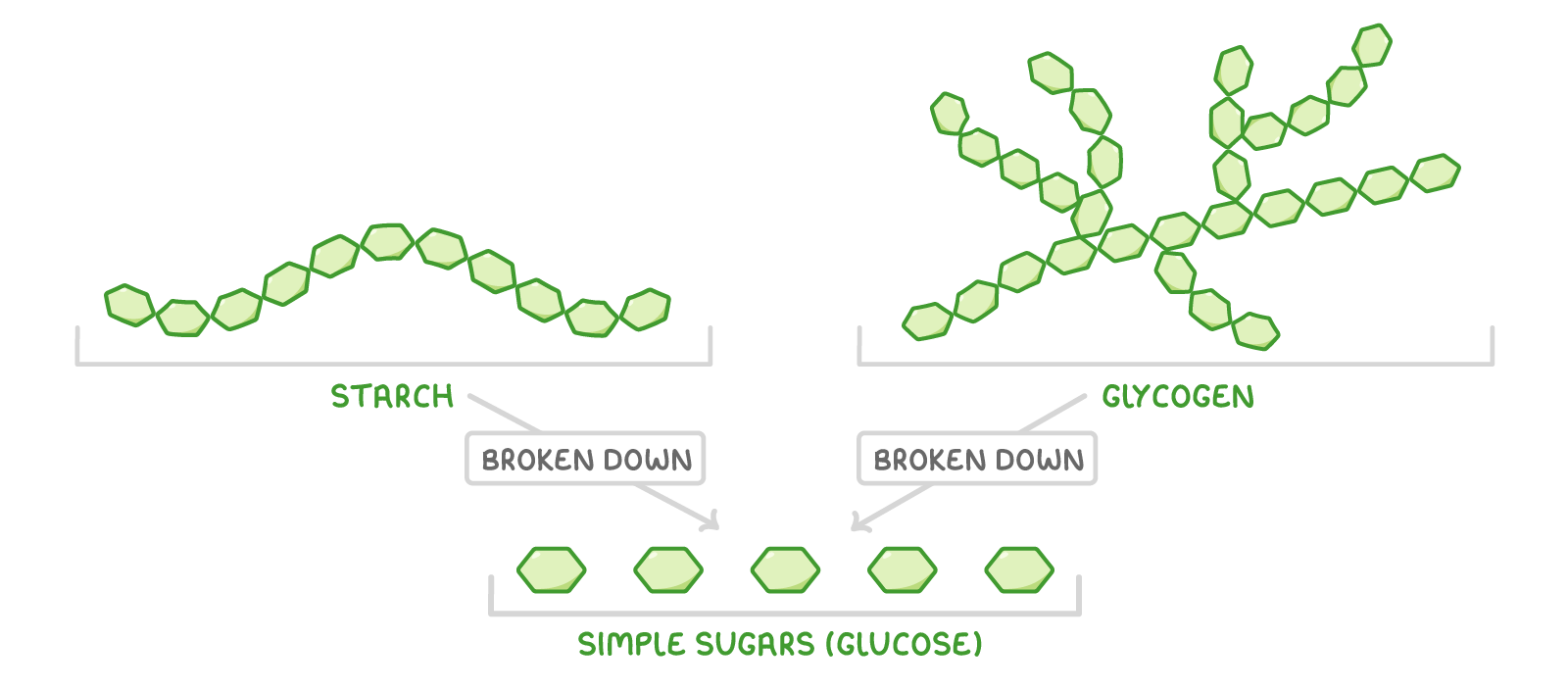
- A large carbohydrate is built from many small basic units called simple sugars - the most important simple sugar is glucose.
- These simple sugars are joined together in long chains to make large, complex carbohydrates.
Starch and glycogen are large carbohydrates made this way - each is a long chain of glucose molecules joined together. Because they're built from a repeating small unit, large carbohydrates can also be broken back down into their simple sugars when the bonds between the units are broken.
Proteins are made of amino acids
- Proteins are one of the main groups of large biological molecules.
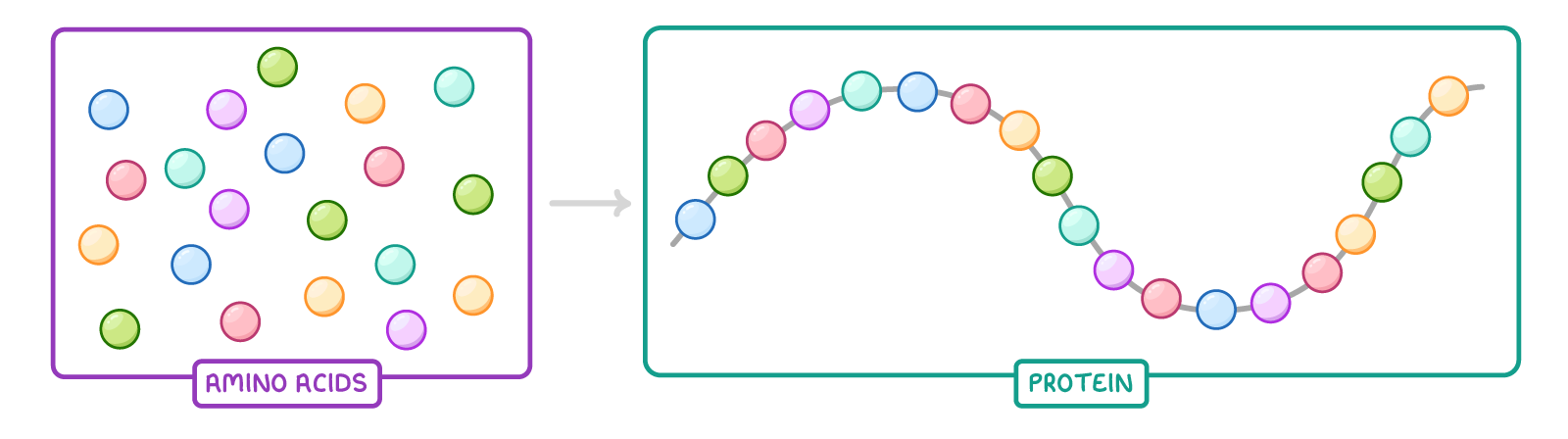
- A protein is built from small basic units called amino acids, joined together in a long chain.
- There are many different amino acids, and a protein can contain a great many of them linked in a particular order.
What makes each protein different
- Each protein is defined by the number of amino acids it contains and the order they are joined in.
- This order gives each protein its own shape.
- The shape is what lets a protein do its job - for example as an enzyme, a hormone, or a structural material in the body.
Lipids are made of fatty acids and glycerol
- Lipids are the fats and oils - one of the main groups of large biological molecules.
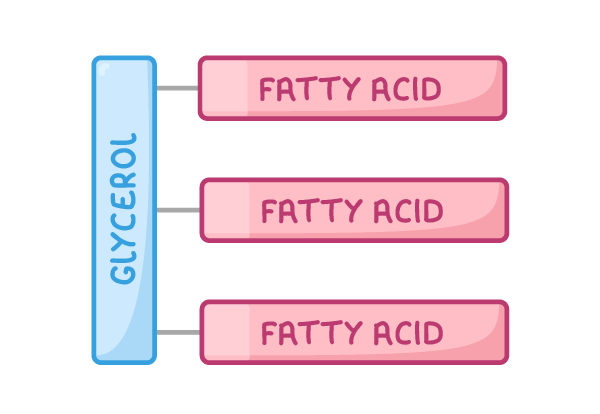
- A lipid is built from two kinds of smaller unit: fatty acids and glycerol.
- One lipid molecule is made from one glycerol molecule joined to three fatty acid molecules.
- Different lipids have different fatty acids, which is part of why fats and oils vary.
- Unlike carbohydrates and proteins, a lipid is not a long chain of repeating units - it's this fixed arrangement of one glycerol and three fatty acids.
TermDefinition
Carbohydrate
Simple sugar
Protein
Amino acid
Lipid