Plant Tissues, Organs & Systems - exam practice
Plant Tissues, Organs & Systems
Question 1 of 10
A student is studying the different types of plant tissues.
List three types of plant tissue and state their functions.
Water enters a plant through root hair cells.
Root hair cells have:
Identify structures A, B, and C in the following diagram of a root hair cell, and describe their functions.
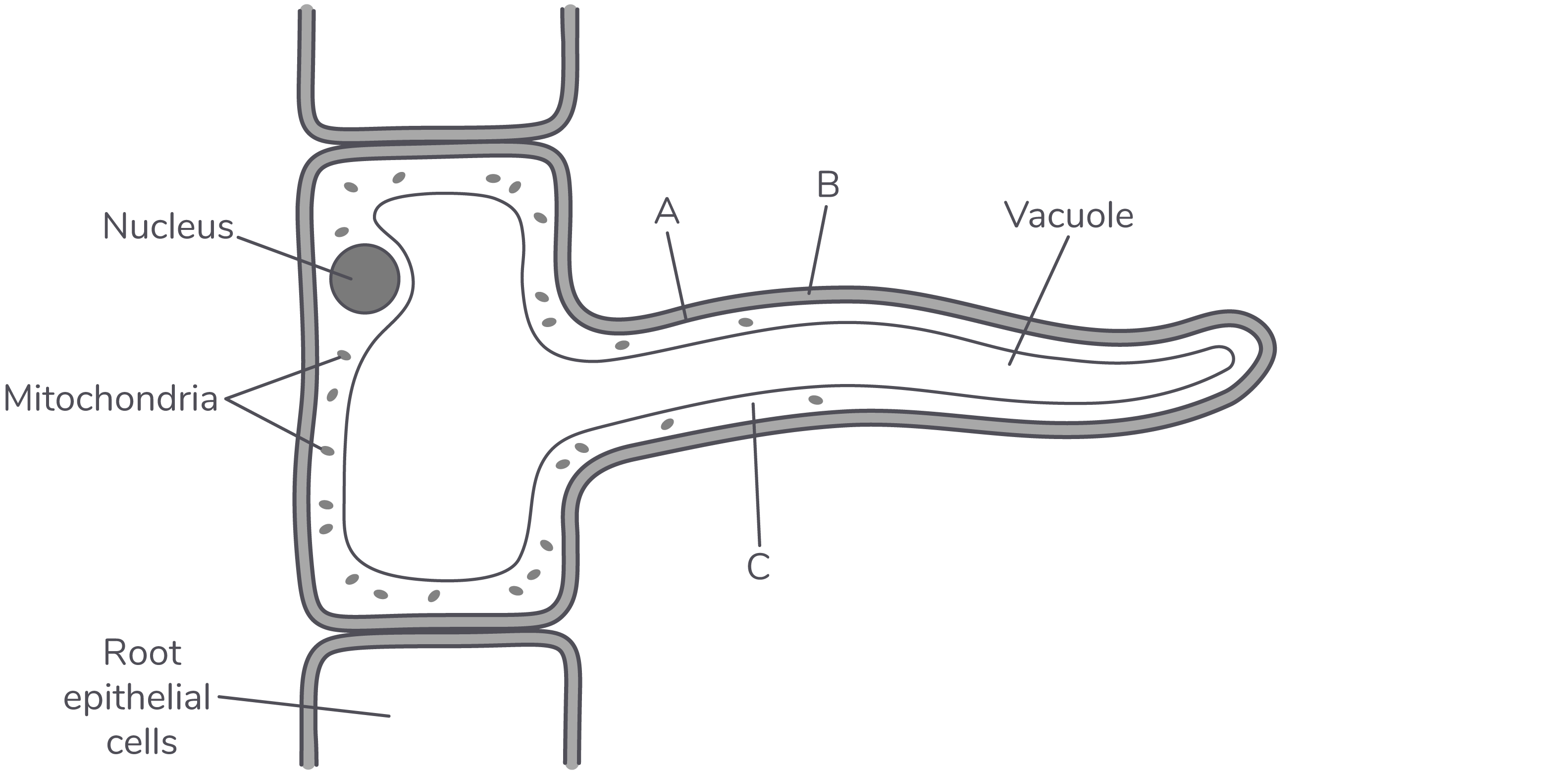
Explain how the features of root hair cells are advantageous for the plant.
Describe the pathway of water through a plant and explain the factors that affect the rate of transpiration.
Stomata are cell structures in the epidermis of tree leaves and needles.
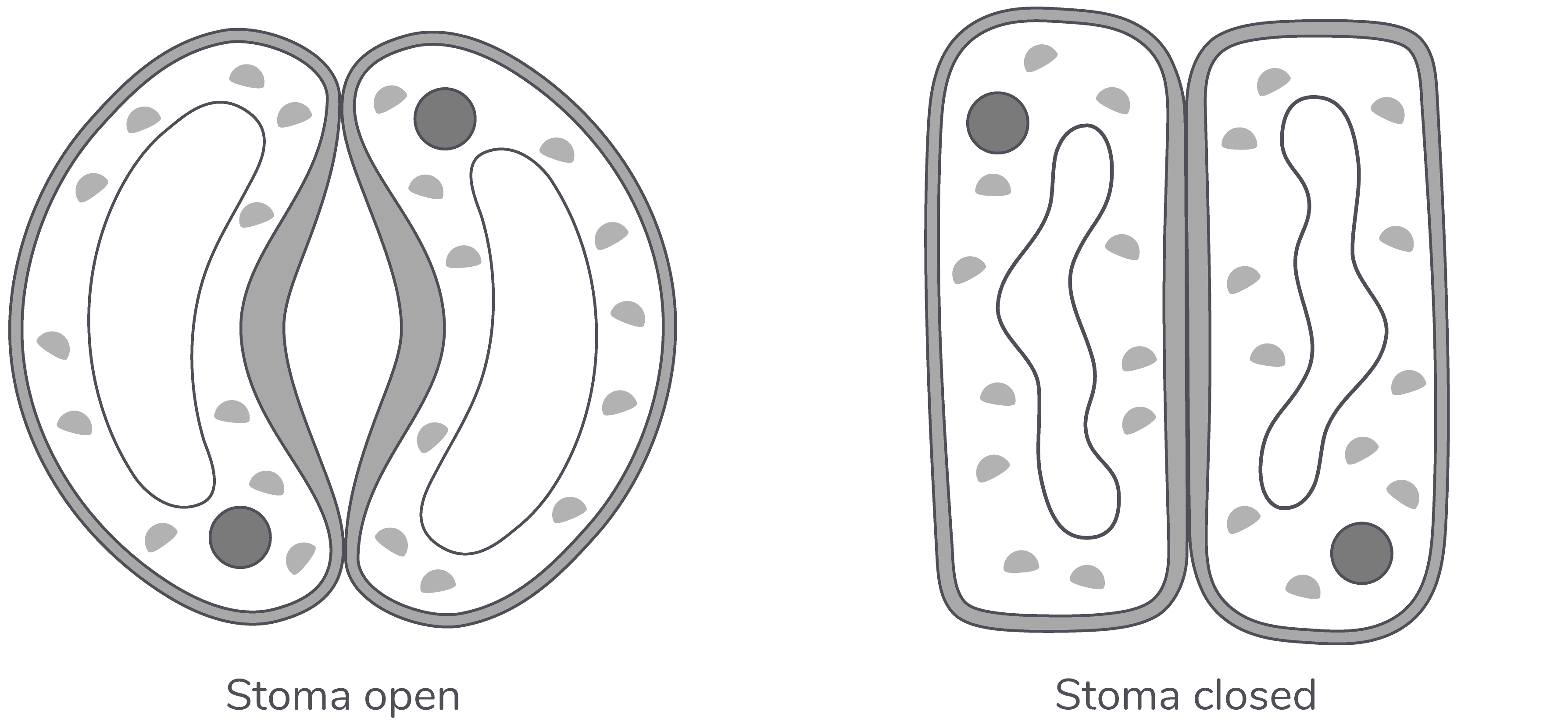
Explain the role of stomata and guard cells in plants.
Explain why stomata are typically found on the lower epidermis of leaves.
Suggest why stomata can close at night.
Explain how the structure of guard cells allows them to control the opening and closing of stomata.
Plants continually lose water to the air.
This is called transpiration.
Outline the process of transpiration.
Explain the effect of changing temperature, humidity, air movement, and light intensity on the rate of transpiration.
Describe how a potometer can be used to measure the rate of transpiration.
How is xylem tissue adapted for the transport of water in the transpiration stream?
A student is studying the structure of a leaf.
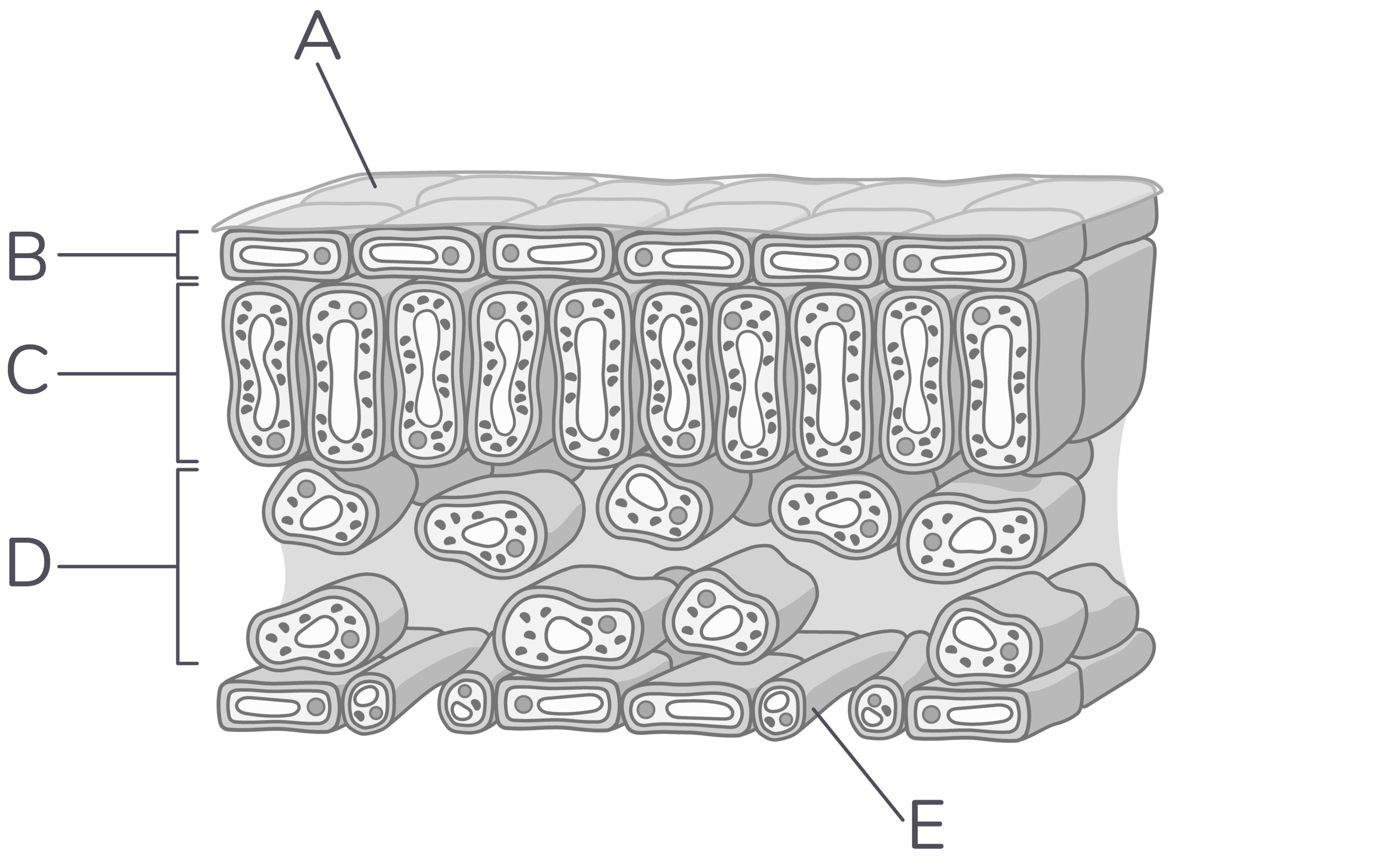
Label the diagram of a leaf cross-section and state the functions of the labelled parts.
A student is studying the process of translocation in plants.
Which of these sentences about the movement of sugars through a plant is correct?
Describe the process of translocation.
Explain why translocation is important to plants.
An aphid feeds by inserting its sharp mouthpiece into the stem of a plant.
Give the reason why the mouthpiece of an aphid contains a high concentration of dissolved sugars after feeding.
A student is studying the transport of substances in plants.
Explain how xylem and phloem tissues are adapted to their functions.
A student is investigating the effect of light intensity on the rate of transpiration.
The student collects the following data:
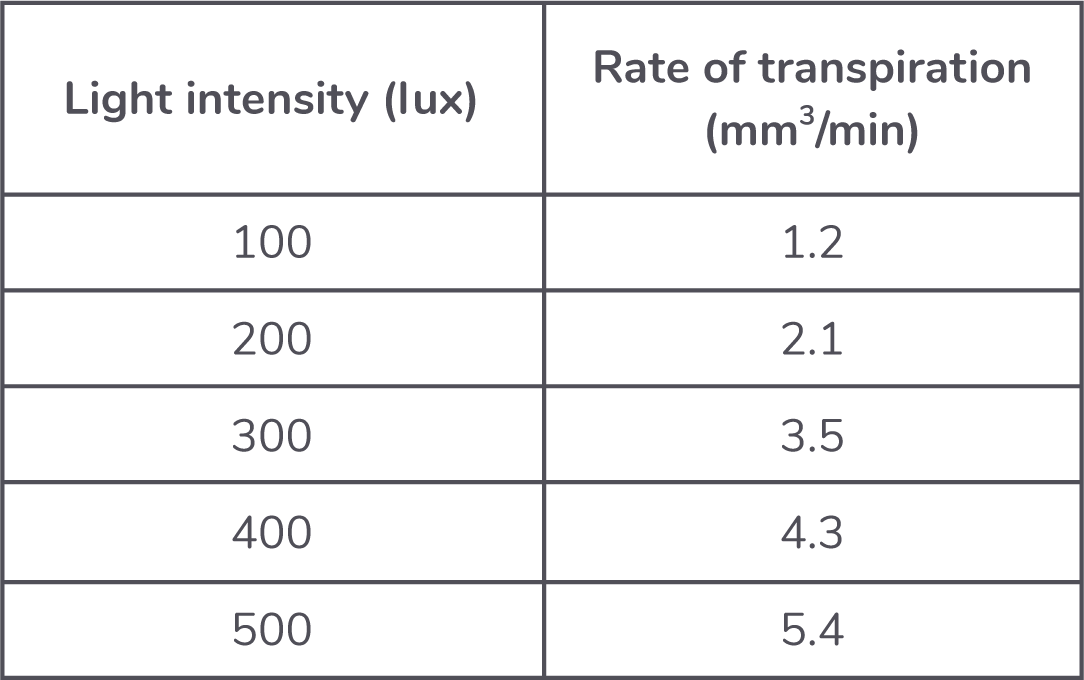
Describe the relationship between light intensity and the rate of transpiration.
Why does light intensity have this effect on the rate of transpiration?
Describe what happens during transpiration.
The student kept environmental conditions like air movement, humidity, and temperature, constant.
Why was it important to keep the temperature the same?
A scientist measured the rate of water loss from a plant shoot using a potometer.
The figure shows the equipment used in the experiment.
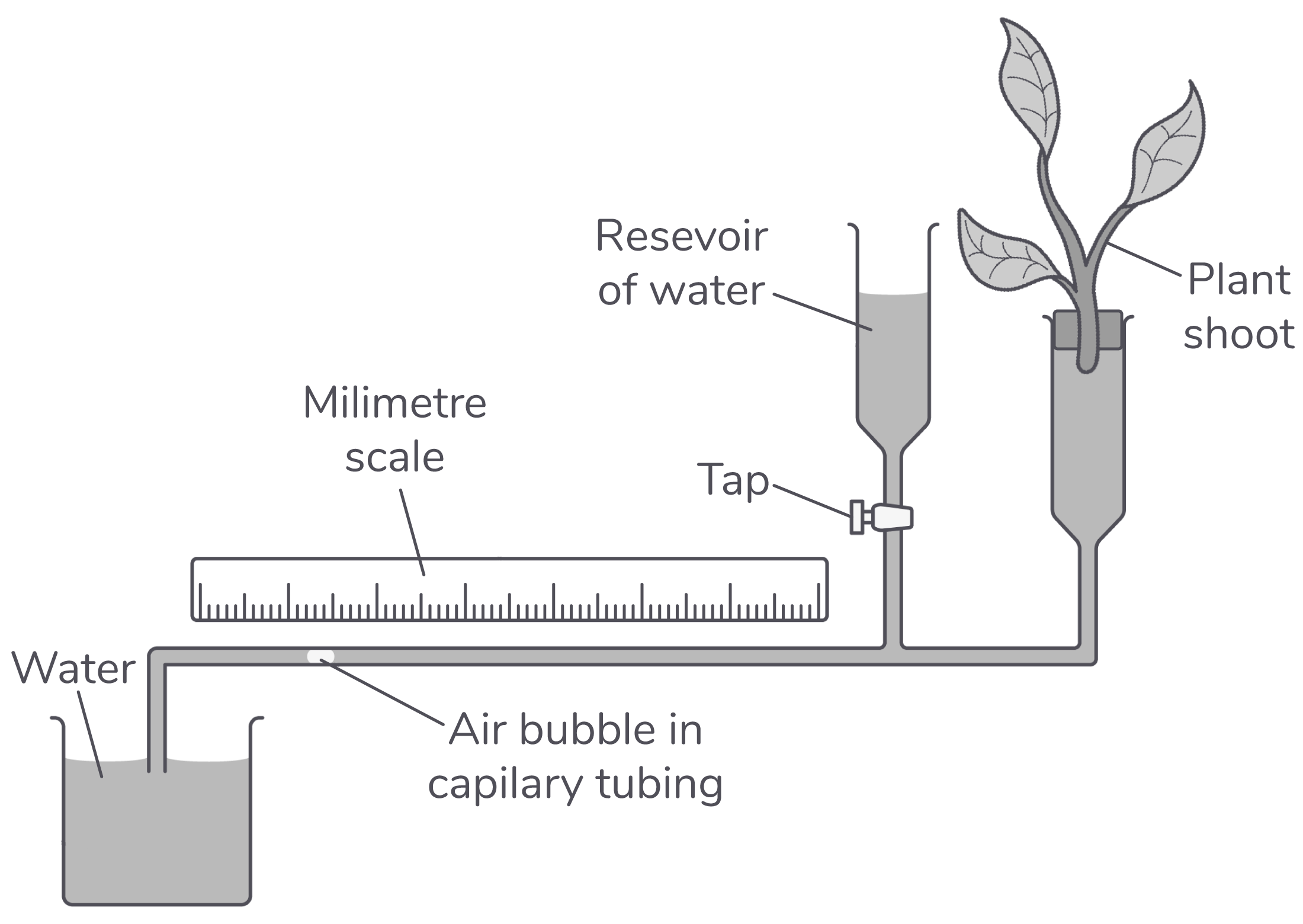
The volume of water lost from the plant can be calculated by measuring the distance a bubble moves along the capillary tubing.
Calculate the rate of water loss from the plant in mm3/s if the volume of water lost was 15 mm3 in 10 minutes.
The scientist wants to extend the investigation by considering factors that affect the rate of transpiration.
State two variables, other than temperature, that she could investigate.
Explain the effect of decreasing air temperature on the rate of transpiration.
A student compared the number of stomata on the upper and lower surfaces of a leaf.
The student followed the method below:
- Coat the leaf with clear nail varnish.
- Remove the layer of nail varnish.
- Place the leaf impression on a microscope slide and cover it with a coverslip.
- Use the microscope to observe the leaf impression.
The layer of nail varnish shows an impression of the cells on the surface of the leaf.
Why is a coverslip placed on top of the leaf impression?
Explain why the student prepared a leaf impression with nail varnish rather than attempting to observe the whole leaf with a microscope.
The student observed that the stomata were open.
Describe how stomata open.
A biologist investigated how different mineral ion concentrations in the soil impact the growth of a particular plant species.
The biologist:
- planted seeds in pots with varying concentrations of mineral ions (1%, 2%, and 3%)
- recorded the plant height every week for four weeks
The results are presented in the following table:
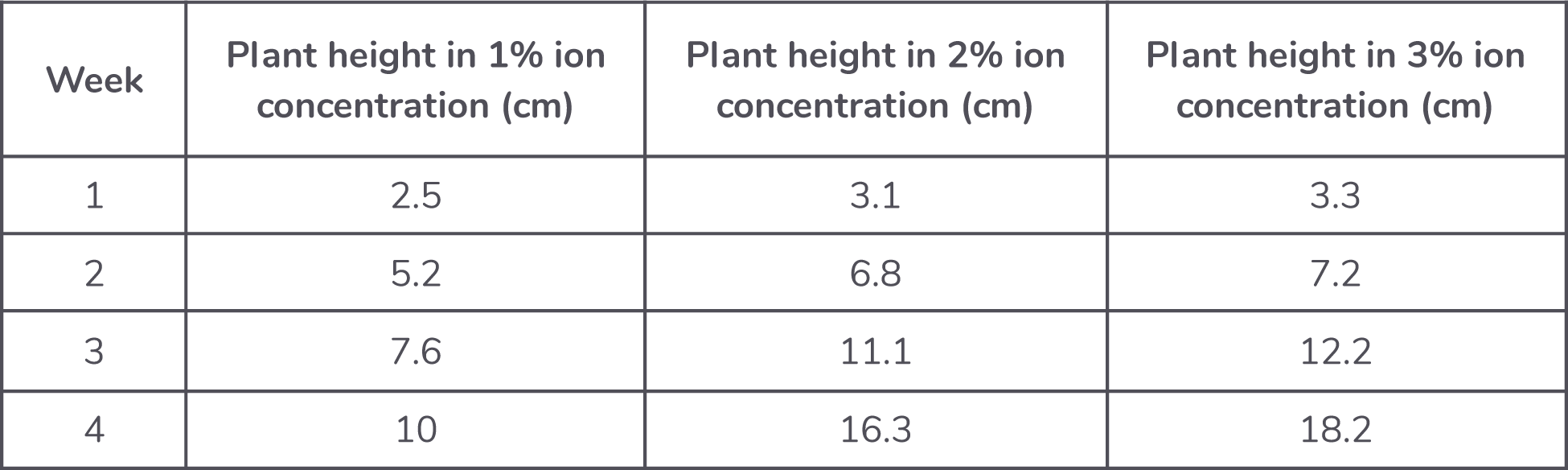
Describe the effect of increasing ion concentration in the soil on the growth of the plant.
Calculate the average weekly growth of the plant in the 2% ion concentration.
Explain how active transport is related to the observed growth of the plants in this experiment.
Suggest a way the biologist could modify the experiment to test the effect of different types of ions on plant growth.
Identify a potential source of error in this experiment and suggest a way it could be minimised.