1.11 - Lungs & Gas Exchange
Gas exchange in the lungs and the alveoli
- The lungs are the body's gas-exchange organs. Their job is to transfer oxygen into the blood and remove waste carbon dioxide from it.
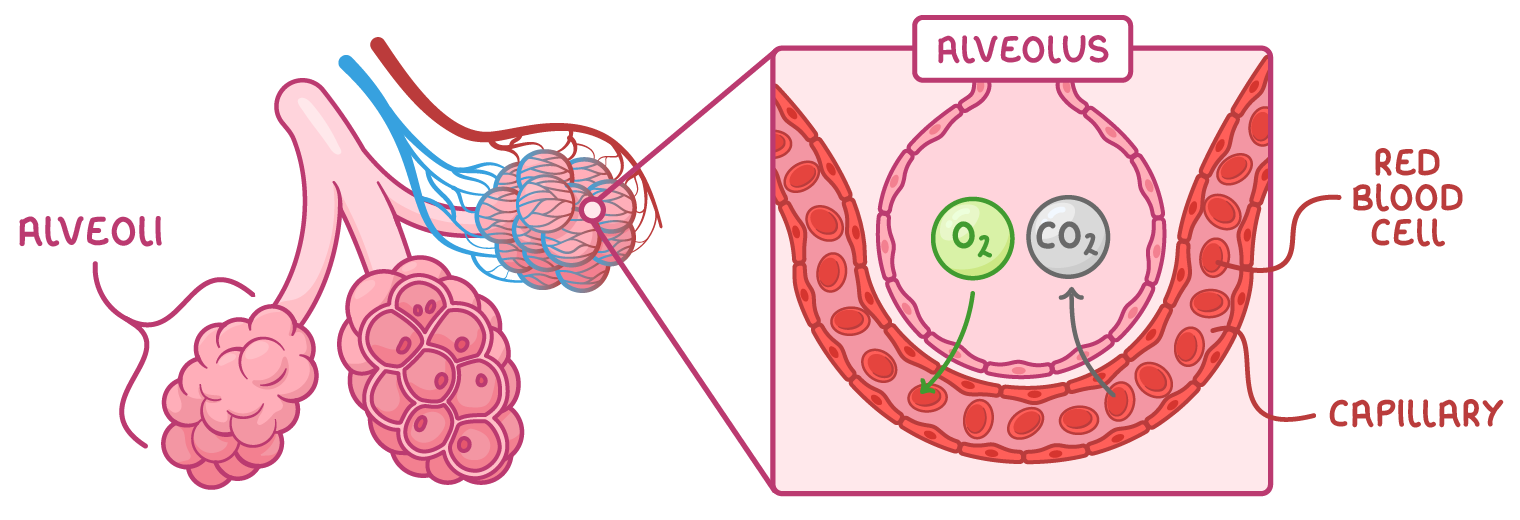
- Air breathed in travels down the trachea and through the branching airways until it reaches the alveoli - millions of tiny air sacs where gas exchange actually happens.
- Each lung contains a huge number of alveoli, and every alveolus is wrapped in a dense network of blood capillaries. This brings the air inside an alveolus and the blood in the capillary very close together.
How the gases are exchanged
- Blood arriving at the alveoli has just returned from the body, so it is low in oxygen and high in carbon dioxide. This sets up a concentration gradient for each gas.
- Oxygen - High concentration in the alveolar air, low in the blood, so oxygen diffuses out of the alveolus into the blood.
- Carbon dioxide - High concentration in the blood, low in the alveolar air, so carbon dioxide diffuses out of the blood into the alveolus, ready to be breathed out.
- The oxygen-rich blood then leaves the lungs to be carried to the body's cells, while the carbon dioxide is removed when the next breath is exhaled.
Protecting the lungs
- The lungs sit inside the chest, protected by the ribcage.
- A thin layer of pleural fluid between the membranes around the lungs reduces friction as the lungs move during breathing.
TermDefinition
Alveoli
Trachea