2.12 - Antibiotics & Painkillers
Antibiotics
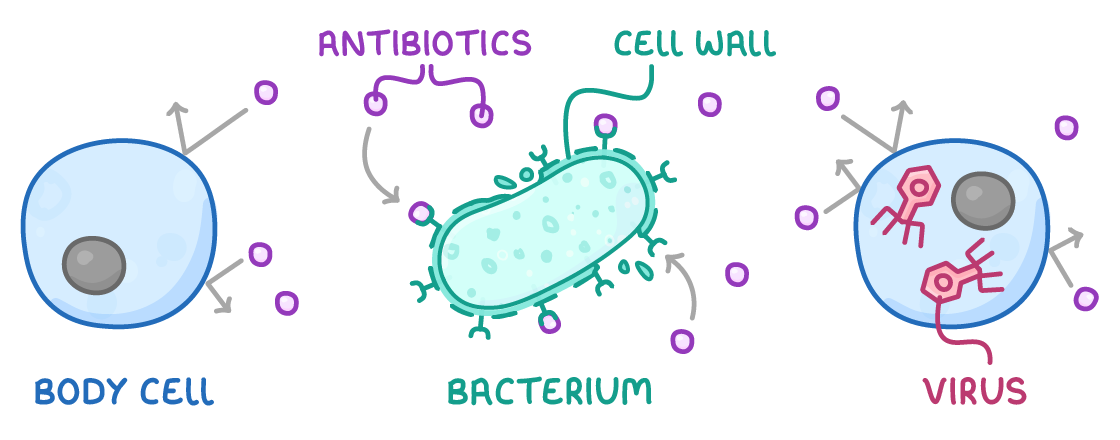
- An antibiotic is a medicine that cures a bacterial disease by killing the bacteria inside the body, or by stopping them from growing and dividing.
- It does this without killing the body's own cells, because it interferes with processes found in bacterial cells but not in human cells - for example building the bacterial cell wall, which human cells don't have.
- Many antibiotics are made naturally by fungi and other microorganisms - penicillin, the best-known antibiotic, is made by the mould Penicillium.
- Drug companies grow these organisms on a large scale and extract the antibiotic from them.
- Antibiotics have greatly reduced deaths from bacterial diseases.
Using antibiotics correctly
- A particular antibiotic only kills particular types of bacteria, so it's important to be treated with the right one for the infection.
- It's also important to finish the whole course, even once you start to feel better, so the infection is fully cleared rather than left to flare up again.
- Bacteria can become resistant to antibiotics, which is a growing problem for treatment.
Antibiotics don't work on viruses
- Antibiotics have no effect on viruses, such as those that cause flu and colds, because viruses are not cells and have none of the processes, such as building a cell wall, that antibiotics interfere with.
- Viruses reproduce inside the body's own cells, so it's very difficult to develop a drug that destroys the virus without also damaging the cells it's hiding in.
- This makes antiviral drugs much harder to make than antibiotics.
Painkillers and other medicines
- Not every medicine cures a disease - some just ease symptoms while the body fights the infection off.
- Painkillers (e.g. aspirin) relieve pain.
- "Cold remedies" reduce how severe the symptoms of an illness are, or how long they last.
- None of these kill the pathogen or tackle the underlying cause of the disease - they simply ease a person's suffering.
Different types of medicines are used for different pathogens
- Antivirals - Used to treat viral infections. Most don't kill the virus but stop it reproducing. They're difficult to produce because viruses replicate inside the body's own cells, so it's hard to target the virus without damaging those cells.
- Antiseptics - Chemicals that destroy microorganisms or stop them growing, but used outside the body - to clean wounds, skin, and surfaces. They prevent infection rather than treat an infection already inside the body.
Drawbacks to weigh up
- Some cause adverse reactions in certain people - such as an allergic reaction to penicillin.
- Some are expensive, especially if they must be taken for a long time.
- Some are not fully effective.
A doctor has to balance the likely benefits of a medicine against its risks and costs when deciding what to prescribe.
TermDefinition
AntibioticA substance that kills bacteria or stops them from growing and dividing, used as a medicine to cure bacterial diseases.
PainkillerA medicine that relieves pain without killing the pathogen or tackling the cause of the disease.
AntiviralA drug that treats viral infections by stopping the virus reproducing, without damaging the body's cells.
AntisepticA chemical used outside the body to clean wounds and surfaces by destroying microorganisms or stopping them from growing.
Key points to remember
How were these notes?