3.17 - The Carbon Cycle
The carbon cycle
- Carbon is a building block of every living thing, locked up in biological molecules such as carbohydrates, proteins, and fats that make up plants and animals.
- There is only a fixed amount of carbon on Earth, so it has to be used over and over again.
- The carbon cycle keeps carbon moving between the air, living things, the soil, and fossil fuels, so the same atoms can be reused to build new organisms.
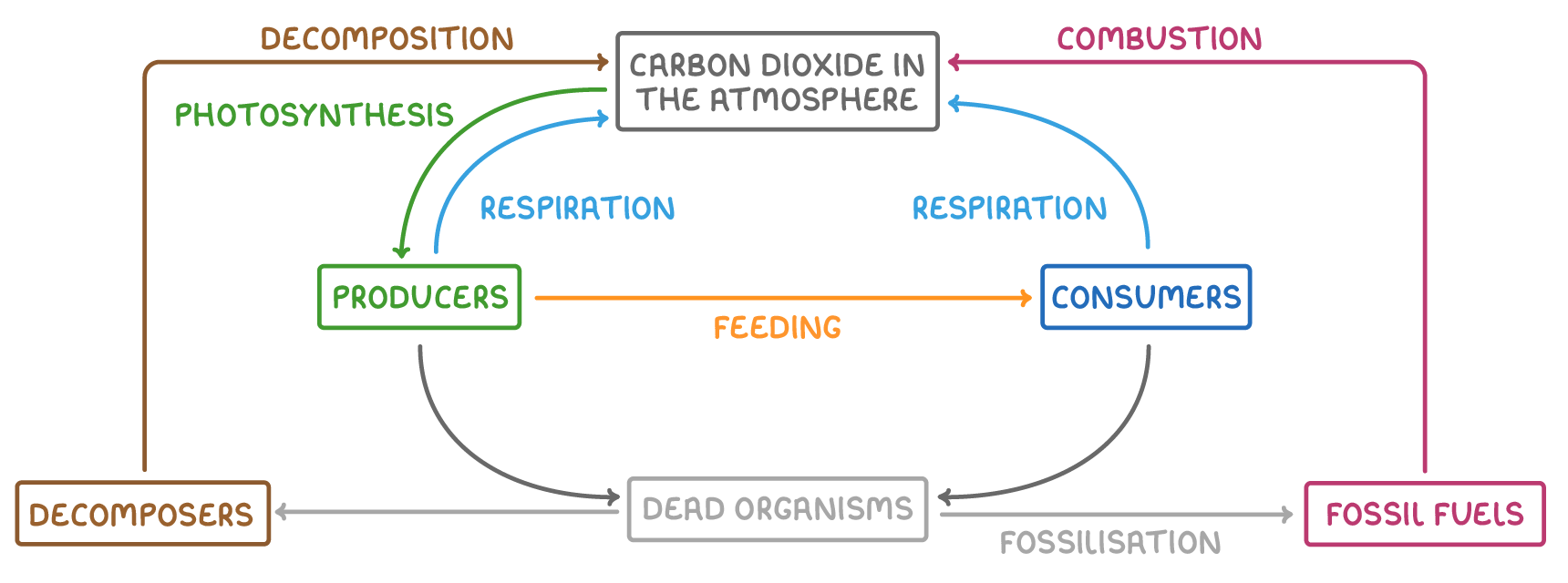
- It's a cycle, so there's no real beginning - but it's easiest to start in the air, where carbon is found as carbon dioxide gas.
How carbon gets into living things
- Photosynthesis - Green plants and algae, the producers, remove carbon dioxide from the air. The carbon becomes locked up in glucose, which plants use to build carbohydrates, fats, and proteins as they grow.
- Feeding - When animals, the consumers, eat plants or eat other animals, the carbon is passed along the food chain and becomes part of the animals' bodies.
How carbon is returned to the air
- Respiration - Plants and animals break down glucose for energy, releasing carbon dioxide back into the atmosphere.
- Decomposers - When plants, algae, and animals die, microorganisms (bacteria and fungi) feed on the dead material and break it down. As these microorganisms respire, they return carbon to the air as carbon dioxide and release mineral ions back into the soil.
- This microbial role is what keeps carbon cycling rather than staying locked in dead matter.
- Combustion - Burning wood or fossil fuels releases the carbon they contain as carbon dioxide.
Fossil fuels lock carbon away
- Not all dead material decays straight away.
- If dead organisms are buried where there is little or no oxygen, they may not be fully decomposed. Over millions of years this fossilisation turns them into fossil fuels - coal, oil, and natural gas - locking carbon away underground.
- The carbon stays stored until the fossil fuel is dug up and burned, which releases it back into the atmosphere as carbon dioxide and completes the cycle.
TermDefinition
Carbon cycleThe movement of carbon between the air, living things, the soil, and fossil fuels.
DecomposerAn organism, such as a bacterium or fungus, that gets its energy from dead and waste organic matter.
Fossil fuelA store of carbon formed over millions of years from dead organisms buried without oxygen. Coal, oil and natural gas are fossil fuels.
Key points to remember
How were these notes?