2.5 - Plant Diseases
Plant diseases and their signs
- Plants can be infected by pathogens, just as animals can: viruses, bacteria, and fungi.
- They can also be infested and damaged by larger organisms such as insects.
- Several pathogens are specific to plants.
Examples of plant diseases
- Tobacco mosaic virus (viral) - Gives a mottled, discoloured pattern on the leaves of many plants.
- Ash dieback (fungal) - A disease of ash trees, carried from tree to tree through the air by the wind. It produces leaf loss and lesions on the bark.
- Crown gall disease (bacterial) - Caused by Agrobacterium tumefaciens, which lives freely in some soils and on plant roots:
- When the bacteria get into a plant, they make growths (tumours) called galls form on the roots, stems, and branches.
- These galls damage the plant's tissues and restrict the flow of water through it, so the plant becomes weaker and may eventually die.
Signs of disease
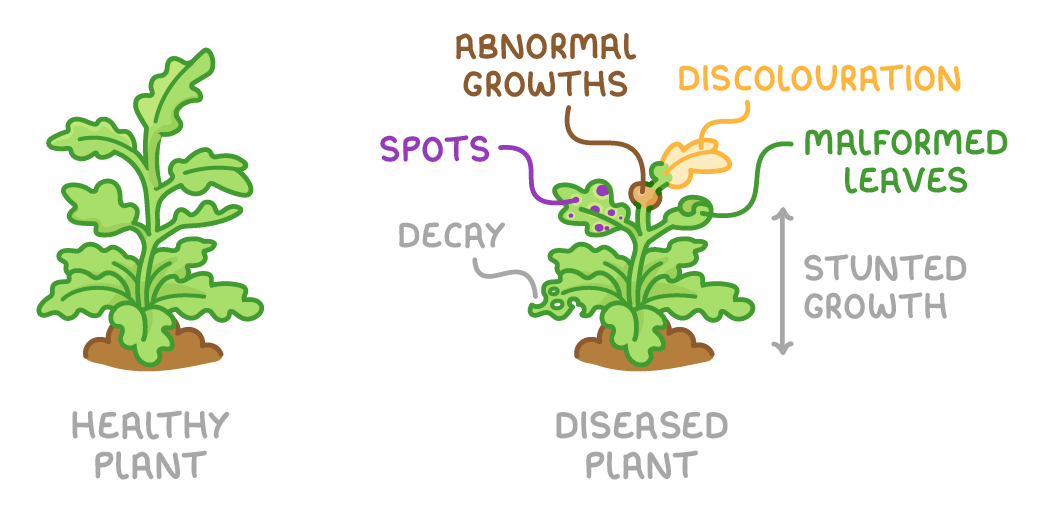
- Diseased plants show characteristic signs, so it's usually fairly clear when a plant is diseased. Common signs include:
- Stunted growth
- Spots on the leaves
- Patches of decay or rot
- Abnormal growths, such as lumps
- Malformed stems or leaves
- Discolouration
- Different diseases produce different combinations of these signs - this is what makes it possible to tell one disease from another.
TermDefinition
GallA growth or tumour on a plant's roots, stems or branches. Some are caused by bacteria, as in crown gall disease.
Key points to remember
How were these notes?