2.3 - Stem Cells
What a stem cell is
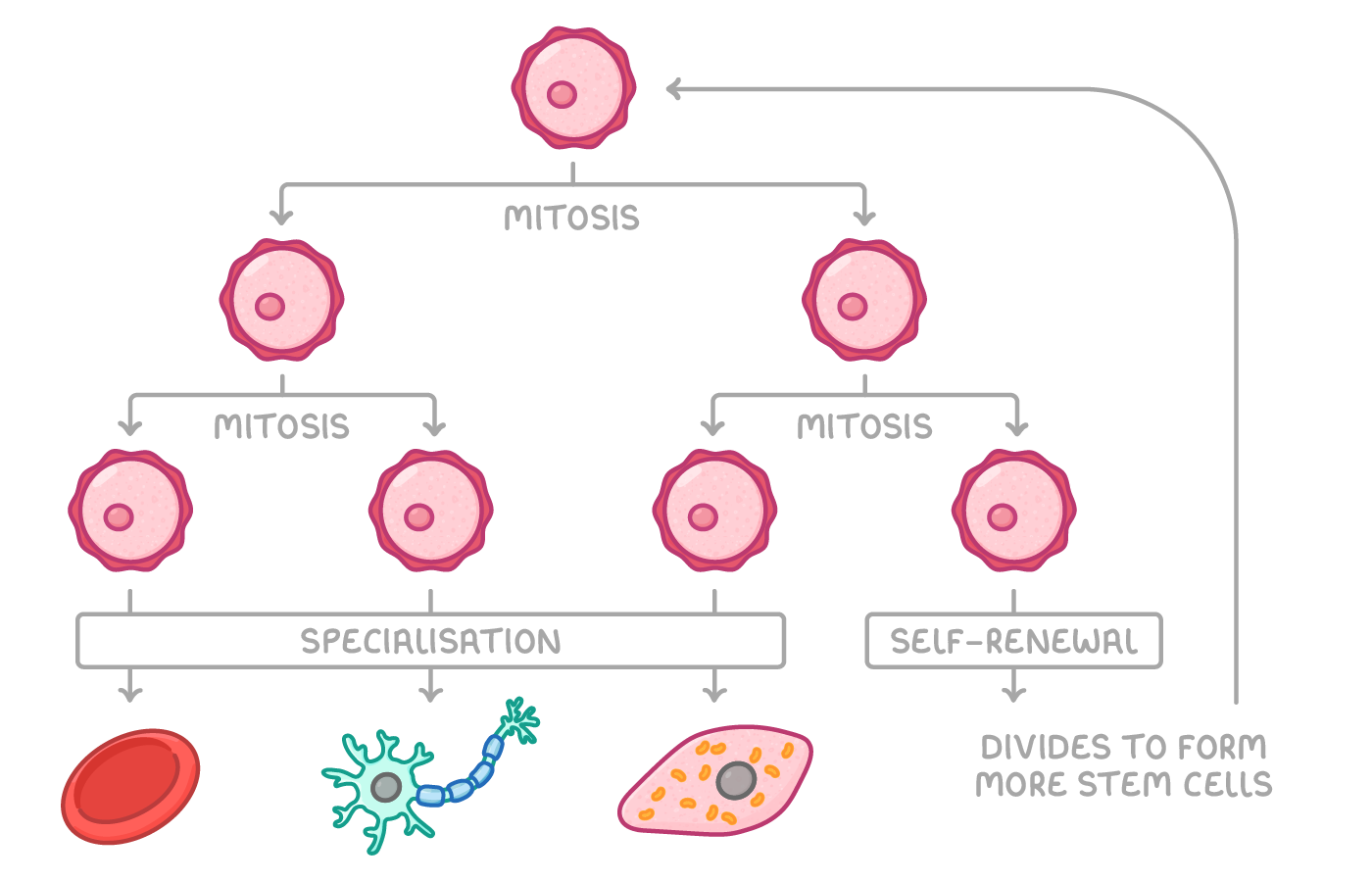
- A stem cell is an unspecialised cell - unlike a nerve cell or muscle cell, it hasn't yet taken on a particular form or job.
- Stem cells can do two things:
- Self-renewal - Keep dividing by mitosis to produce more cells of the same type (more stem cells), so a supply of them is maintained.
- Specialisation - Depending on the instructions they're given, their daughter cells can become specialised, developing into a particular cell type such as a blood cell, a nerve cell or a muscle cell.
How they differ from specialised cells
- In most fully developed tissues the cells have already become specialised and can no longer turn into other types of cell.
- A stem cell stays unspecialised and keeps the ability to divide and to give rise to specialised cells.
- Because of this, stem cells are the source of the new specialised cells an organism needs as it grows and develops, and of the new cells that replace worn-out or damaged ones.
Embryonic and adult stem cells
- A stem cell is an unspecialised cell that can divide to make more stem cells or turn into other types of cell.
- Animals have two kinds of stem cell - embryonic and adult - which differ in how many types of cell they can become.
Embryonic stem cells
- Found in an embryo at a very early stage.
- Can become any kind of cell at all.
- This makes sense because every one of the body's many specialised cell types has to come from those few cells in the early embryo.
- This is why stem cells are so important for the growth and development of an organism.
Adult stem cells
- Also called tissue stem cells.
- Found in the body throughout life, but only in certain places, such as the bone marrow.
- Less versatile than embryonic stem cells - they can become only a limited range of cells, usually those of the tissue they came from.
- For example, stem cells in bone marrow produce new blood cells.
- Used for growth and repair - replacing cells that are damaged or worn out, such as making new skin cells or blood cells.
Meristems - Stem cells in plants
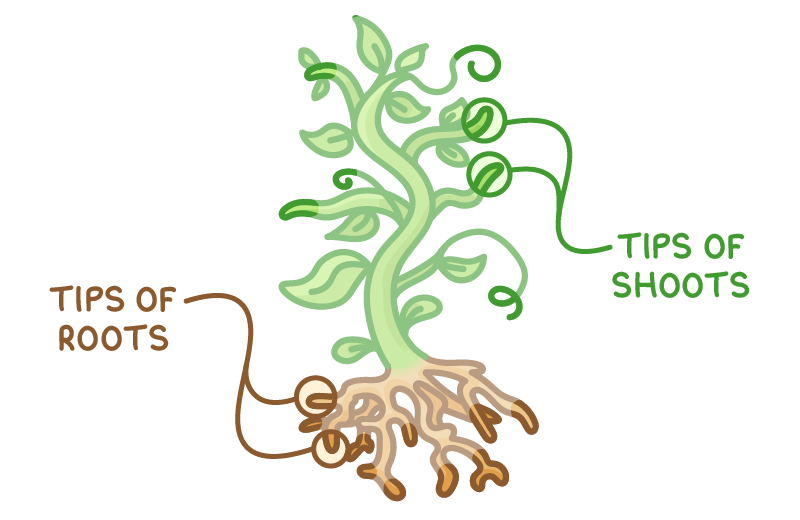
- In plants, stem cells are found in meristem tissue (meristems).
- Meristems sit in the parts of a plant that are actively growing - mainly the tips of the roots and the tips of the shoots.
- These are the only plant cells that divide by mitosis.
What meristem cells can do
- The cells produced in meristems are unspecialised, like animal stem cells.
- They can divide and become any type of plant cell the plant needs - for example root cells, leaf cells, or the cells of the transport tissues.
- Unlike most animal stem cells, meristem cells keep this ability for the whole life of the plant. This is part of how a plant can carry on growing and producing new parts throughout its life.
- Because they can be grown into any type of plant cell, meristem cells can also be used to produce new plants in cloning techniques.
TermDefinition
Stem cellAn unspecialised cell that can divide to produce more stem cells or develop into specialised cells.
Embryonic stem cellA stem cell from an early embryo that can differentiate into any type of cell in the body.
Adult stem cellA stem cell found in adult tissues, such as bone marrow, that can develop into a limited range of cell types.
MeristemA region of actively growing tissue in a plant where unspecialised stem cells are found.
Key points to remember
How were these notes?