1.3 - Cell Structure
Eukaryotic and prokaryotic cells
Cells are sorted into two types: eukaryotic and prokaryotic.
Eukaryotic cells
- Larger and more complex.
- Genetic material is held inside a nucleus.
- Contain membrane-bound sub-cellular structures, such as mitochondria and (in plants) chloroplasts.
- Animals, plants, fungi, and protoctists are all made of eukaryotic cells.
- An organism made of eukaryotic cells is a eukaryote.
Prokaryotic cells
- Smaller and simpler - bacteria are the main example.
- Have no nucleus: the genetic material is a single circular loop of DNA floating freely in the cytoplasm.
- Have no membrane-bound sub-cellular structures.
- A prokaryote is a single-celled organism made of one prokaryotic cell.
Animal cells
- Cells are the building blocks of all living things.
- Inside a cell are smaller parts called sub-cellular structures (organelles), each with its own job.
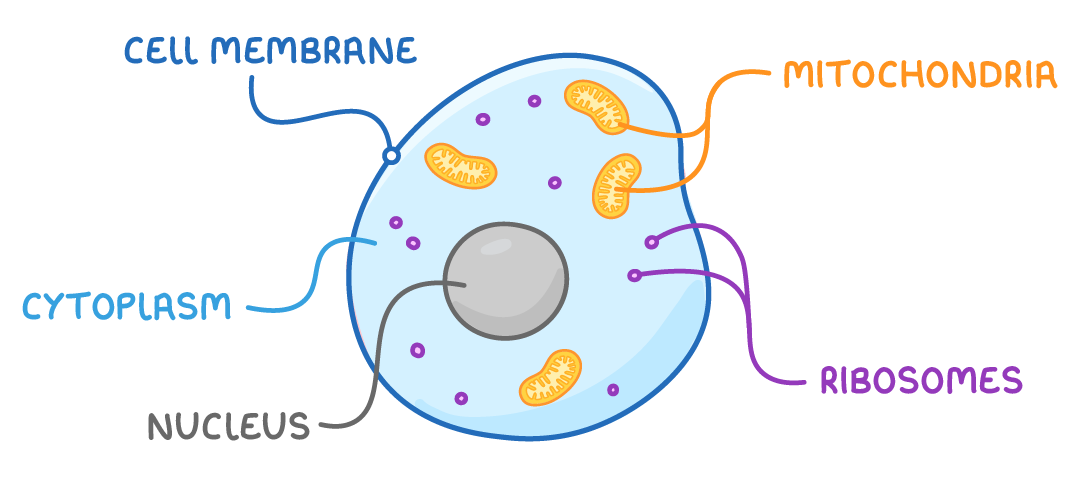
The five key structures in an animal cell
- Nucleus - Contains the cell's genetic material, held in chromosomes, and controls the activities of the cell
- Cytoplasm - A gel-like substance that fills the cell and is where most of the cell's chemical reactions take place; it contains the enzymes that control those reactions
- Cell membrane - Forms the boundary of the cell, holding it together and controlling which substances pass in and out. It acts as a partially permeable (also called selectively permeable) barrier, letting small molecules through but not large ones
- Mitochondria - Where most of the reactions of aerobic respiration happen, releasing the energy the cell needs to work
- Ribosomes - Where proteins are made
Plant cells
Plant cells have all the structures found in an animal cell, plus a few extra ones.
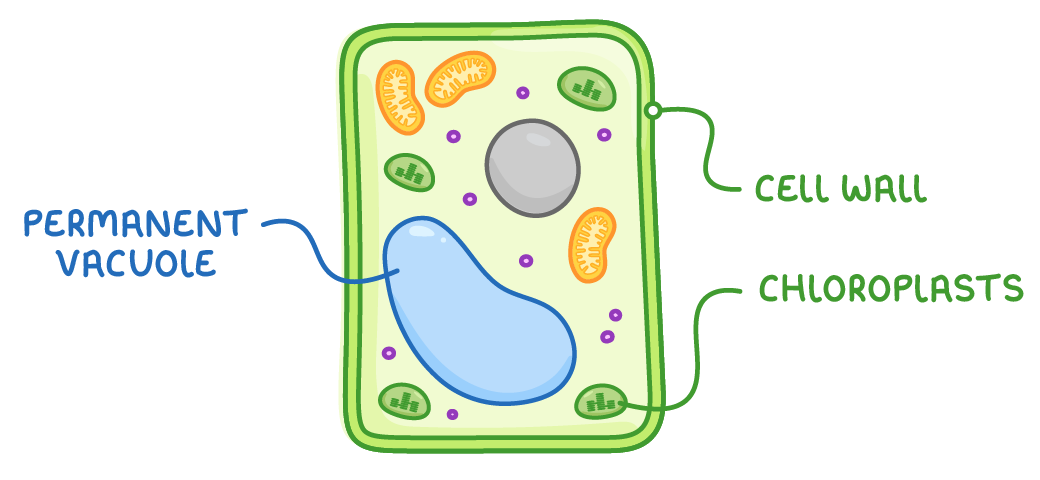
Only the extra structures are labelled; the rest are the same as an animal cell.
The extra structures in a plant cell
- Cell wall - Made of cellulose. It's rigid and gives the cell support and strength.
- Permanent vacuole - A large vacuole filled with cell sap (a weak solution of sugars and salts). It helps keep the cell firm and supports it.
- Chloroplasts - Where photosynthesis takes place. They contain a green substance called chlorophyll, which absorbs the light needed for photosynthesis.
Algal cells also have a cellulose cell wall and chloroplasts.
Bacterial cells
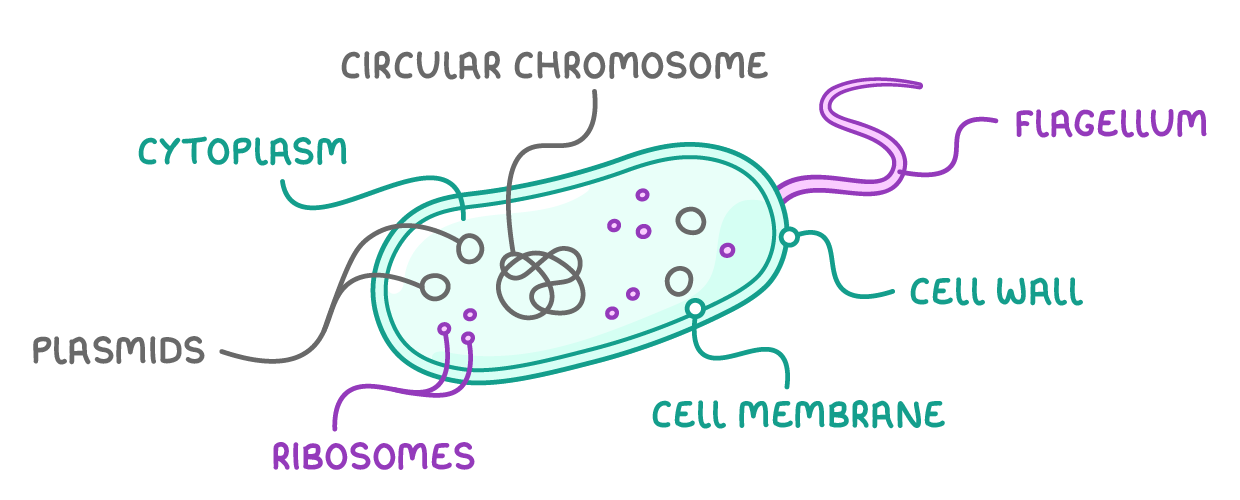
- A bacterial cell is a prokaryotic cell - much smaller than an animal or plant cell, and built more simply.
- It has cytoplasm and a cell membrane, with a cell wall around the outside - but the wall is made of a material other than the cellulose found in plant cell walls.
- It contains ribosomes, where proteins are made.
- It has none of the larger sub-cellular structures of a eukaryotic cell - no mitochondria and no chloroplasts.
Genetic material
- The most important difference is the genetic material: a bacterial cell has no nucleus.
- Instead, its DNA is a single circular chromosome - one loop of DNA - that floats freely in the cytoplasm and controls the cell's activities.
- A bacterial cell may also contain one or more plasmids - small separate rings of DNA carrying extra genes, such as genes for resistance to drugs.
- Plasmids can be passed from one bacterium to another.
Movement
Some bacteria have a flagellum - a long structure that rotates to move the cell along.
TermDefinition
Eukaryotic cellA cell that holds its genetic material inside a nucleus and contains membrane-bound sub-cellular structures.
Prokaryotic cellA small, simple cell that has no nucleus and stores its genetic material as a single loop of DNA.
NucleusThe sub-cellular structure that contains the genetic material and controls the activities of the cell.
CytoplasmA gel-like substance that fills the cell and is where most of its chemical reactions take place.
Cell membraneA partially permeable barrier that forms the boundary of the cell and controls which substances pass in and out.
MitochondriaThe sub-cellular structures where most of the reactions of aerobic respiration happen.
RibosomesThe sub-cellular structures where proteins are made.
Cell wallA rigid layer outside the cell membrane that supports the cell. In plant and algal cells it is made of cellulose.
Permanent vacuoleA large space filled with cell sap that helps keep a plant cell firm and supported.
ChloroplastA sub-cellular structure in plant and algal cells where photosynthesis takes place.
PlasmidA small ring of DNA, separate from the main chromosome, found in bacteria and often carrying extra genes.
Key points to remember
How were these notes?