6.10 - Viral Diseases
Measles
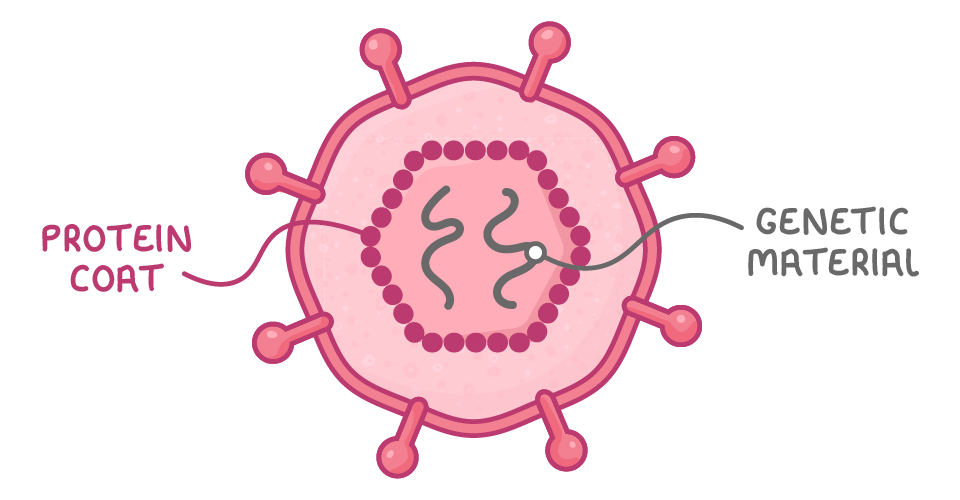
- Viruses are not cells and are not considered living - a virus is little more than a strand of genetic material inside a protein coat, far smaller than the cells it infects.
- A virus cannot reproduce on its own. It must get inside a living host cell and use that cell's machinery to make many copies of itself.
- The host cell is damaged in the process - this cell damage is a main reason viruses make us ill.
How measles spreads and its symptoms
- Type - Measles is a viral disease.
- Spread - By droplets breathed out when an infected person coughs or sneezes.
- Symptoms - A fever (a high temperature) and a red skin rash over much of the body.
Complications and prevention
- Measles can be serious, and sometimes fatal, if complications develop, for example:
- Pneumonia - A lung infection
- Encephalitis - Inflammation of the brain
- Most children are vaccinated against measles when young, which is why it is now rare in many countries.
HIV and AIDS
- HIV (human immunodeficiency virus) attacks the immune cells - a type of white blood cell.
- There is no cure, but the infection can be controlled with antiretroviral (antiviral) drugs, which stop the virus replicating inside the body.
How HIV is spread
- Through sexual contact.
- Through the exchange of body fluids such as blood - for example when drug users share needles.
Its spread can be reduced by using a condom during sex, and by people who inject drugs not sharing needles.
The stages of infection
- At first HIV causes a flu-like illness for a few weeks.
- The person then often feels well for several years while the virus attacks the immune cells.
- If the immune system becomes so badly damaged that the body can no longer fight off other infections or cancers, the person has late-stage HIV infection, or AIDS (acquired immune deficiency syndrome).
- With a weakened immune system, a person with AIDS becomes vulnerable to other infections such as tuberculosis and pneumonia.
Tobacco mosaic virus (TMV)
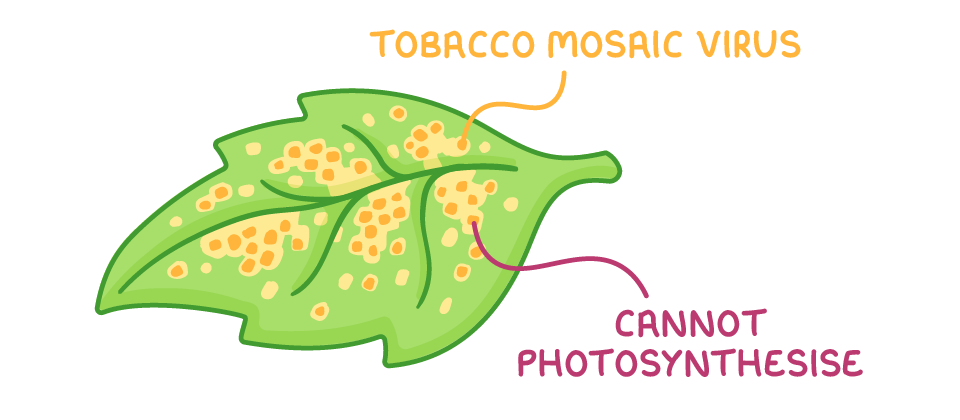
- Tobacco mosaic virus (TMV) is a virus that infects plants rather than humans.
- It affects many species, including tobacco and tomato plants.
- It produces a distinctive mosaic pattern of discolouration on the leaves.
Effect on the plant
- The discoloured patches cannot photosynthesise properly.
- As a result, the plant makes less sugar.
- This means the plant's growth is affected.
TermDefinition
Host cellA cell that a virus gets inside and uses to make copies of itself. In genetic engineering, it is the cell a new gene is put into.
HIVA virus that attacks the body's immune cells and can eventually lead to AIDS if it is not treated.
AIDSThe late stage of HIV infection, when the immune system is so badly damaged that the body can no longer fight off other infections.
Antiretroviral drugsMedicines that control an HIV infection by stopping the virus from replicating.
Key points to remember
How were these notes?