5.6 - Meiosis
What meiosis is
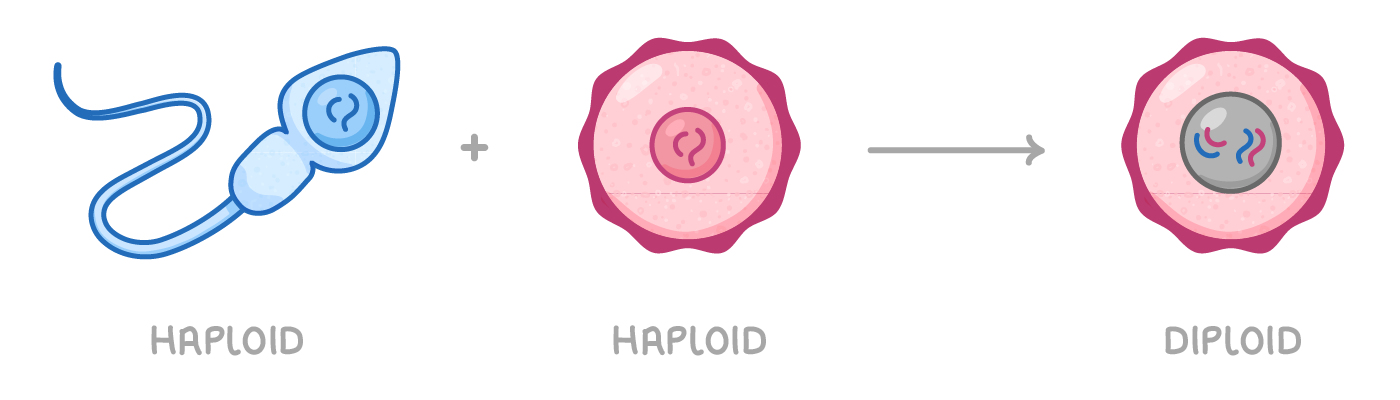
- A gamete is a sex cell (an egg or a sperm). Gametes carry only half the number of chromosomes of an ordinary body cell.
- A body cell is diploid - it has two copies of each chromosome.
- A gamete is haploid - it has just one copy of each chromosome.
Why halving the number matters
- At fertilisation, two gametes join and the new cell gets one set of chromosomes from each.
- These add back up to the full diploid number.
- So the chromosome number stays the same from one generation to the next, instead of doubling each time.
How meiosis produces gametes
- Meiosis is a special type of cell division that produces genetically different gametes with half the chromosome number.
- It only happens in the reproductive organs - the ovaries and testes in humans.
- It's called a reduction division because it reduces the chromosome number from the diploid number down to the haploid number.
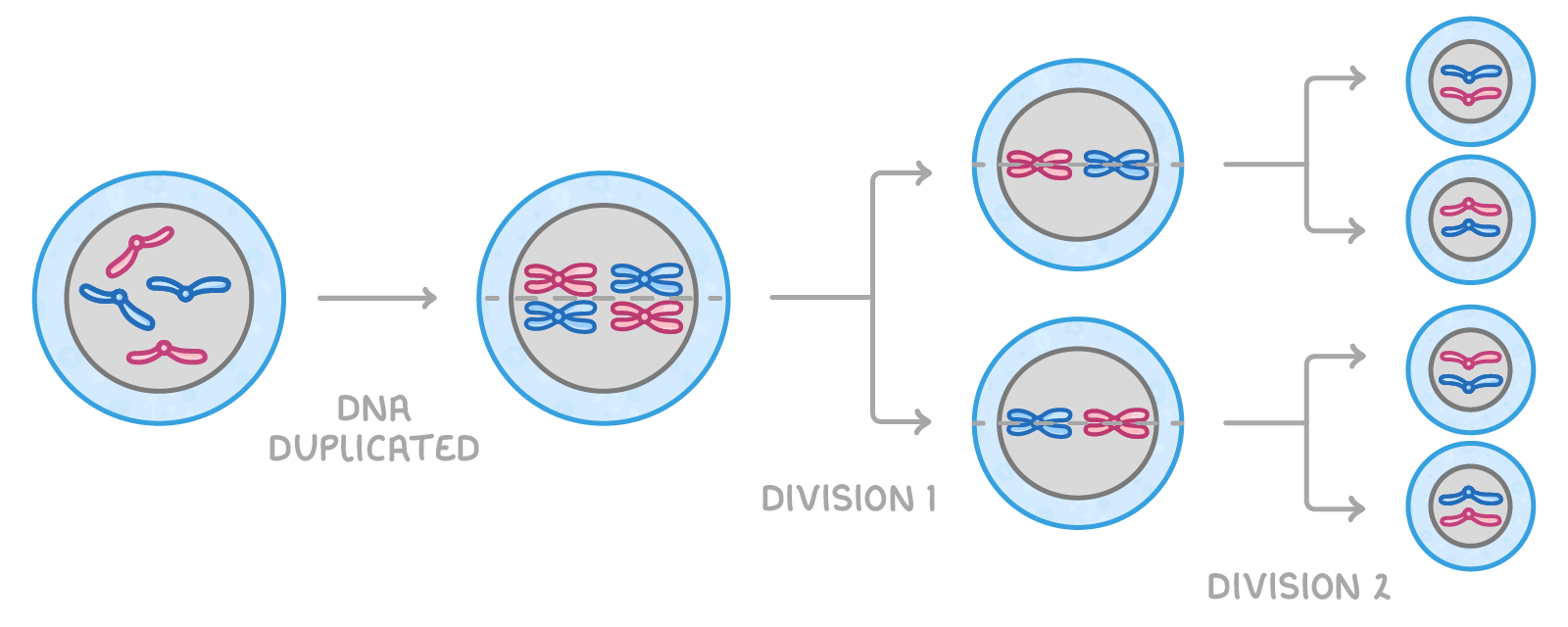
The process runs as follows:
- Before meiosis begins, in a period called interphase, the cell duplicates its DNA - each chromosome becomes an X shape in which each half is an exact copy of the other.
- The cell then divides twice, one division straight after the other.
- The result is four daughter cells, each a gamete with only a single set of chromosomes - half the number the original cell started with.
How meiosis creates variation
- Meiosis produces four gametes that are all genetically different from each other and from the parent cell.
- This happens because the chromosomes are shuffled during the process.
Shuffling the chromosomes
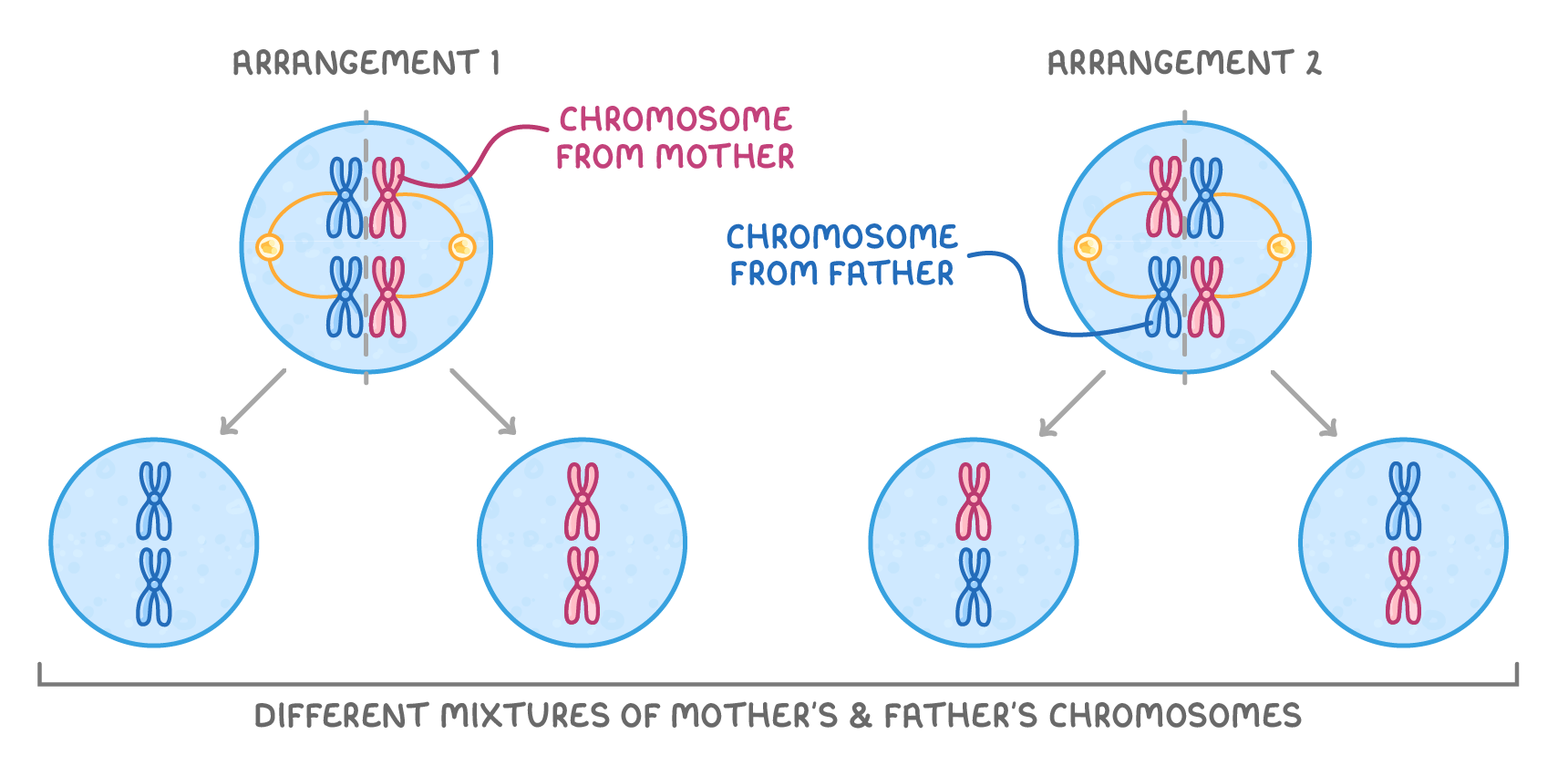
- A body cell carries its chromosomes in pairs - one of each pair originally came from the organism's mother, the other from its father.
- In the first meiotic division, the pairs line up and are pulled apart, so each new cell gets just one chromosome from each pair. The pairs can line up either way round, and each arrangement sends a different mixture into the new cells.
- Which one it gets is effectively random, so each gamete ends up with a different mixture of the mother's and the father's chromosomes.
- Because each gamete has its own random half of the chromosomes, the gametes are all genetically different from each other.
Why this matters
- At fertilisation, gametes from two parents join and the offspring inherit a new combination of chromosomes.
- This is the main reason offspring vary from their parents and from each other.
Comparing mitosis and meiosis
- Mitosis and meiosis are both types of cell division, but they differ in several clear ways.
- In short: mitosis copies a cell to give identical diploid cells, while meiosis halves the chromosome number to give varied haploid gametes.
Key differences
| Feature | Mitosis | Meiosis |
|---|---|---|
| Number of divisions | One division | Two divisions, one after the other |
| Number of daughter cells | Two | Four |
| Chromosome number | Full set - diploid, same as the parent cell | Half the set - haploid |
| Genetics of daughter cells | Genetically identical to each other and to the parent cell | All genetically different from one another |
TermDefinition
GameteA sex cell that carries half the number of chromosomes of an ordinary body cell.
DiploidDescribes a cell or nucleus that has two sets of chromosomes, one set from each parent.
HaploidDescribes a cell or nucleus that has a single set of chromosomes, which is half the normal number.
FertilisationThe fusion of the nucleus of a male gamete with the nucleus of a female gamete.
MeiosisA type of cell division that produces four genetically different haploid gametes (sex cells with a single set of chromosomes).
Reduction divisionA cell division that halves the chromosome number, from the diploid number (two sets of chromosomes) to the haploid number (one set).
Key points to remember
How were these notes?