6.12 - Plant Diseases
Plant diseases and their signs
- Plants can be infected by the same types of pathogens as animals: viruses, bacteria, and fungi.
- They can also be infested and damaged by larger organisms such as insects.
Three pathogens specific to plants
- Tobacco mosaic virus (a virus) - Gives a mottled, discoloured pattern on the leaves of many plants.
- Erysiphe graminis (a fungus) - Causes powdery mildew of barley, producing white, fluffy patches on the leaves. These stop the leaves photosynthesising properly, lowering the crop yield.
- Agrobacterium tumefaciens (a bacterium) - Lives freely in some soils and on plant roots, and causes crown gall disease. When the bacteria get into a plant, they make growths (tumours) called galls form on the roots, stems, and branches. These galls damage the plant's tissues and restrict the flow of water through it, so the plant weakens and may eventually die.
Common signs of disease
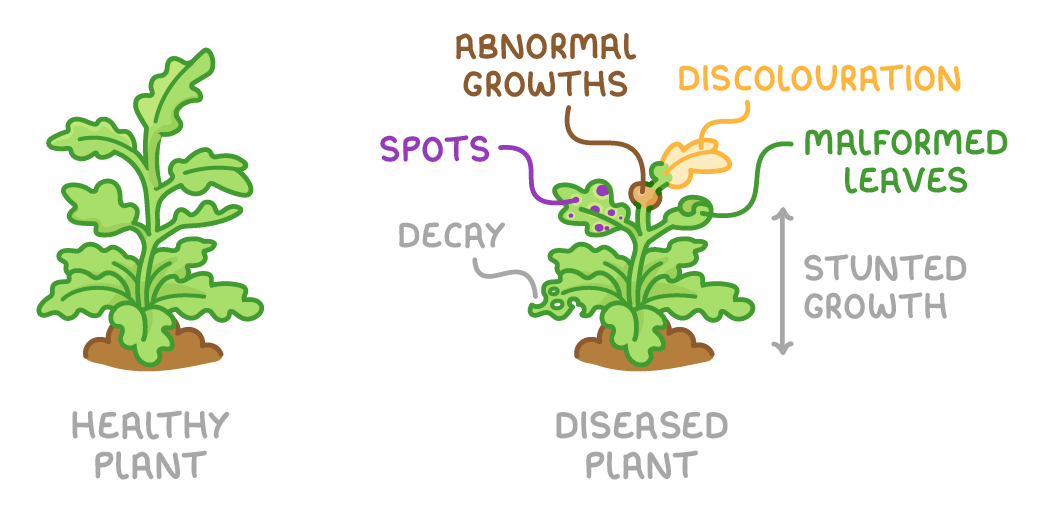
It's usually fairly clear when a plant has a disease, because diseased plants show characteristic signs:
- Stunted growth
- Spots on the leaves
- Patches of decay or rot
- Abnormal growths such as lumps
- Malformed stems or leaves
- Discolouration
Different diseases produce different combinations of these signs, which is what makes it possible to tell one disease from another.
TermDefinition
GallA growth or tumour on a plant's roots, stems or branches. Some are caused by bacteria, as in crown gall disease.
Key points to remember
How were these notes?