9.2 - Food & Drink from Microorganisms
Bread-making
- Yeast is a single-celled fungus (Saccharomyces cerevisiae) used to make bread rise.
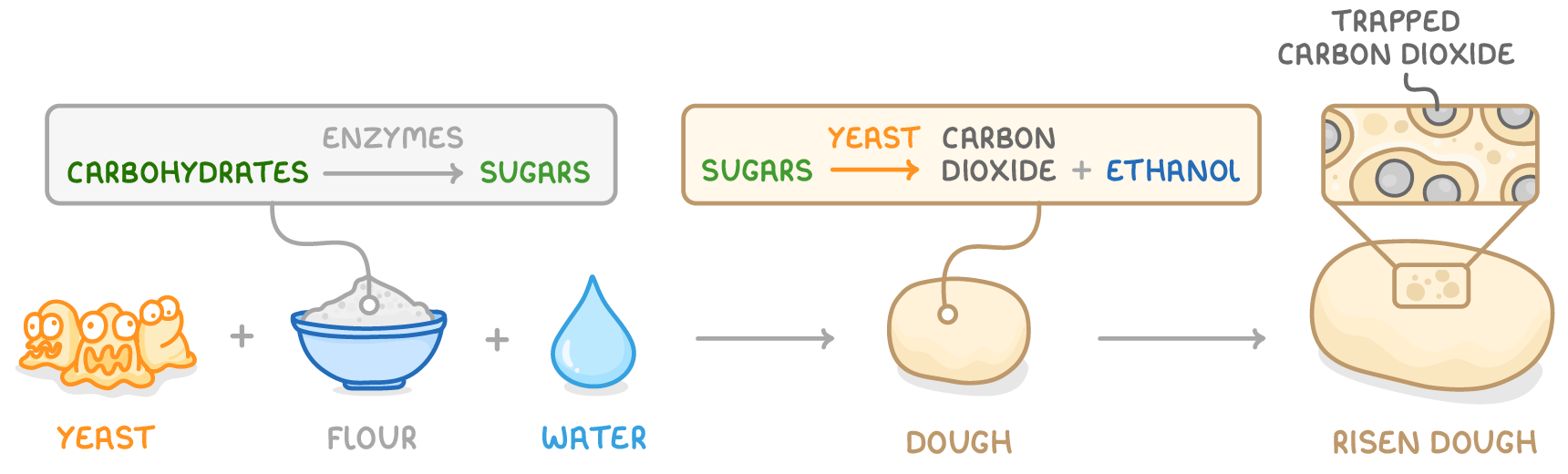
- To make bread, yeast is mixed with flour, water, and a little sugar to form a dough, which is left in a warm place.
- Enzymes break down the carbohydrates in the flour into sugars, and the yeast uses these sugars in respiration.
How the dough rises
- While oxygen is still present, the yeast respires aerobically, producing carbon dioxide.
- Once the oxygen runs out, the yeast switches to anaerobic respiration (also called fermentation), which produces both carbon dioxide and alcohol (ethanol).
- The carbon dioxide is trapped in bubbles in the dough. These pockets of gas expand, so the dough rises.
Baking the dough
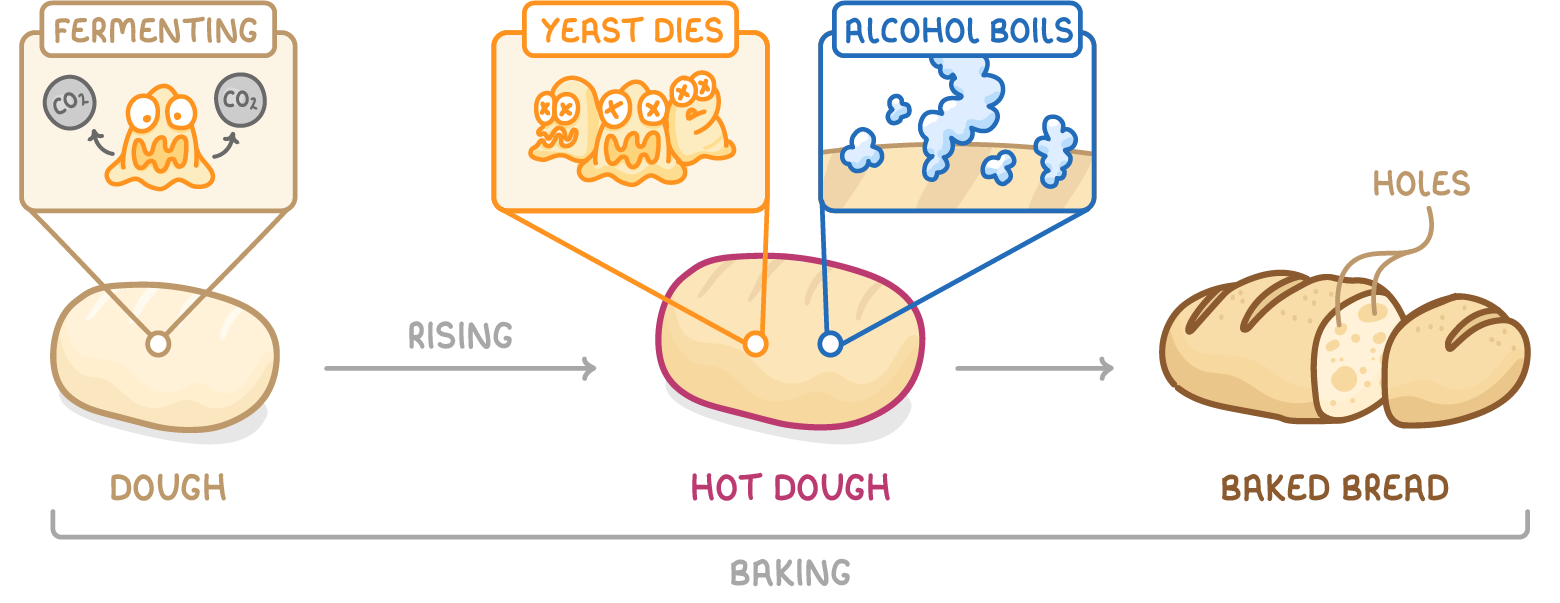
- The dough is baked in an oven.
- The yeast keeps fermenting until the dough gets hot enough to kill it, at which point the bread stops rising.
- Any alcohol made during anaerobic respiration is boiled away by the heat.
- The pockets where the carbon dioxide was trapped are left behind as the holes in the baked bread.
Yoghurt-making
- Yoghurt is essentially fermented milk, made using bacteria.
- The bacteria used are Lactobacillus.
- Fermentation is the breakdown of sugars by microorganisms to release energy, usually by anaerobic respiration.
The stages of making yoghurt
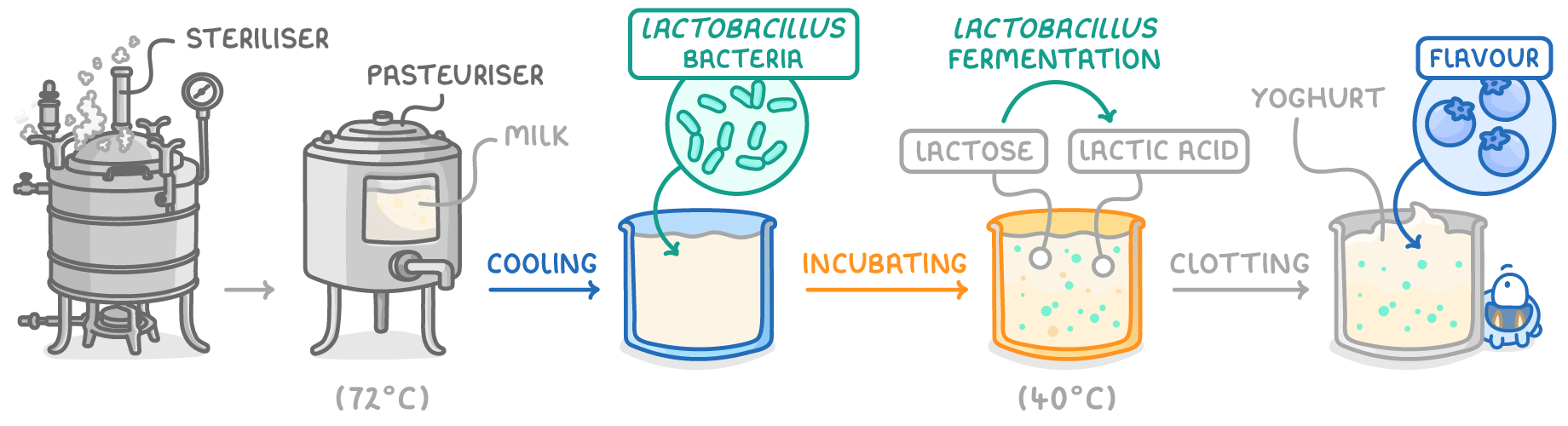
- Sterilise the equipment to kill off any unwanted microorganisms.
- Pasteurise the milk - heat it to about 72 °C for 15 seconds to kill any harmful microorganisms.
- Cool the milk.
- Add Lactobacillus bacteria and incubate (keep warm) at around 40 °C.
- The bacteria ferment the lactose - the sugar naturally present in milk - converting it into lactic acid.
- The lactic acid makes the milk proteins clot, so the milk solidifies into yoghurt.
- Flavours (such as fruit) and sometimes colours may be added, then the yoghurt is packaged.
TermDefinition
FermentationAnaerobic respiration in yeast and other microorganisms, which breaks down sugars to release energy.
LactoseA sugar found in milk.