Homeostasis - exam practice
Homeostasis
Question 1 of 5
The endocrine system coordinates many internal functions of the body.
Give three ways in which the endocrine system differs from the nervous system.
The response of the skin to cold weather is an involuntary action.
How is an involuntary action different from a voluntary action?
Give the name of the process by which the internal conditions of the body are maintained.
A man goes for a run.
Exercising causes the man's body temperature to rise.
When the man’s core body temperature rises, his rate of sweating increases.
Explain why.
The man arrives home after his run.
The man’s skin looks very red.
Describe what happened to the blood circulation in his skin to cause this change in colour.
The man has a very cold shower.
This makes the man shiver.
What causes shivering?
Shivering increases the man's body temperature.
Explain how.
A scientist studied two populations in very different environments.
One of the populations lives in a hot desert. The other population lives in a rainforest.
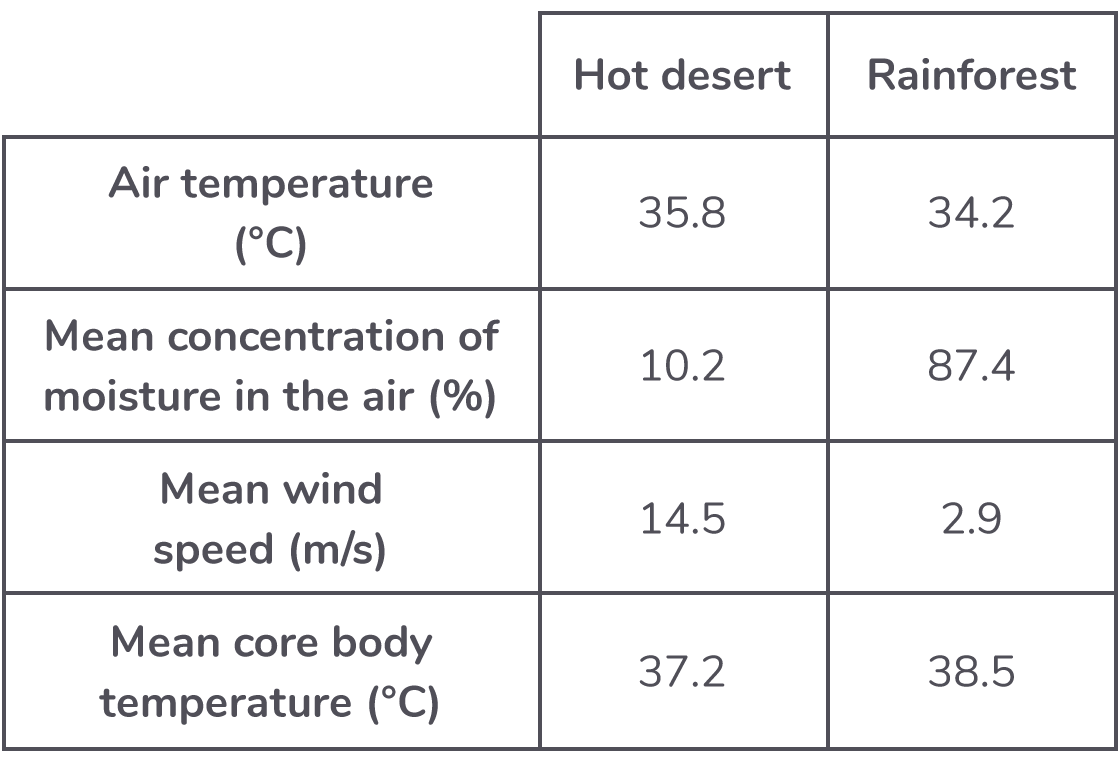
The scientist recorded the air temperature, mean humidity levels and mean wind speed, in the desert and in the rainforest.
The scientist also recorded the core body temperature of members of both populations.
The data was recorded in the table below.
Why is it important to maintain a constant body temperature?
Use information from the table and your prior knowledge to explain the difference in the mean core body temperature of the members of the two tribes.
What happens to blood vessels if a persons core body temperature is too high?
Homeostasis keeps conditions in the body relatively constant.
Body temperature and the amount of water in the body are both controlled by homeostasis.
The human body maintains a constant core body temperature of around 37°C.
Describe what happens in the body to keep the body temperature constant.
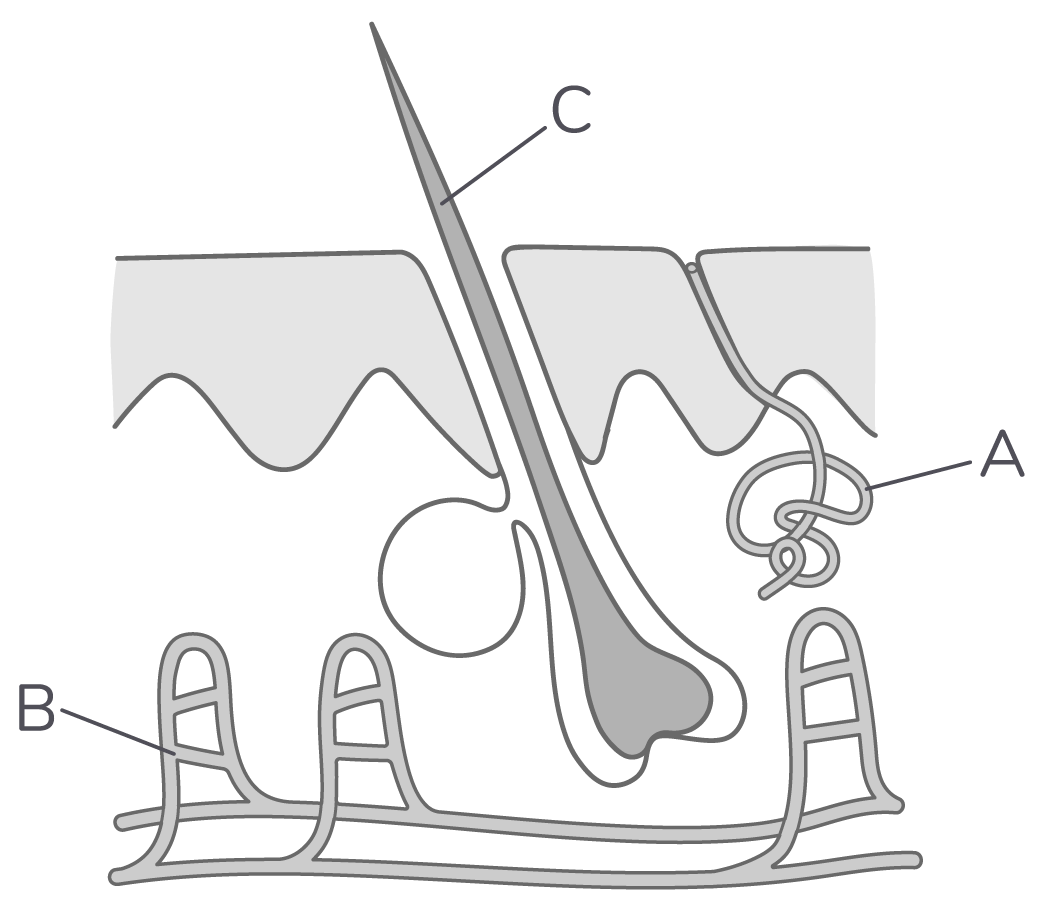
The diagram below shows a cross section of human skin.
Name structures A, B and C.
Describe the appearance of human skin when the temperature drops.
Use information from the diagram and your own knowledge to explain the change in appearance of human skin following exposure to a cold environment.