Cell Division, Differentiation & Stem Cells - exam practice
Cell Division, Differentiation & Stem Cells
Question 1 of 5
Mitosis is a process of cell division in eukaryotic cells.
During mitosis, a parent cell divides to produce two identical daughter cells.
Give two reasons why new cells need to be produced throughout an organism's life.
Which cells, found in the early stages of embryonic development, have the potential to differentiate into specialised cells?
Complete the diagram to depict the levels of organisation found within a multicellular organism.
Cell → → Organ → → Organism
Name the organ in the human body responsible for pumping blood around the body.
Mitosis is a fundamental process of cell division that occurs in eukaryotic organisms.
During mitosis, a single cell divides into two identical daughter cells.
The picture below shows a stage of mitosis.
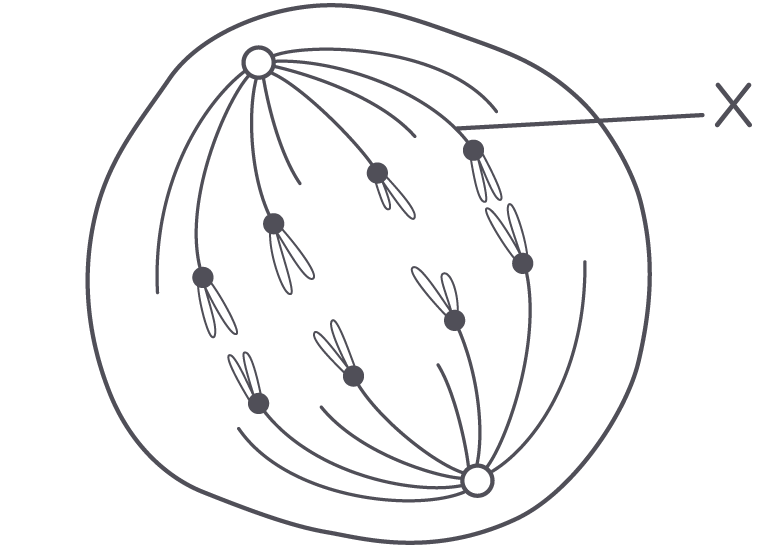
Name structure X.
Describe what happens immediately before mitosis.
How many cells are produced from one fertilised egg, after three cell divisions by mitosis?
Following mitosis, which process causes the divided cells to become specialised?
A student is trying to map out the sequence of events that occur during mitosis.
Put the following statements about mitosis in the correct order by writing the numbers1 to 6 into the table.
Plant cells divide by mitosis.
Before mitosis can take place, the cell prepares for cell division by obtaining nutrients, synthesising molecules, and replicating its DNA.
Which two cell components are duplicated before plant cells start to divide?
Plant cells divide by mitosis so that the plant can grow.
Give one other reason plant cells divide by mitosis.
Describe the process of mitosis from when the parent cell's chromosomes become visible to the production of two identical daughter cells.
The image below shows a cell going through the different stages of the cell cycle.
Assign numbers from 1 to 6 to each figure to arrange them chronologically.