2.3 - Stem Cells in Medicine
Treating disease with stem cells
- Stem cells are unspecialised cells that can divide and differentiate (turn into) specialised cells.
- This ability to become other cell types is exactly what makes them useful in medicine.
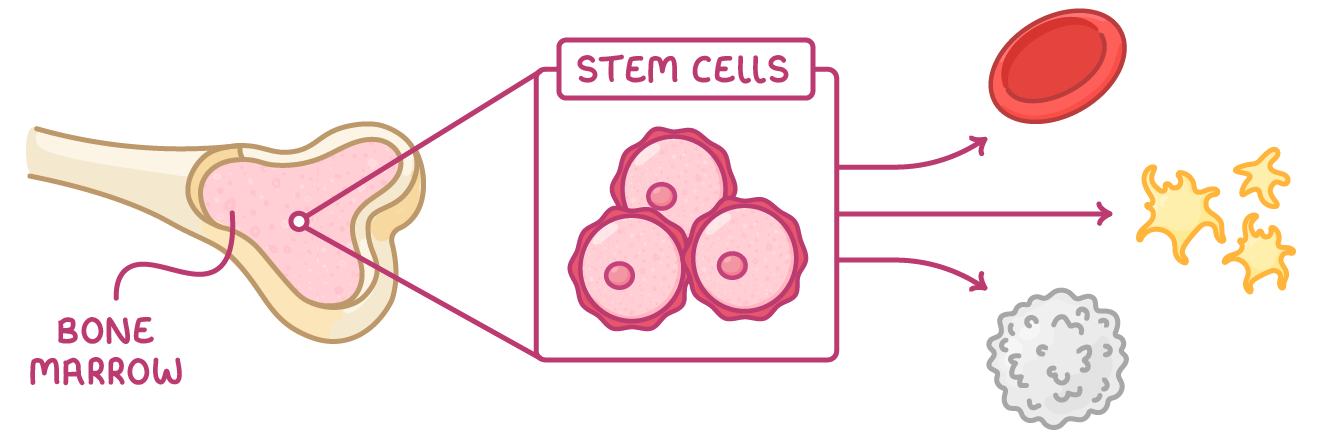
Adult stem cells to treat leukaemia
- Leukaemia is a cancer of the blood and bone marrow.
- It can be treated with a bone-marrow transplant: the patient's faulty bone marrow is replaced with healthy bone marrow from a donor.
- Bone marrow contains stem cells that produce all the different types of blood cell in the right proportions.
- The transplanted stem cells then go on making healthy blood cells for the patient.
Growing replacement cells in the lab
- Stem cells can be grown in the laboratory and made to differentiate into a particular type of specialised cell.
- These could then be used to replace cells a patient has lost or damaged.
- Embryonic stem cells are especially promising because they can become any type of cell.
Replacement cells grown this way could help conditions that are otherwise very hard to treat:
- Insulin-producing cells - For someone with diabetes
- Nerve cells - For someone paralysed by a spinal injury
- Heart muscle cells - For someone with heart disease
Getting a culture to differentiate into just the one wanted cell type is difficult and still the subject of a lot of research. The potential to grow replacement cells and tissues is the reason for the strong scientific interest in stem cells.
The risks and ethics of using stem cells
Using stem cells in medicine carries several risks, and the use of embryonic stem cells also raises ethical and religious issues.
Risks of using stem cells
- Viral contamination - Stem cells grown in the laboratory can become contaminated with a virus. If undetected, the virus could be passed on to the patient and make them more ill.
- Tumour formation - Stem cells divide quickly, so transplanted cells whose division isn't properly controlled inside the patient may keep dividing and form a tumour, or differentiate into unwanted types of cell.
- Rejection - If the transplanted cells weren't grown from the patient's own stem cells, the immune system may recognise them as foreign and attack them. The patient then has to take drugs to suppress the immune response, which leave them more vulnerable to other infections.
- Harsh pre-treatment - When stem cells treat leukaemia, clearing the faulty bone marrow can involve radiotherapy or chemotherapy, which kills healthy cells as well as cancerous ones.
Ethical and religious issues
Embryonic stem cells raise ethical and religious concerns because the embryos are destroyed when the stem cells are taken from them.
Opinions on this are divided:
- Against - Some people argue that each embryo is a human life, or has the potential to become one, so shouldn't be used for experiments. They argue scientists should develop other sources of stem cells that don't require embryos.
- For - Others argue that curing patients who are suffering matters more than the rights of the embryos. They point out that the embryos used are usually unwanted ones from fertility clinics that would otherwise be destroyed.
Because the issue is so contested, the use of stem cells in research and medicine is tightly regulated by the government in most countries.
TermDefinition
Stem cellAn unspecialised cell that can divide to produce more stem cells or develop into specialised cells.
DifferentiationThe process by which a cell changes to become specialised for a particular function.
Embryonic stem cellA stem cell from an early embryo that can differentiate into any type of cell in the body.
Key points to remember
How were these notes?