9.5 - Invasive Species
What an invasive species is
- An invasive species is a non-indigenous (non-native or foreign) species that has been brought into an area where it does not naturally occur, and that spreads there and harms the native species.
- Native (indigenous) species are those that already live in the area.
How invasive species arrive
- Intentionally - Deliberately introduced, for example for food or for hunting.
- Unintentionally - Arriving by accident, such as a stowaway in international cargo or on a ship.
Why they spread and take hold
- Once an invasive species reaches a place it does not belong, it often does well and spreads.
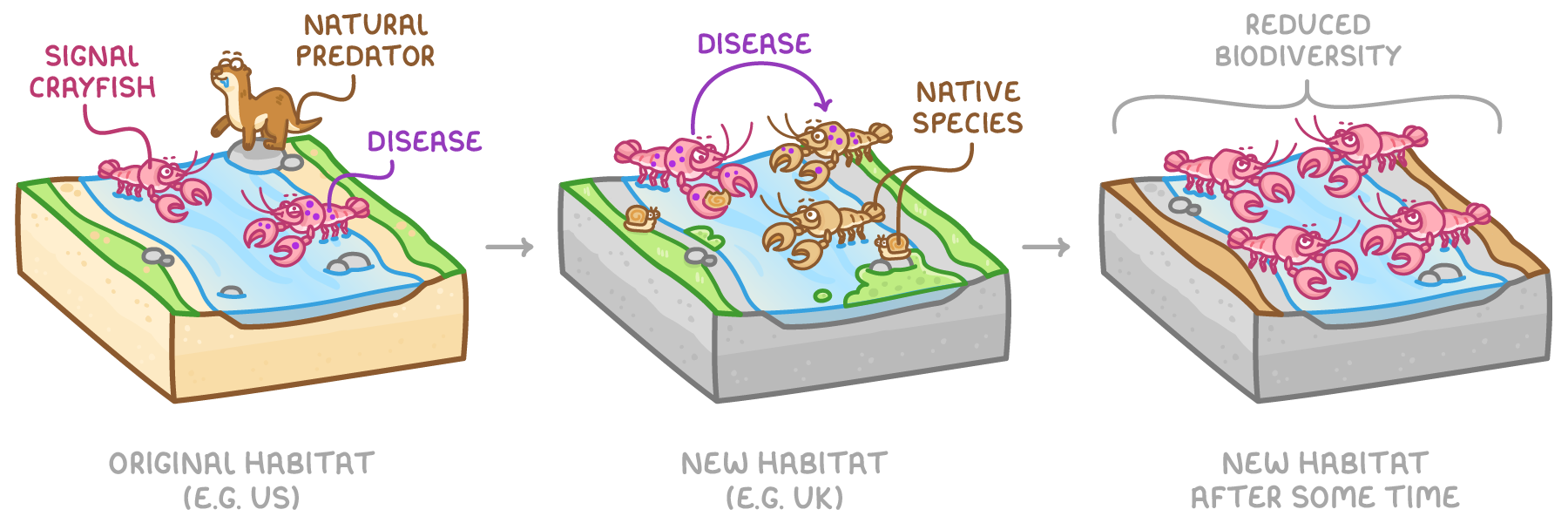
- This happens because the natural predators and diseases that kept its numbers in check in its home range are absent.
- With nothing to keep its population down, it can grow and establish quickly, becoming common in its new habitat.
- This lack of natural controls is what lets a non-native species take hold and start to cause problems for the native species already living there.
The impact of invasive species
- Once an invasive species establishes itself, it reduces the biodiversity of the habitat - the variety of living things it contains.
- Because invasive species lower the number of native species, they are an important cause of biodiversity loss, and can push native species towards becoming endangered or even extinct when those species can't defend themselves against, or compete with, the invaders.
How invasive species reduce biodiversity
- Competition - It competes with native species for resources such as food, light, and shelter. Being better at getting them, it out-competes the natives, whose numbers fall until they may die out locally.
- Predation and takeover - It may prey on native species directly, or grow and reproduce so fast that it takes over an area and crowds out the species that were there before.
- No natural predators - With nothing to keep its numbers down in its new home, its population can grow unchecked, and native species may be unable to defend themselves against it.
- New diseases - Some invasive species bring diseases to which native species have no resistance, so the disease spreads and kills large numbers of them.
Examples in the UK
- Signal crayfish - Introduced to UK rivers for food, but they prey on and out-compete many native river species, and carry a disease that kills the native crayfish.
- Japanese knotweed - Brought to the UK as an ornamental plant, it grows so fast that it smothers other plants and reduces the variety of species that can live there.
TermDefinition
Invasive speciesA species that does not naturally occur in an area but has been brought into it, where it spreads and harms the native species.
Native speciesA species that already naturally lives in an area.
BiodiversityThe variety of all the different species of organisms on Earth, or within an ecosystem.
Key points to remember
How were these notes?