5.9 - Vaccination
What a vaccine is and why we vaccinate
- The first time a pathogen infects you, your body takes a while to make enough of the right antibody to clear it. During that time you can become ill - sometimes seriously.
- Once you've fought a pathogen off, you're usually immune to it. If the same pathogen gets into your body again, you make the right antibody so quickly that the pathogen is destroyed before it can make you ill.
- A vaccine is a way of gaining that immunity without ever having to catch the disease first.
How a vaccine works
- A vaccine contains a safe form of the pathogen you want protection against.
- This safe form cannot make you ill, but it still triggers your body to build up its defences against the pathogen.
- Vaccines can be made against both bacterial and viral diseases - for example tuberculosis, polio, and measles.
How vaccination produces immunity
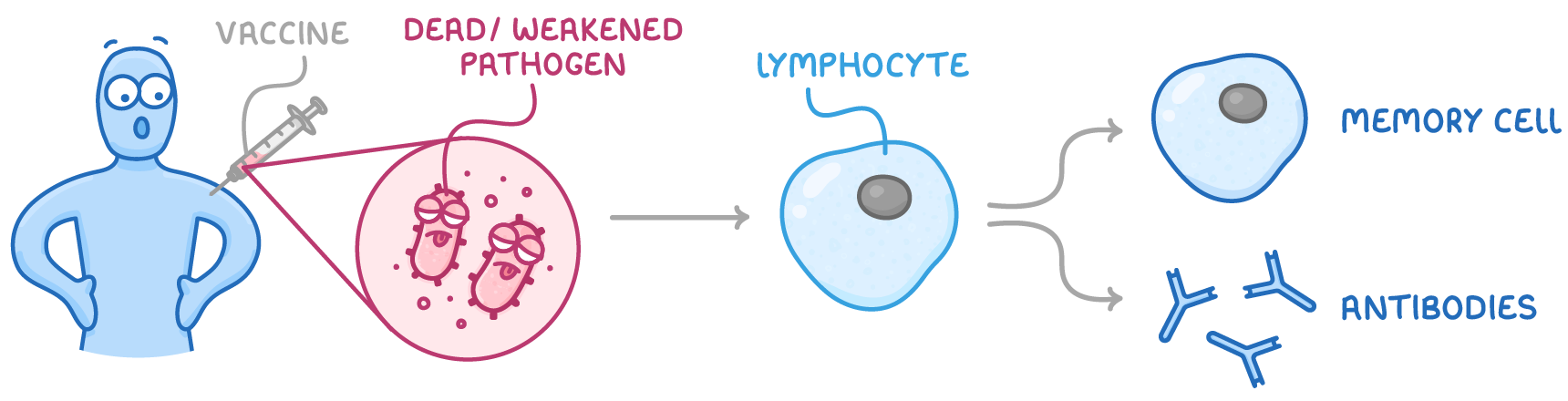
- A vaccine contains a safe form of the pathogen: it may be the pathogen killed, inactivated or weakened, or just the antigens isolated from it.
- It's usually given by injection.
- Antigens are the unique surface molecules the immune system recognises as foreign.
- The safe form can't make you ill, but it still carries the pathogen's antigens - so the body responds exactly as it would to the real pathogen.
The response to the vaccine
- White blood cells called lymphocytes produce antibodies against those antigens.
- At the same time, memory cells are made and stay in the blood for a long time, giving long-term immunity.
The secondary response
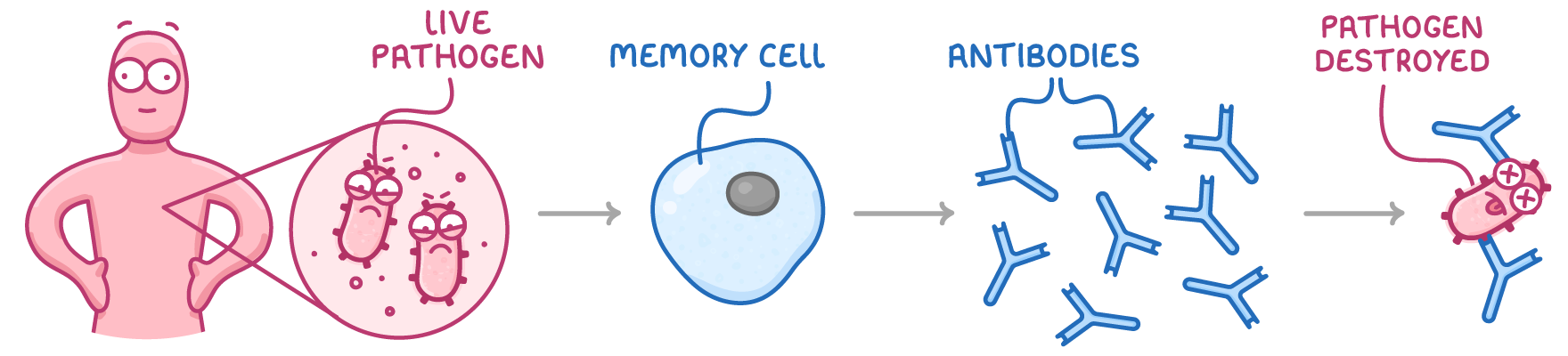
- If the live pathogen of the same type later enters the body, the memory cells recognise its antigens at once.
- They trigger the rapid production of large amounts of the right antibody.
- This secondary response is much faster and stronger than the first, so the pathogen is destroyed before it can build up and make you ill.
TermDefinition
VaccineA dead, weakened or inactive form of a pathogen (or just its antigens) that makes the body build immunity without causing the disease.
AntigenA unique molecule on the surface of a cell or pathogen that the immune system can recognise.
Key points to remember
How were these notes?