5.13 - Cardiovascular Disease
Coronary heart disease
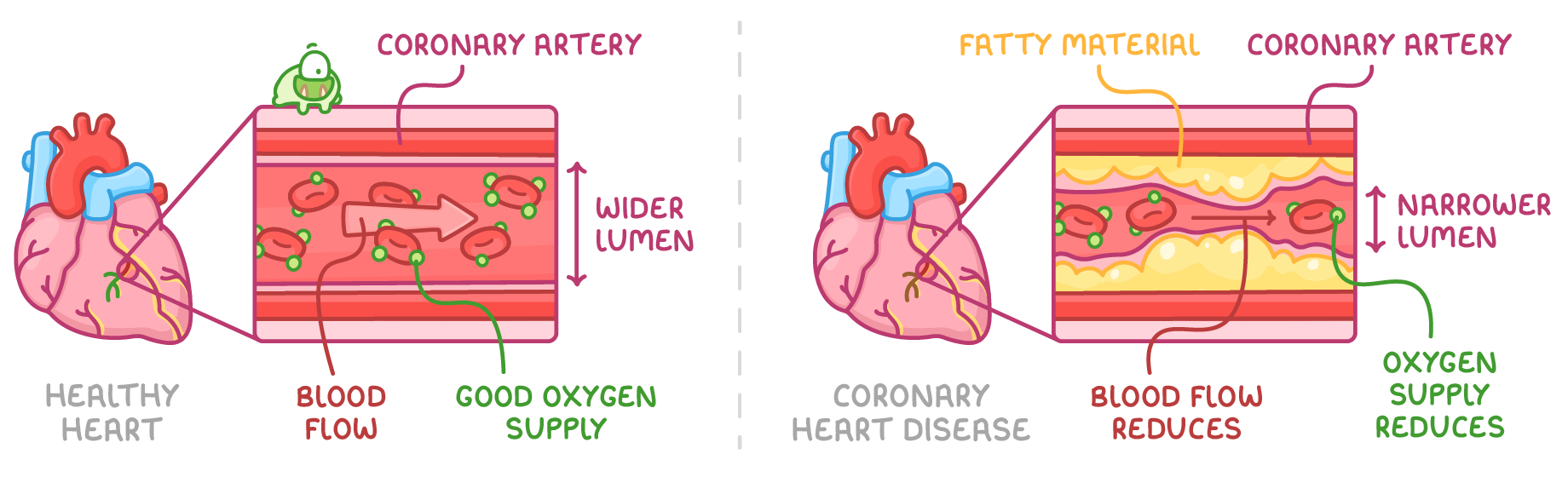
- The coronary arteries branch from the base of the aorta and run over the surface of the heart, supplying the heart muscle itself with oxygen-rich blood so it can keep contracting.
- Coronary heart disease is what happens when these arteries become blocked.
How the arteries become blocked
- Over time, layers of fatty material build up on the inside walls of the coronary arteries.
- This narrows the space inside them (the lumen), so blood flow through the arteries is restricted and less oxygen reaches the heart muscle.
- The heart muscle needs a constant supply of oxygen to respire and keep working, so this lack of oxygen puts the heart under strain.
Heart attacks and strokes
- The fatty deposits can harden and damage the artery wall. A piece breaking off can trigger a blood clot.
- If a clot blocks a coronary artery completely, the heart muscle beyond the blockage is cut off from blood altogether, causing a heart attack - part of the heart muscle is starved of oxygen and its cells die.
- The same kind of blockage can happen in the blood vessels supplying the brain. There it cuts off oxygen to the brain cells, which die, resulting in a stroke, with reduced brain function.
- A number of risk factors, including smoking, raise a person's chance of developing the disease.
Treating cardiovascular disease with lifestyle changes
- Cardiovascular disease can be treated in three broad ways: lifestyle changes, medication, and surgery.
- These are often used together, and each has its own balance of benefits and drawbacks.
- Lifestyle changes are usually tried first.
A person may be advised to:
- Eat a healthy diet low in saturated fat
- Exercise regularly
- Stop smoking
These changes lower the risk of developing the disease and form part of the treatment once someone has it.
Benefits and drawbacks
- Advantage - They have almost no harmful side effects.
- Drawback - They take a lot of self-discipline to keep up.
Drug treatments for cardiovascular disease
- The main medication used to treat cardiovascular disease is a group of drugs called statins.
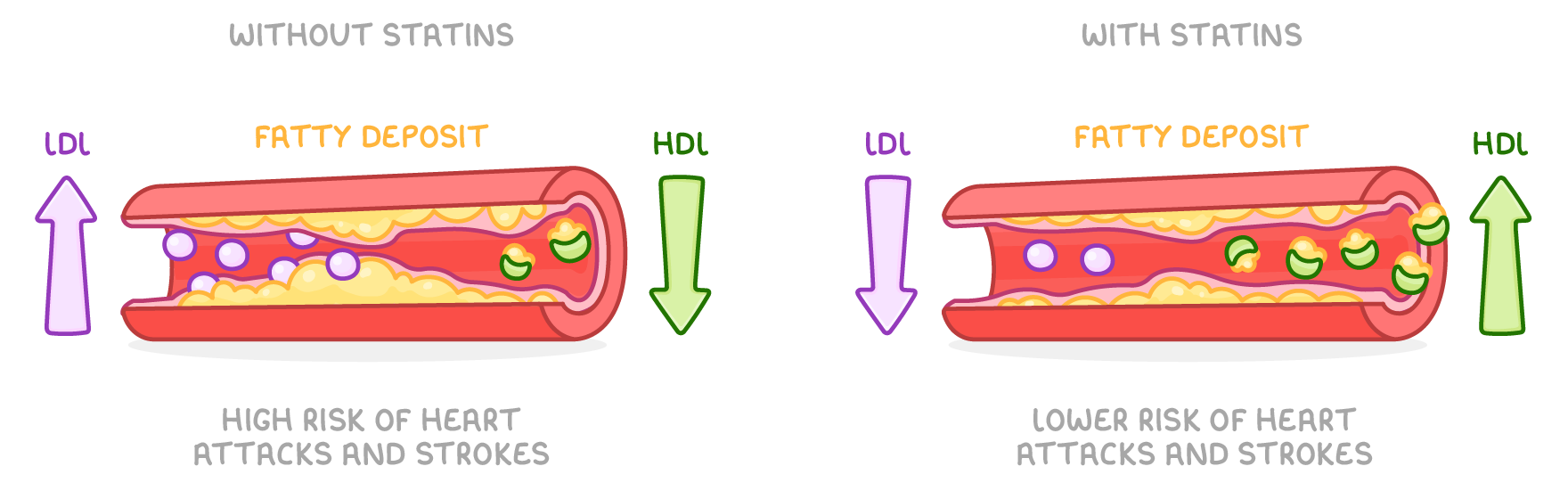
- Statins change the balance of cholesterol in the blood.
How statins work
- They reduce the amount of 'bad' (LDL) cholesterol, which slows the build-up of fatty deposits in the arteries.
- They can raise the level of 'good' (HDL) cholesterol, which helps remove the bad type.
- This lowers the overall risk of heart attacks and strokes.
Drawbacks of statins
- They must be taken regularly over years.
- They take time to work.
- They can cause side effects, ranging from headaches to liver or kidney damage.
Surgical treatments for cardiovascular disease
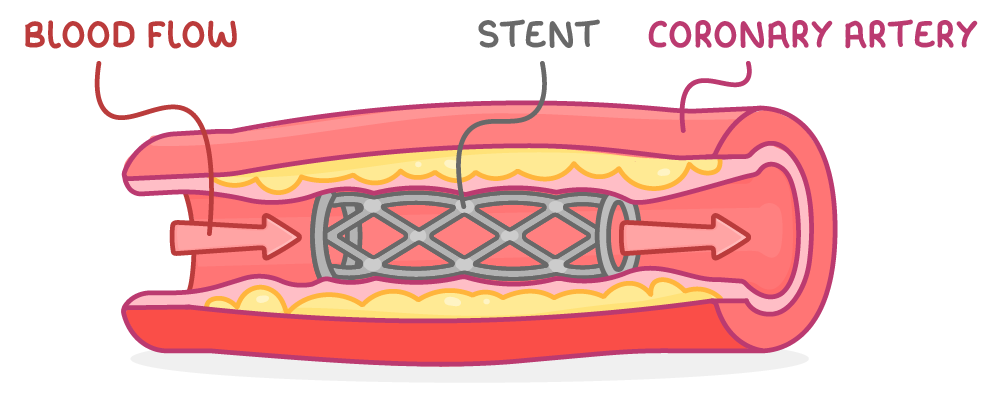
- A stent is used to open up a narrowed coronary artery.
- It is an expandable tube placed inside the artery to hold it open.
- This keeps blood flowing to the heart muscle, so the risk of a heart attack falls.
Advantages and disadvantages of stents
| Advantages | Disadvantages |
|---|---|
| Work for a long time. | Carry the usual surgical risks of an operation. |
| Recovery is fairly quick. | A blood clot (thrombosis) can form near the stent. |
TermDefinition
Coronary artery
Coronary heart disease
Statin
Stent