20.2 - Human Impact on Biodiversity
Biodiversity and reducing it
- Biodiversity is the variety of all the different species of organisms living on Earth, or within a particular ecosystem, together with the number of individuals within each species.
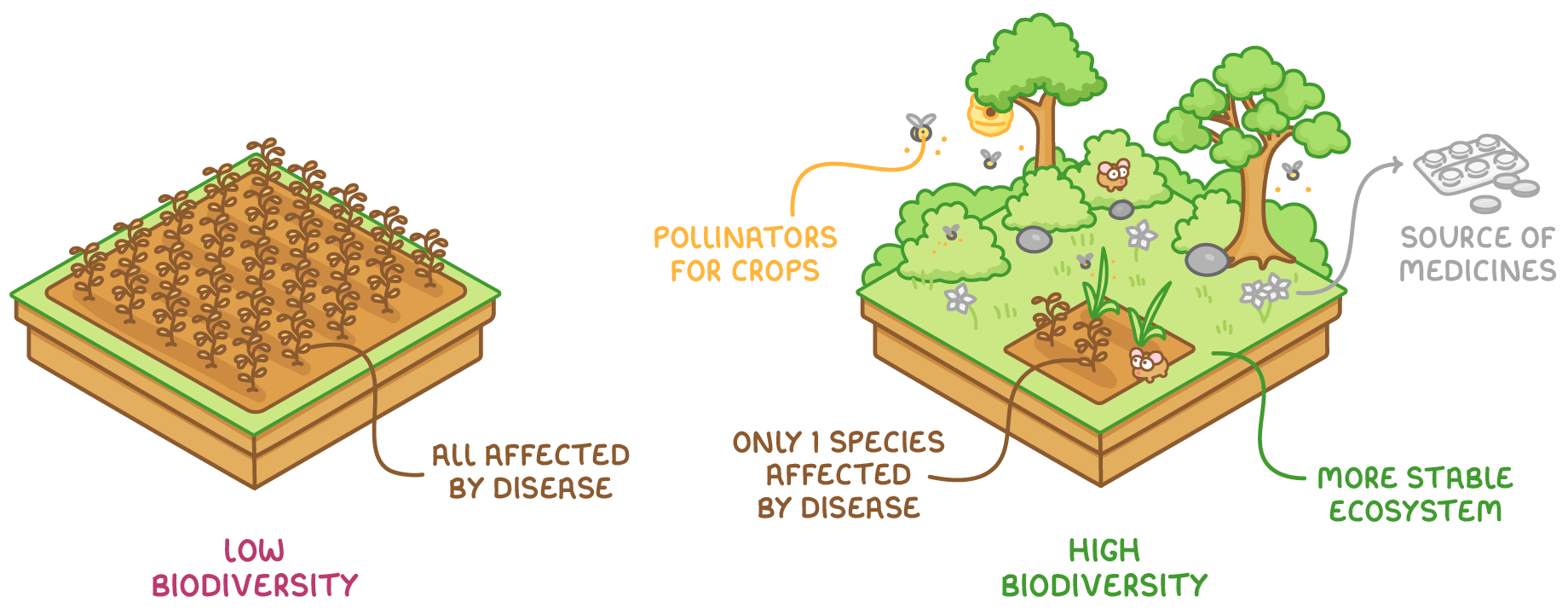
- A woodland or rainforest - full of animals, plants, fungi, and bacteria - has a far higher biodiversity than a single ploughed field.
Why a high biodiversity matters
- More stable ecosystems - When many species live together, losing any one of them (to disease, for example) is less damaging. The other species have many other feeding and supporting relationships to fall back on, rather than depending heavily on the one that's gone.
- Crops need pollinators - A great many of our crops depend on animal pollinators.
- Source of medicines - More than half of new medicines are derived in some way from living organisms.
- Every species lost is a possible food source or medicine lost with it, so the future of the human species relies on maintaining a good level of biodiversity across the planet.
The problem
- Many human activities are reducing biodiversity:
- Using up resources
- Destroying habitats
- Producing pollution and waste
- As biodiversity falls, so does the stability and the benefits it provides.
TermDefinition
BiodiversityThe variety of all the different species of organisms on Earth, or within an ecosystem.