Protein Synthesis - exam practice
Protein Synthesis
Question 1 of 3
p53 is a protein known as the "guardian of the genome".
p53 regulates gene expression and controls DNA repair, cell division, and cell death.
Mutations in the p53 gene are found in over half of all human cancers.
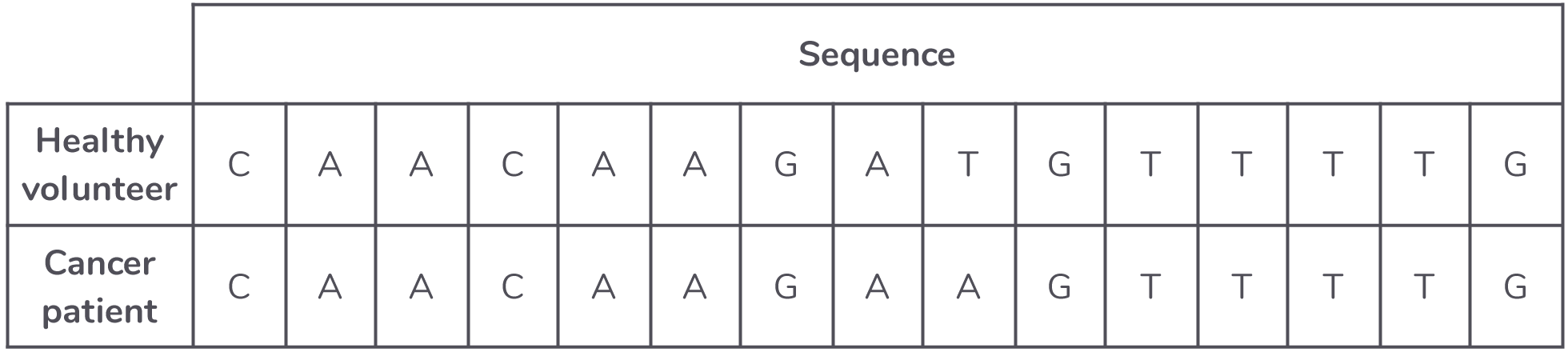
Scientists sequenced the p53 gene from a healthy volunteer and from a cancer patient.
The table shows the sequences of a part of the p53 gene from both the healthy volunteer, and the cancer patient.
The figure below shows the key needed to predict the translated amino acid sequence coded-for by this section of the p53 protein.
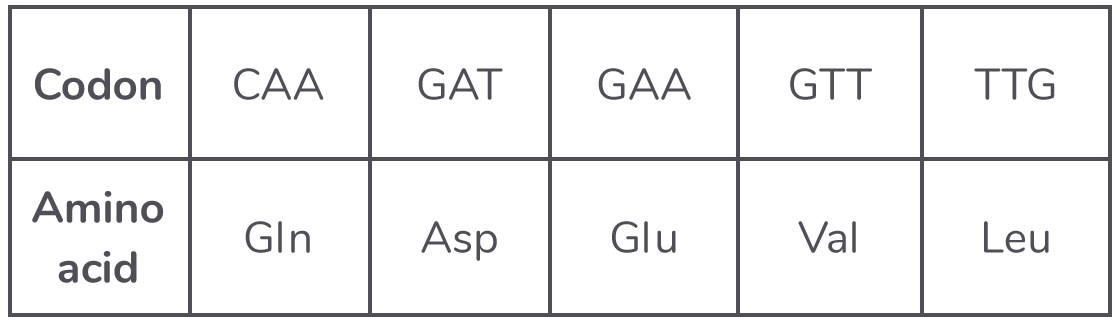
Explain how the mutation in the cancer patient could affect the functioning of the p53 protein.
Suggest a reason why a mutation in the gene coding for p53 could be harmful.
Some portions of DNA do not code for proteins.
How do non-coding parts of DNA affect gene expression?
Cystic fibrosis is a recessive genetic disorder caused by a mutation in the CFTR gene.
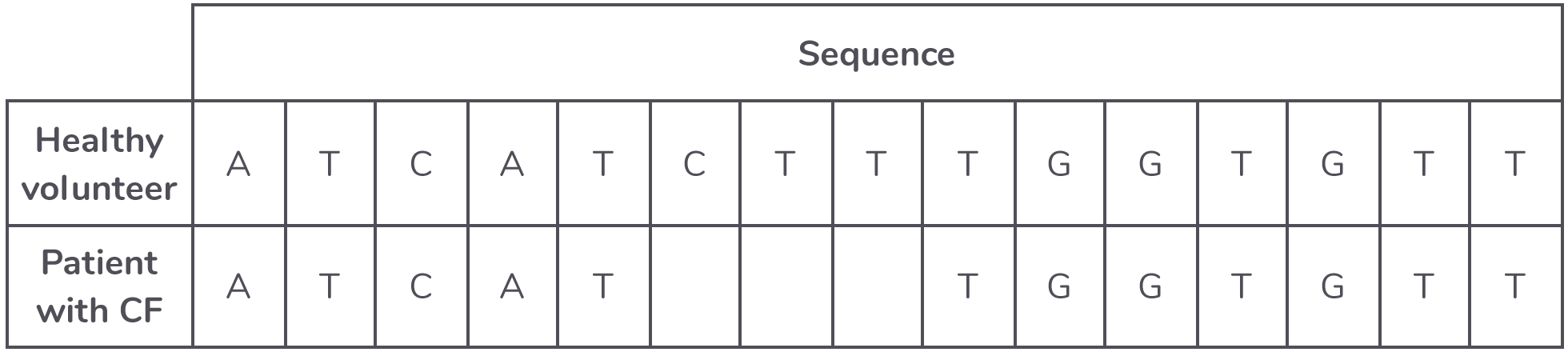
The most common mutation that causes cystic fibrosis is a deletion of three nucleotides that results in the loss of an amino acid at position 508 in the protein sequence.
The table shows DNA sequences from a healthy person and from a patient with cystic fibrosis.
The table below shows the key needed to predict the translated amino acid sequences.
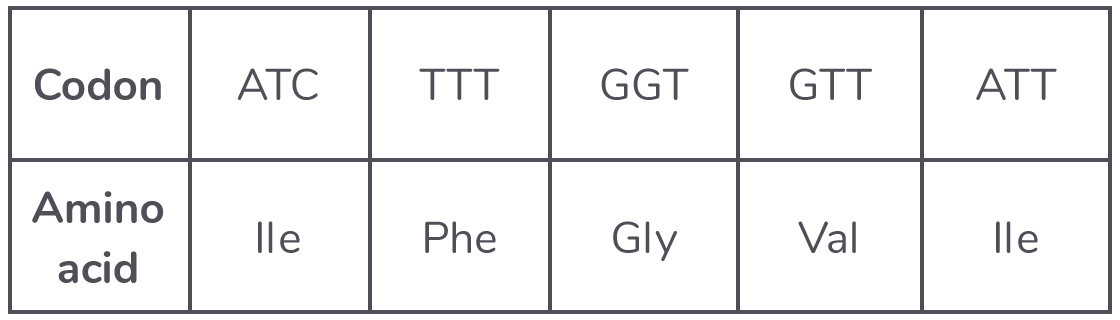
Translate the healthy and mutated DNA sequences into their corresponding amino acid sequences.
What is the effect of the mutation on the amino acid sequence?
Explain how a change in the DNA sequence of the CFTR gene can result in the production of a different protein.
Cystic fibrosis is a recessive disorder.
State the possible genotypes of the parents of a child with cystic fibrosis.
A faulty CFTR protein leads to the production of thick, sticky mucus in the respiratory system of patients with cystic fibrosis.
The mucus blocks the patients' bronchioles.
Suggest why people with cystic fibrosis often have lung infections.
Suggest why gas exchange is more difficult in a patient with cystic fibrosis.
Familial hypercholesterolemia (HC) is an inherited condition that causes very high levels of cholesterol in the blood.
HC is caused by a mutation in a gene that codes for a LDL receptor protein.
The faulty allele is 2521 nucleotides long, four more than the normal allele.
Explain why people who have the mutated allele are much more likely to develop heart disease.