Adaptation, Interdependence & Competition - exam practice
Adaptation, Interdependence & Competition
Question 1 of 4
The photograph below shows a bee.
Bees collect nectar and pollen from flowers.
As they do this, they become covered in pollen.
When they move to another flower, some of the pollen is transferred to this other flower.
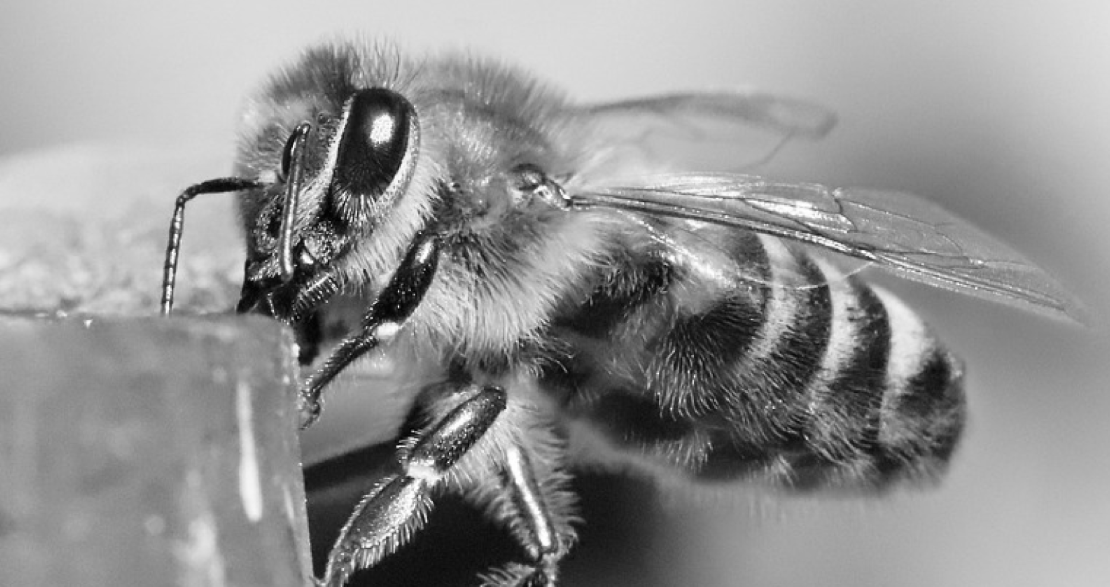
Suggest what the bees and the plants each gain from their relationship.
Bee populations are rapidly declining around the world due to habitat loss, pollution, and the use of pesticides, among other factors.
In the USA, there was a honey bee decline from about 6 million hives in 1947 to 2.4 million hives in 2008.
Calculate the percentage decrease in bee hive numbers from 1947 to 2008.
Suggest why conserving bees is important.
Squirrels feed on the leaves of oak trees.
Red-tailed hawks feed on the squirrels.
What do we call animals, like the red-tailed hawk, that eat other animals, such as the squirrel?
The graph below shows how the numbers of squirrels and red-tailed hawks change over a period of time.
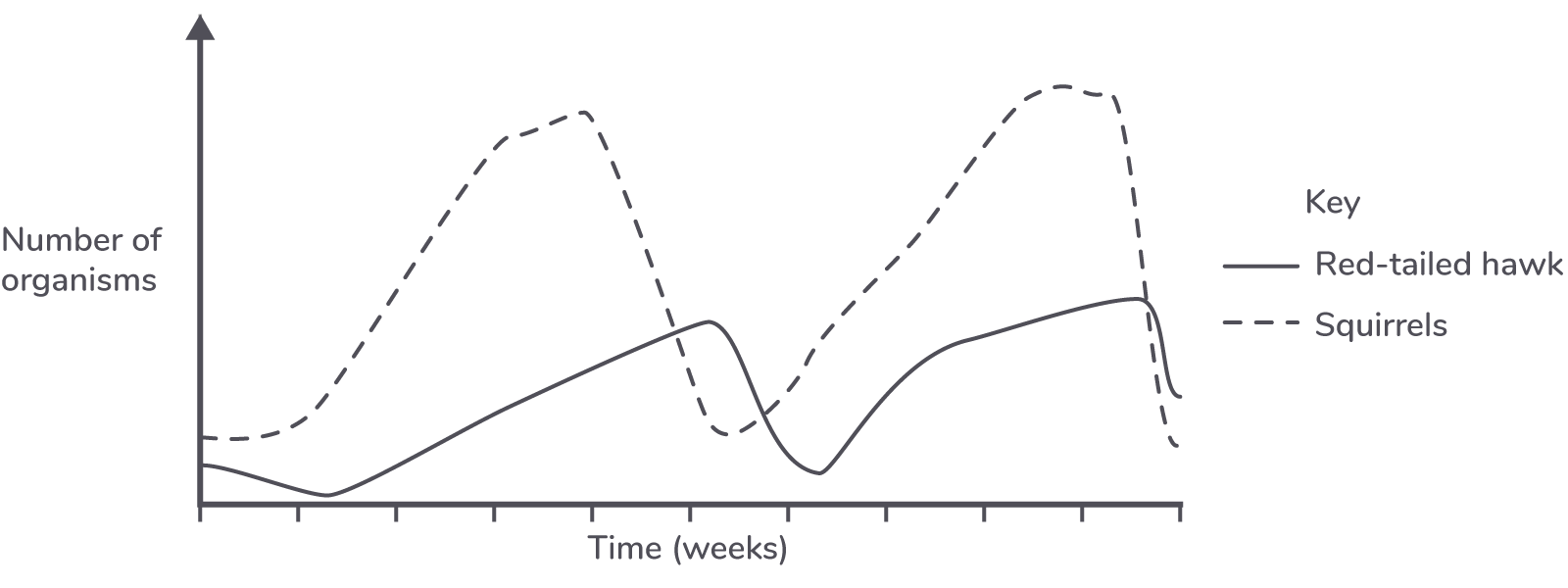
What happens to the number of red-tailed hawks after the number of squirrels decreases?
Suggest a reason for your answer.
Organisms have adaptations that enable them to survive and thrive in their environment.
These adaptations may be structural, behavioural or functional.
For each example, state whether the adaptation is structural, behavioural, or functional.
Swallows undertake a 6000 mile migration between the UK and South Africa twice a year in search of food.
Animals that live in the arctic have a thick layer of fur that protects them from extremely cold temperatures.
When humans exercise, there is an increase in heart rate to supply more blood to the muscles.
A scientist is studying a plant.
This plant:
- grows attached to other types of plants
- has brightly coloured flowers
- produces large quantities of pollen
- produces thousands of very small, light seeds
Describe how these adaptations help the plants to survive and compete.
Animals and plants have adaptations that allow them to survive in the conditions in which they normally live.
Give three adaptations of animals or plants that live in dry deserts, and explain how these adaptations help them survive.