Plant Tissues, Organs & Systems - exam practice
Plant Tissues, Organs & Systems
Question 1 of 4
Describe the pathway of water through a plant and explain the factors that affect the rate of transpiration.
A student is studying the process of translocation in plants.
Which of these sentences about the movement of sugars through a plant is correct?
Describe the process of translocation.
Explain why translocation is important to plants.
An aphid feeds by inserting its sharp mouthpiece into the stem of a plant.
Give the reason why the mouthpiece of an aphid contains a high concentration of dissolved sugars after feeding.
Explain the concept of sources and sinks within the context of translocation.
A student is studying the transport of substances in plants.
Explain how xylem and phloem tissues are adapted to their functions.
A student is investigating the effect of light intensity on the rate of transpiration.
The student collects the following data:
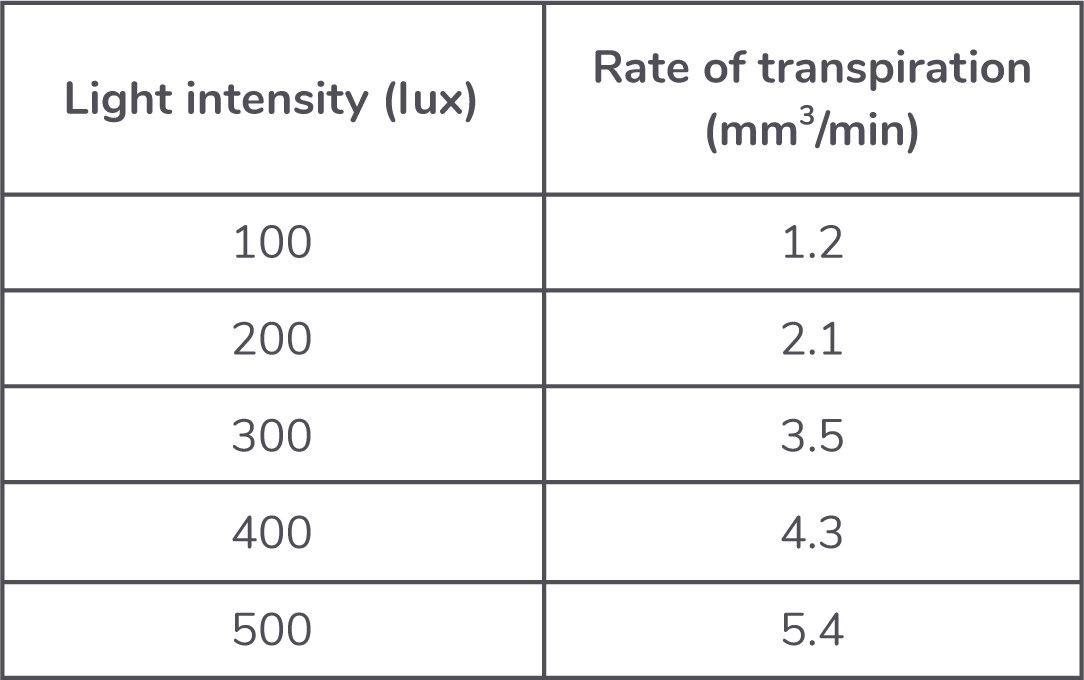
Describe the relationship between light intensity and the rate of transpiration.
Why does light intensity have this effect on the rate of transpiration?
Describe what happens during transpiration.
The student kept environmental conditions like air movement, humidity, and temperature, constant.
Why was it important to keep the temperature the same?
A scientist measured the rate of water loss from a plant shoot using a potometer.
The figure shows the equipment used in the experiment.
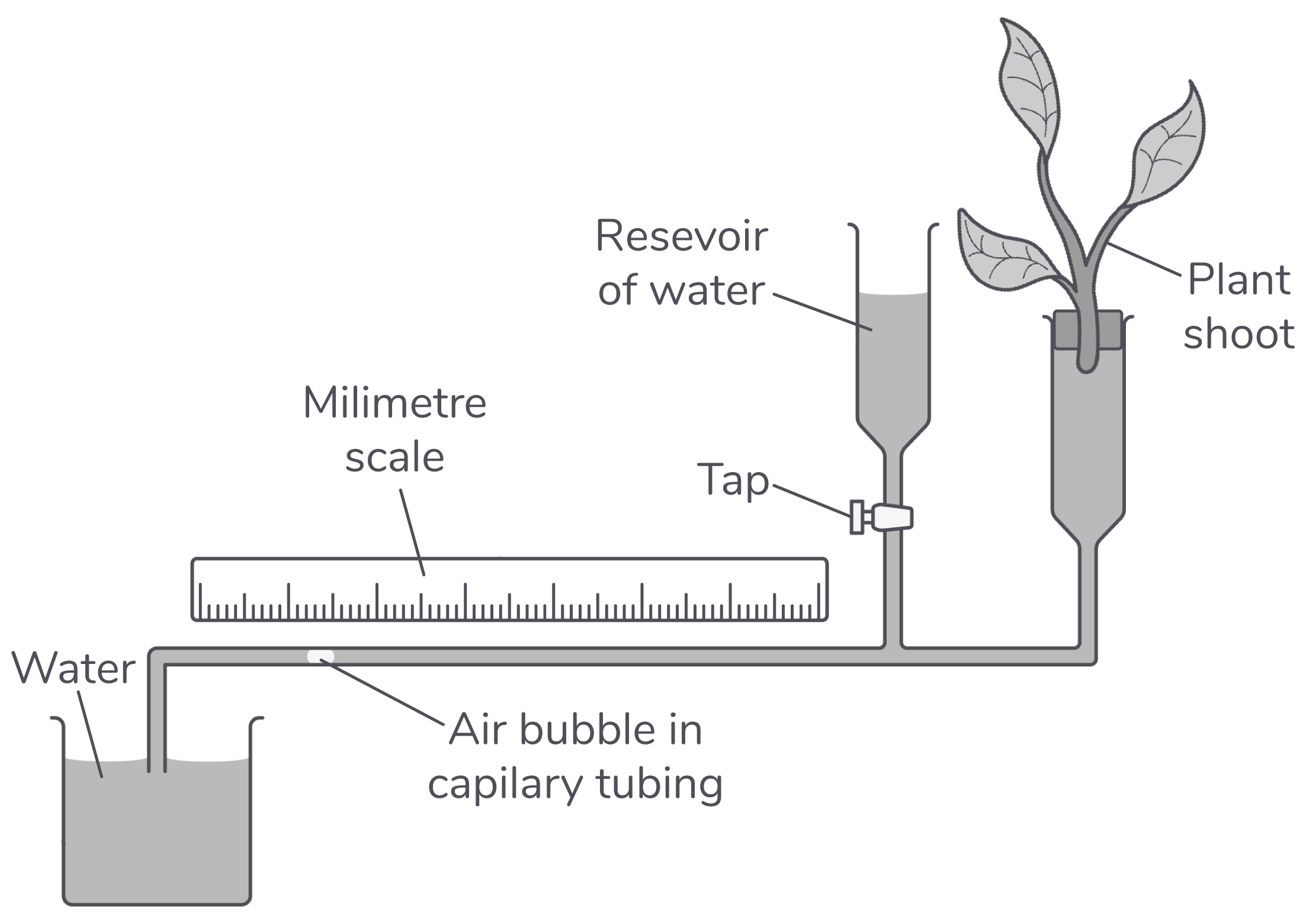
The volume of water lost from the plant can be calculated by measuring the distance a bubble moves along the capillary tubing.
Calculate the rate of water loss from the plant in mm3/s if the volume of water lost was 15 mm3 in 10 minutes.
The scientist wants to extend the investigation by considering factors that affect the rate of transpiration.
State two variables, other than temperature, that she could investigate.
Explain the effect of decreasing air temperature on the rate of transpiration.