Cardiovascular & Respiratory System - exam practice
Cardiovascular & Respiratory System
Question 1 of 6
Explain how the human circulatory system is adapted to provide oxygen and remove waste products from our tissues.
The picture below shows the human breathing system.
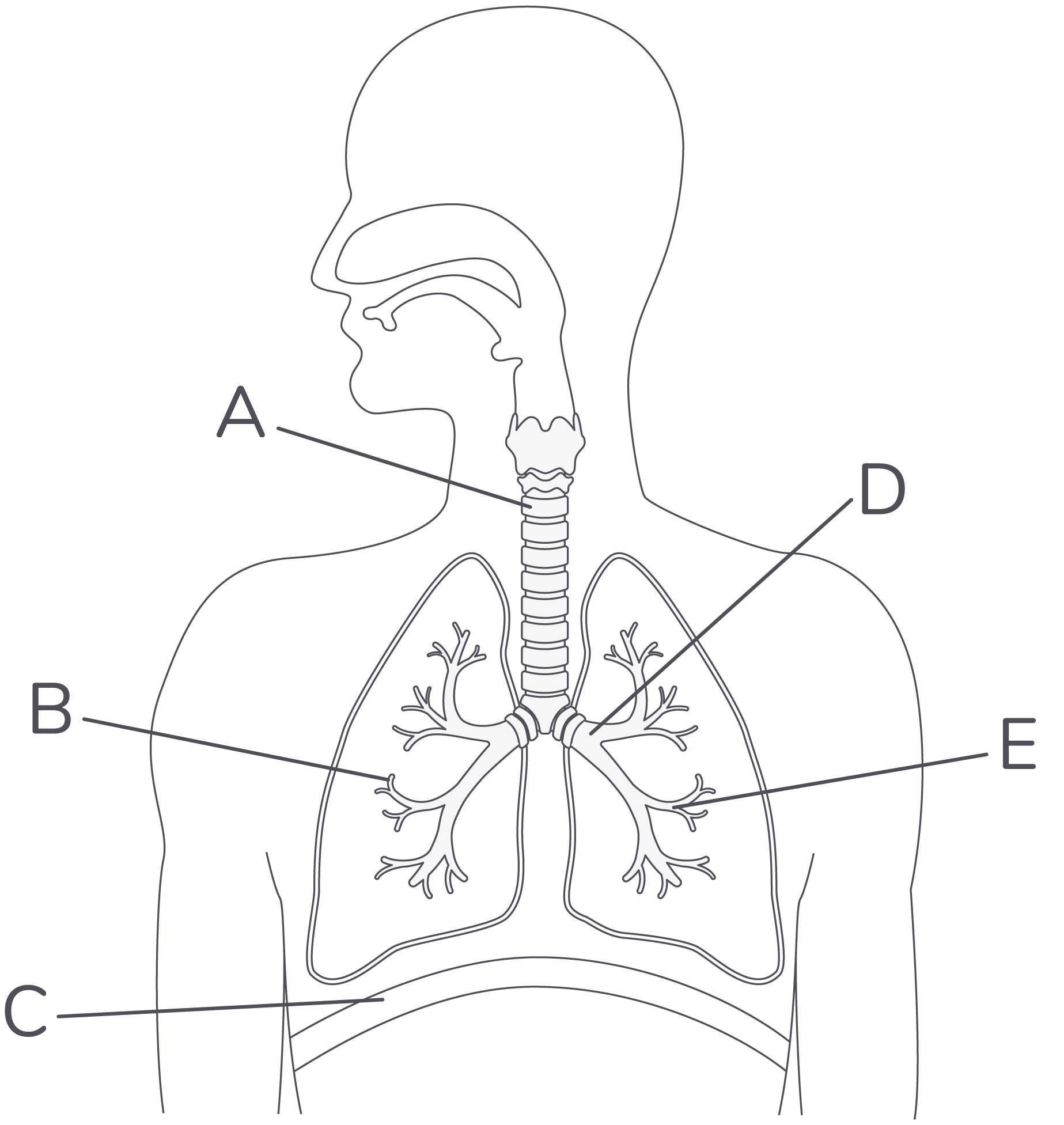
Name parts A, B, C, D and E.
Explain how the human lungs are adapted for efficient exchange of gases by diffusion.
Emphysema is a lung disease that damages the alveoli in your lungs. The primary symptom of emphysema is shortness of breath.
The picture below shows alveoli of a healthy person on the left, and alveoli of an emphysema sufferer on the right.
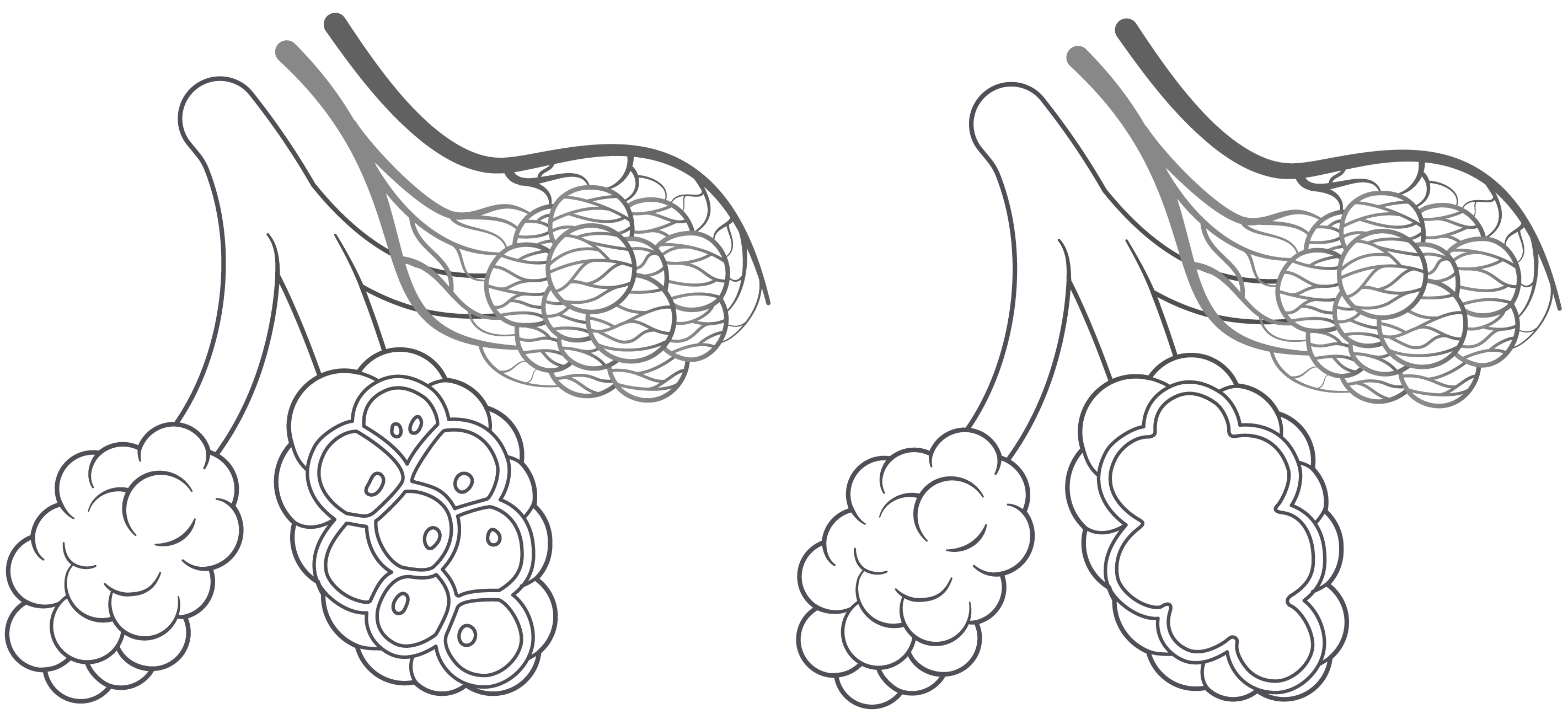
What is the main difference between the damaged alveoli from the emphysema sufferer and the healthy alveoli?
Suggest why an emphysema sufferer may not be able to engage in physical activities.
Blood is an important body fluid in the circulatory system of humans and other vertebrates.
What are the main components of the blood?
Name each component and describe its function in the human body.
As the heart beats, it pumps blood through a system of blood vessels.
The picture shows cross sections of the three types of blood vessels present in the human body.
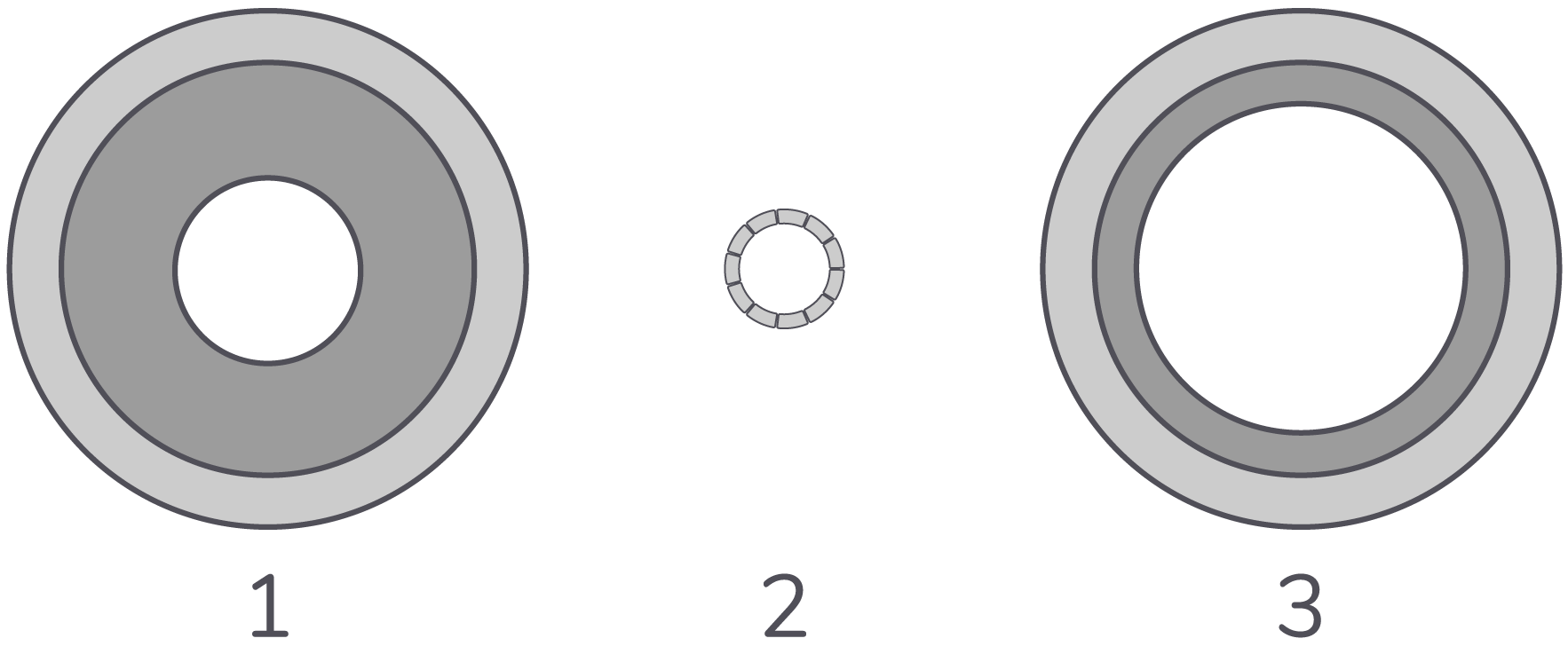
Which blood vessel in the picture above is a capillary? Explain your answer.
Veins need to carry the blood upwards against gravity when we are standing.
How does their structure differ from that of arteries to facilitate this function?
Predict the differences between blood collected from an artery and blood collected from a vein.
A stroke is a serious condition that happens when the blood supply to a part of the brain is cut off. One of the causes of a stroke is the bursting of an artery in the brain.
Suggest why it is more common that a stroke is caused by an artery than a vein.
What adaptations do arteries have to prevent bursting and avoid causing a stroke?
Heart attacks are another example of a cardiovascular disease.
Describe the sequence of events that can lead to a heart attack.
Leukaemia is a type of cancer characterised by the abnormal production and accumulation of cancerous white blood cells in the bone marrow.
The cancer cells overcrowd the bone marrow, impairing its ability to produce blood components.
Symptoms of leukaemia include:
- Fatigue (tiredness that lasts a long time and doesn't improve with rest).
- Bruising and bleeding more easily, or bleeding that takes longer to stop.
- Infections that are more frequent, severe, or prolonged.
Suggest why patients with leukaemia experience these symptoms.