15.1 - Antibiotics
Antibiotics
- A drug is any substance that, when taken into the body, changes or affects the chemical reactions happening inside it.
- Medicines are drugs used to treat disease - some just ease symptoms, while others attack the cause.
- An antibiotic is a medicine that cures a bacterial disease by either killing the bacteria inside the body or stopping them growing and dividing.
Why antibiotics don't harm your own cells
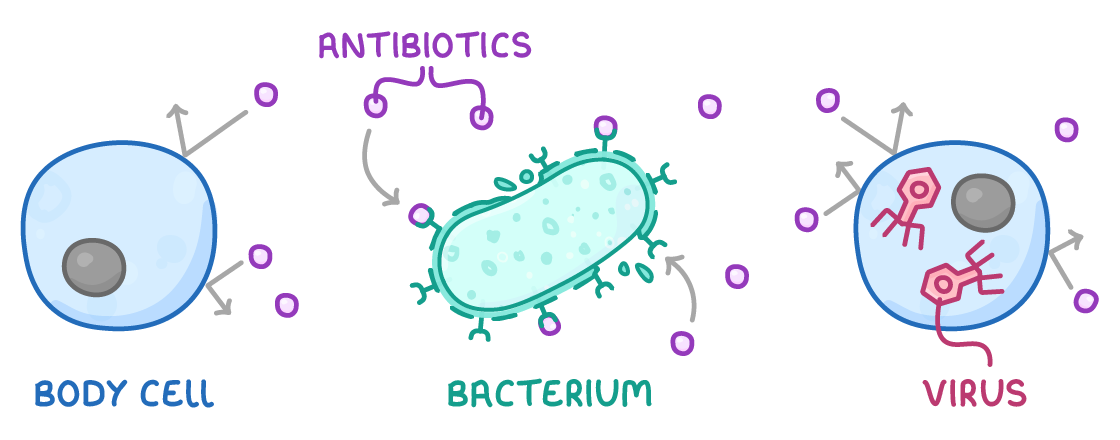
- Antibiotics interfere with processes that happen in bacterial cells but not in human cells - for example, building the bacterial cell wall, which human cells don't have.
- This is why they kill the bacteria without killing the body's own cells.
Where antibiotics come from
- Many are produced naturally by fungi and other microorganisms.
- Penicillin, the best-known antibiotic, is made by the mould Penicillium.
- Drug companies grow these organisms on a large scale and extract the antibiotic from them.
- Using antibiotics has greatly reduced the number of deaths from bacterial diseases.
Using antibiotics correctly
- A particular antibiotic only kills particular types of bacteria, so you must be treated with the right one for the infection.
- Finish the whole course, even once you feel better, so the infection is fully cleared and doesn't flare up again.
- Some bacteria are resistant to antibiotics, which makes antibiotics less effective against them and is a growing problem for treatment.
Antibiotics don't work on viruses
- Antibiotics have no effect on viruses, such as those causing flu and colds, because viruses are not cells and have none of the processes, such as building a cell wall, that antibiotics interfere with.
- Viruses reproduce inside the body's own cells, so it's very hard to make a drug that destroys the virus without damaging the cells it's hiding in.
- This makes antiviral drugs much harder to develop than antibiotics.
TermDefinition
Drug
Antibiotic