6.2 - The Nervous System & Reflexes
The nervous system and how it coordinates a response
- The nervous system lets the body react to its surroundings and coordinate its response.
- It's built from nerve cells called neurones, which run to all parts of the body.
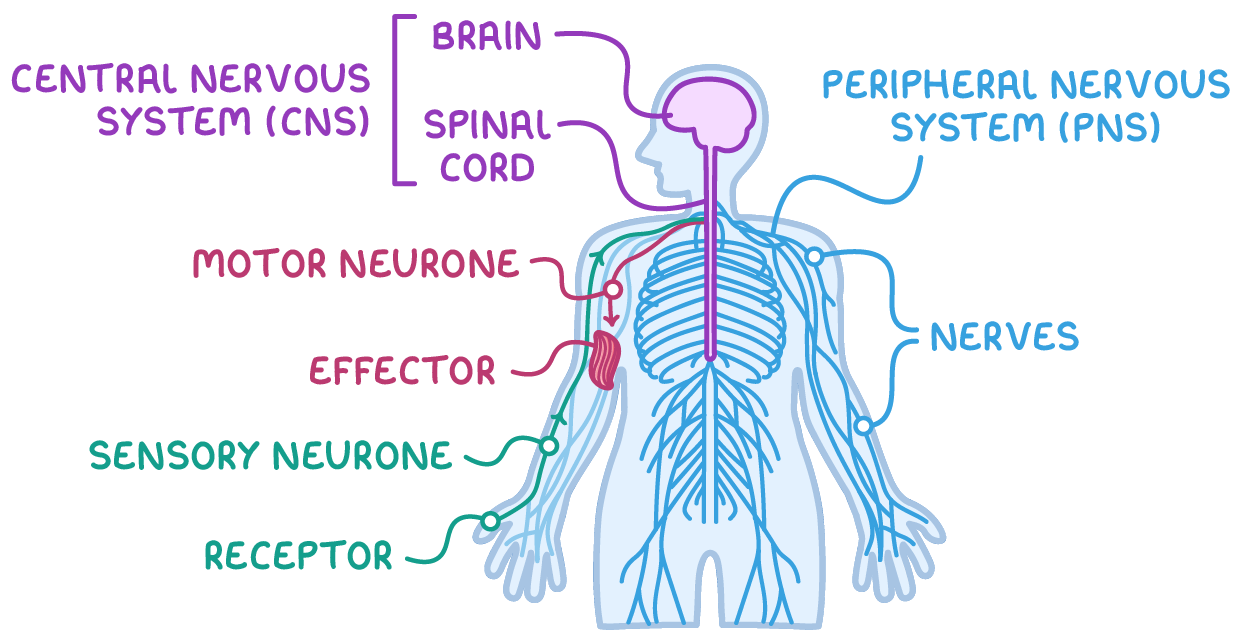
- The central nervous system (CNS) is made up of the brain and the spinal cord.
- The peripheral nervous system (PNS) is the nerves outside the brain and spinal cord, connecting the CNS to the rest of the body.
Stimuli, receptors and effectors
- Stimulus - A change in the environment inside or outside the body.
- Receptors - Cells that detect a particular kind of change. Different receptors detect different stimuli, and many are grouped together in sense organs:
- Light receptors in the eyes
- Sound receptors in the ears
- Touch and temperature receptors in the skin
- Chemical receptors in the tongue and nose
- Effectors - The parts that carry out the response. They are either:
- Muscles - Respond by contracting
- Glands - Respond by secreting a substance such as a hormone
- When a receptor detects a stimulus, the information is carried as an electrical impulse.
The coordination pathway
- Information passes from the receptor along a sensory neurone to the CNS.
- The CNS is the coordinator - it receives the information, decides the response, and links the right receptor to the right effector.
- It sends an electrical impulse out along a motor neurone to an effector.
- The effector produces the response.
The whole pathway runs: stimulus → receptor → sensory neurone → CNS → motor neurone → effector → response.
The synapse
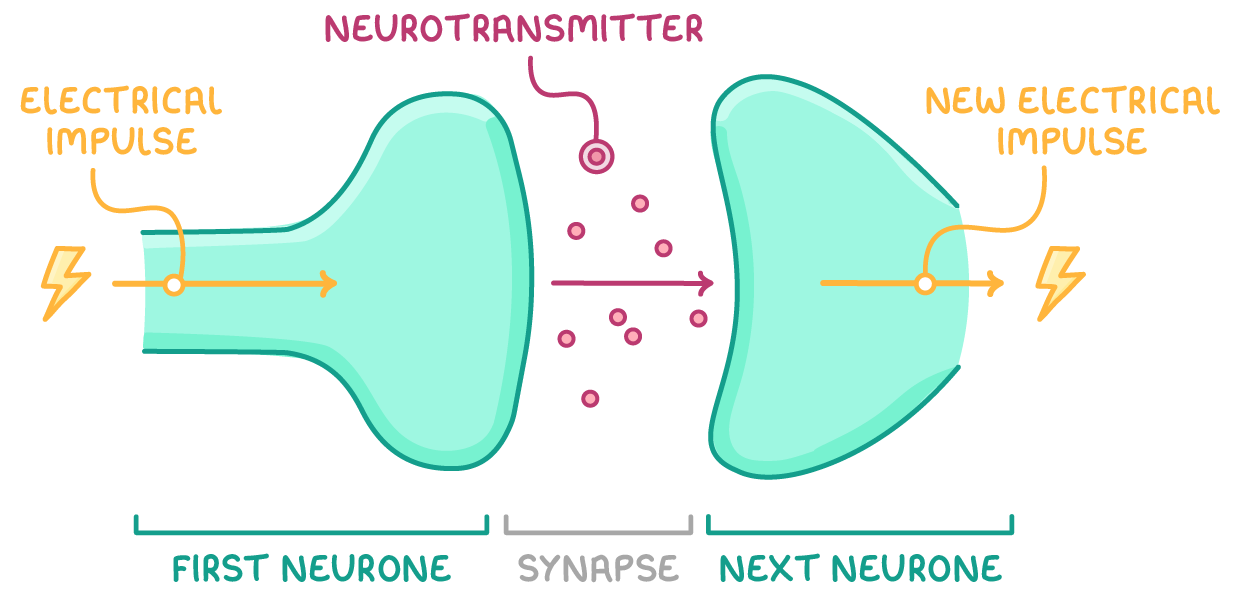
- Where the end of one neurone meets the next, the two do not actually touch - there's a tiny gap between them.
- This junction is called a synapse.
- The impulse travelling along a neurone is electrical and can't jump the gap on its own, so the signal is carried across the synapse by a chemical.
How the signal crosses the gap
- An electrical impulse arrives at the end of the first neurone.
- This causes a chemical, called a neurotransmitter, to be released into the gap.
- The neurotransmitter diffuses across the gap to the next neurone.
- When it arrives, it sets off a new electrical impulse in that neurone, so the signal continues on its way.
Passing the signal across a synapse takes a little longer than carrying it along a neurone, because the diffusion of the chemical across the gap takes time.
The reflex arc and reflex action
- A reflex action is an automatic, rapid response to a stimulus that happens without any conscious thought.
- Because the body doesn't spend time deciding what to do, a reflex is faster than an ordinary, considered response.
- Reflexes are often protective - they help prevent injury. Examples:
- Pulling your hand away from a hot object before you've thought about it
- The pupil of the eye getting smaller in bright light to protect the eye
The reflex arc
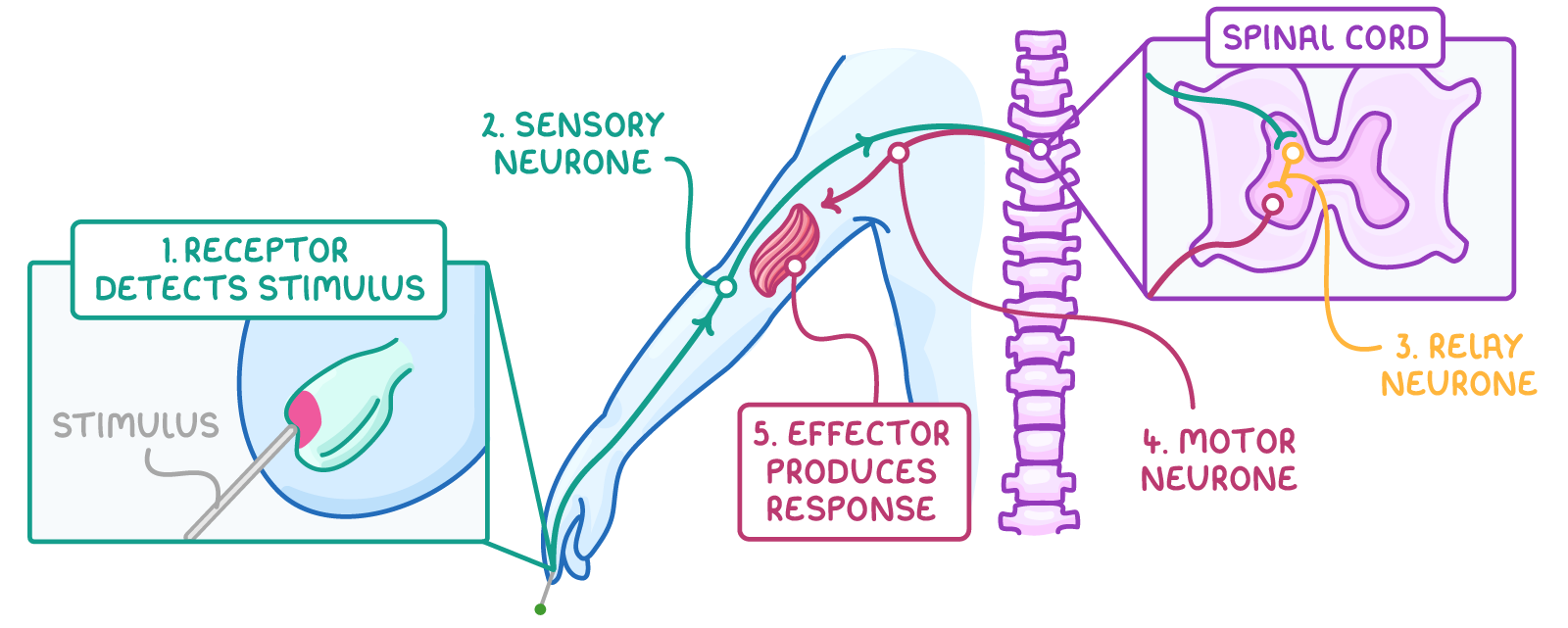
- A reflex arc is the pathway the information follows in a reflex, from the receptor that detects the stimulus to the effector that responds.
- The neurones pass through the spinal cord or an unconscious part of the brain, rather than the conscious part - which is why the response is so quick.
The pathway of a reflex arc
- A receptor detects the stimulus.
- The receptor sends an impulse along a sensory neurone to the central nervous system.
- The sensory neurone passes the impulse across a synapse to a relay neurone.
- The relay neurone passes it across another synapse to a motor neurone.
- The motor neurone carries the impulse out to the effector - a muscle or a gland - which produces the response.
Example - Touching something sharp
- A receptor in the skin detects the stimulus.
- The impulse travels in along the sensory neurone to a relay neurone in the spinal cord.
- The impulse passes out along the motor neurone.
- The muscle contracts to pull the hand away.
TermDefinition
Neurone
Central nervous system (CNS)
Stimulus
Receptor
Effector
Synapse
Neurotransmitter
Reflex action
Reflex arc