3.5 - The Immune System
Physical and chemical barriers
- The body's first line of defence is a set of barriers that stop pathogens getting inside.
- These barriers work against many different pathogens, not just one, so they are described as non-specific.
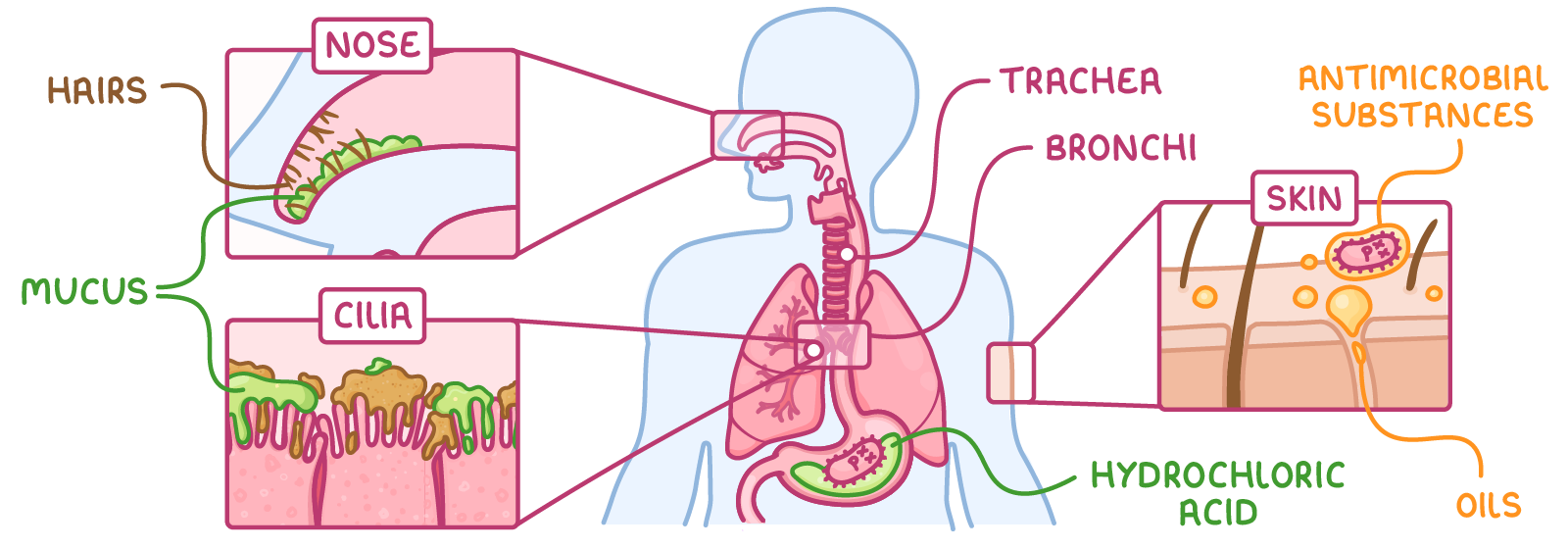
Physical barriers
- Skin - Covers most of the body and acts as a physical barrier that pathogens cannot pass through. It also secretes oils and antimicrobial substances that kill pathogens on its surface.
- Nose - Contains hairs and a layer of mucus that trap particles in the air before they can travel further.
- Trachea and bronchi - The airways down to the lungs are lined with mucus that traps pathogens, and with cilia (tiny hair-like structures on the cells).
- The cilia beat in a rhythm that wafts the trapped mucus up to the back of the throat, where it is swallowed and carried down to the stomach.
Chemical barrier
- The stomach produces hydrochloric acid, making the stomach contents strongly acidic.
- This kills most of the swallowed pathogens, whether they came in with food or in mucus from the airways.
Phagocytosis
- When pathogens get past the body's barriers and into the body, the white blood cells of the immune system destroy them.
- White blood cells travel in the blood and move into the tissues, constantly patrolling for pathogens.
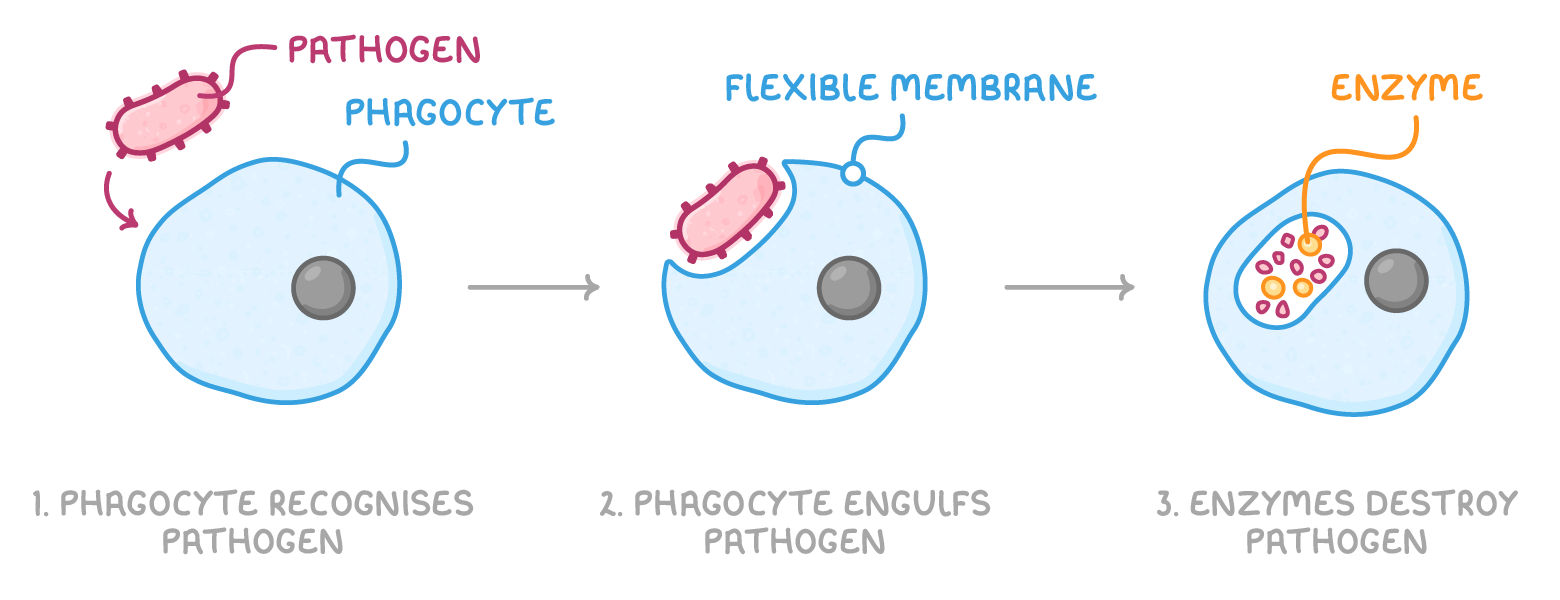
- One of their main defences is phagocytosis - carried out by white blood cells called phagocytes.
How a phagocyte destroys a pathogen
- The phagocyte tracks down a pathogen and binds to it.
- Its flexible membrane changes shape and wraps right around the pathogen, engulfing (surrounding) it and taking it inside the cell.
- Enzymes inside the phagocyte break the pathogen down and destroy it.
Key features of phagocytosis
- Non-specific - The same phagocyte can engulf many different kinds of pathogen, rather than acting against one in particular.
- Works alongside antibodies - Phagocytes more easily find and engulf pathogens that have been clumped together or marked by antibodies.
Antibodies, antitoxins and specificity
- As well as phagocytosis, white blood cells defend the body by producing antibodies and antitoxins.
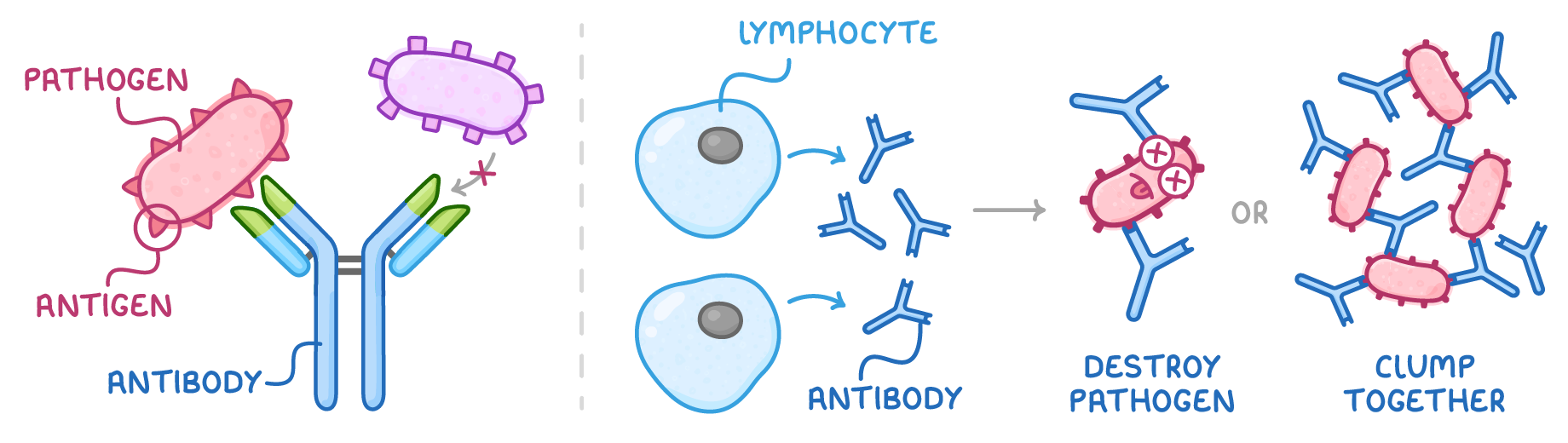
- Every pathogen has unique molecules on its surface called antigens, and each antigen has a particular shape.
- White blood cells can tell the body's own cells from invaders:
- Antigens on the body's own cells are recognised as "self".
- Antigens on a pathogen are recognised as foreign, or "non-self".
How antibodies work
- When white blood cells called lymphocytes meet a foreign antigen, they start to produce proteins called antibodies.
- An antibody has a shape that is complementary to a particular antigen, fitting it like a key in a lock - so each antibody binds to only one type of antigen and won't lock onto any others.
- The lymphocyte that recognises the pathogen then divides many times to make clones of itself, all producing the same antibody - so antibodies are made rapidly, in large numbers, and are carried all round the body.
- The antibodies bind to the antigens on the pathogens. This can:
- Destroy a pathogen directly, or
- Clump pathogens together and mark them out so phagocytes find them more easily and engulf them.
How antitoxins work
- Some bacteria cause harm by releasing toxins - poisons that damage the body's cells.
- Antitoxins are molecules made by white blood cells that bind to and counteract these toxins, stopping them doing damage.
TermDefinition
PhagocytosisThe process by which a white blood cell engulfs and digests a pathogen.
PhagocyteA type of white blood cell that carries out phagocytosis.
AntigenA unique molecule on the surface of a cell or pathogen that the immune system can recognise.
AntibodyA protein produced by lymphocytes that binds to a specific antigen.
AntitoxinA molecule produced by white blood cells that binds to and counteracts a toxin.
LymphocyteA type of white blood cell that produces antibodies.
Key points to remember
How were these notes?