6.12 - Variation
Types and causes of variation
- Variation is the differences in characteristics between individuals of the same species.
- Members of one species resemble each other but usually differ in many ways - for example, in a room full of people you'd see different hair colour, eye colour, and a range of heights.
- There are two underlying causes of variation:
- The genes an organism inherits
- The environment it lives in
- Most characteristics come from a combination of the two.
Genetic variation
- An organism's characteristics are determined by the genes inherited from its parents.
- In a sexually reproducing species, genes are carried in the gametes, and most offspring receive some genes from one parent and some from the other.
- This combining of genes from two parents means no two members of a species are genetically identical - apart from identical twins.
- The different alleles that distinguish individuals ultimately arise from mutation, the original source of all new genetic variation.
- Most mutations have no effect.
- Occasionally one produces a new allele that affects the phenotype, which may be harmful, beneficial, or neutral.
- Some characteristics are determined by genes alone, e.g. eye colour, blood group, and inherited disorders such as cystic fibrosis.
Environmental variation
- The conditions an organism lives and grows in also cause differences between members of the same species.
- Examples:
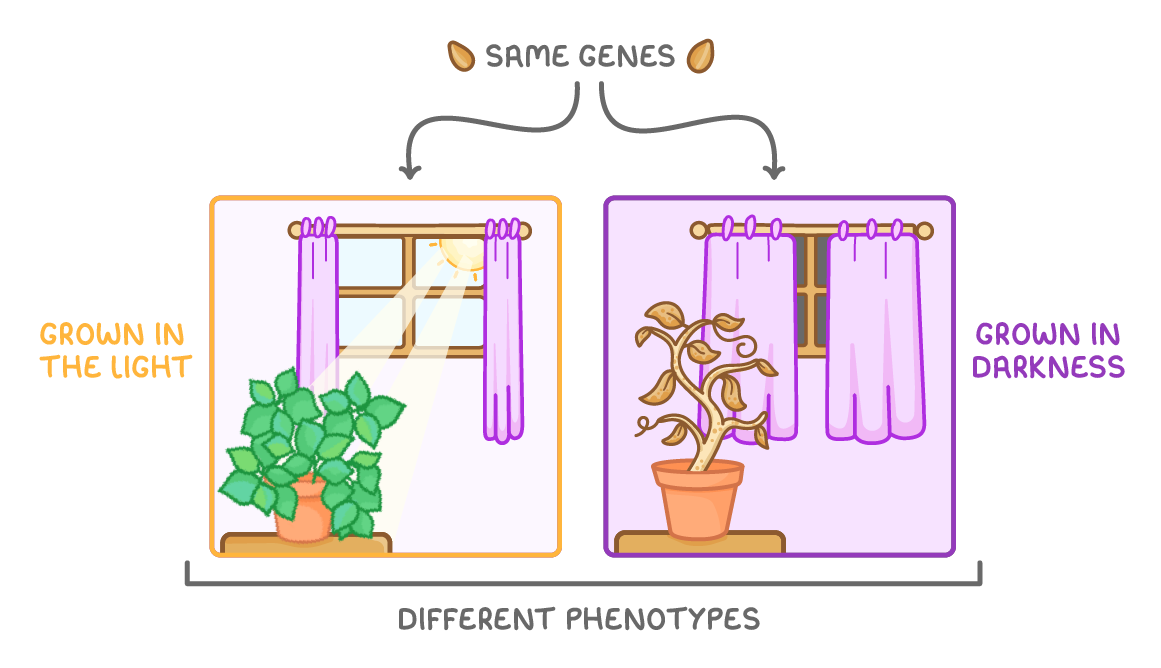
- A plant grown on a sunny windowsill grows lush and green, while a genetically identical plant grown in darkness grows tall and spindly with yellow leaves.
- In people, getting a suntan is an environmental difference.
- Features acquired during an organism's lifetime are called acquired characteristics.
A mixture of genetic and environmental factors
- Most characteristics are determined by a mixture of genetic and environmental factors rather than by one alone, e.g. body weight, height, and skin colour.
- The maximum height an organism could reach is set by its genes, but whether it actually grows that tall depends on its environment, such as how much food it gets.
- So the phenotype - the characteristics an organism actually shows - is the result of its genes interacting with its environment.
TermDefinition
VariationThe differences in characteristics between individuals of the same species.
Acquired characteristicsFeatures that an organism gains during its lifetime as a result of environmental factors.
Key points to remember
How were these notes?