7.10 - Maintaining Biodiversity
Conservation programmes
- When humans damage an ecosystem, biodiversity falls - but the trend can be reversed by reducing harmful practices or by protecting species and habitats so they recover.
- Conservation programmes are set up by scientists, governments, and concerned citizens to do this.
Breeding programmes
- Often set up for endangered species - those at high risk of extinction.
- Animals are bred in captivity (e.g. in zoos), where numbers can be built up safely with less infant mortality than in the wild.
- Individuals can later be reintroduced to the wild to boost an existing population or start a new one.
- This only works long term if the natural habitat is also safe.
Protecting and regenerating habitats
- Rare habitats worth protecting include mangroves, heathland, coral reefs, and wetlands.
- Protected areas - Creating national parks, nature reserves, and Sites of Special Scientific Interest, where building and farming are restricted.
- Managing habitats - For example, controlling water levels to conserve wetlands, and coppicing to conserve woodland.
Other conservation methods
- Seed banks - Store the seeds of rare and endangered plants, preserving their genetic diversity for the future.
- Controlling non-native species - The introduction of harmful non-native species can be controlled to protect native wildlife.
- Educating people - Teaching people about the value of biodiversity and how their choices affect it; public understanding and support make the other measures possible.
Conservation in farming and by law
Conservation can be built into farming, and supported by laws, international agreements, and ecotourism.
Conservation on farmland
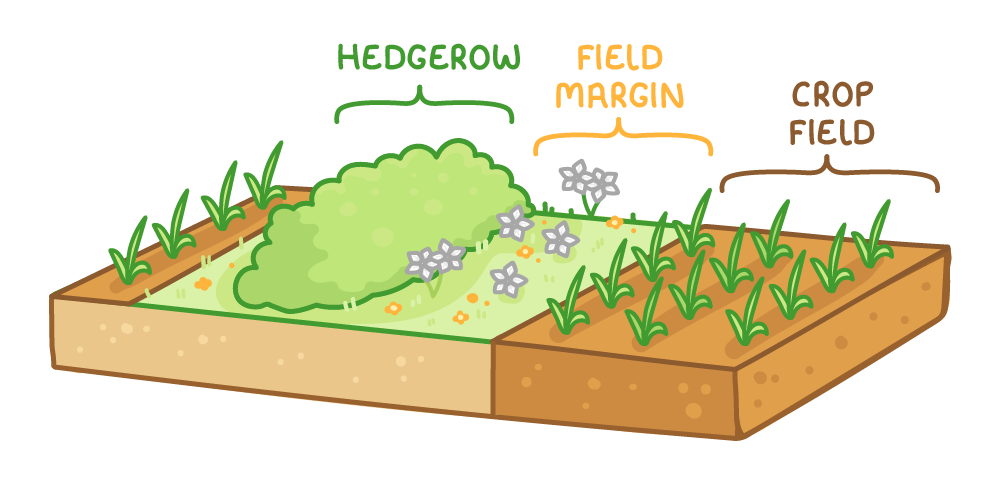
- Field margins - Narrow strips around fields where wild flowers and grasses are left to grow. They provide habitats and food for a wider range of species than a single crop allows.
- Hedgerows - Also provide habitats and food for more species than a single crop.
- Governments encourage these methods, sometimes by paying farmers a subsidy.
Laws and international agreements
- Governments set quotas on deforestation and carbon dioxide emissions.
- The CITES agreement restricts trade in endangered species.
- Individuals can reduce waste sent to landfill by recycling.
Ecotourism
- Ecotourism is tourism focused on appreciating and conserving nature.
- It brings money into biodiverse areas and helps fund conservation work.
The challenges of maintaining biodiversity
- Maintaining biodiversity is not simple because conflicting pressures get in the way.
- Governments, companies, and individuals must balance conservation against other priorities.
Conflicting pressures
- Cost - Conservation costs money, and governments, companies, and individuals often prioritise spending elsewhere.
- Local livelihoods - Protecting biodiversity can conflict with people's jobs:
- Reducing deforestation can put tree-fellers out of work.
- An SSSI (Site of Special Scientific Interest) can stop a farmer expanding.
- Food security - Organisms seen as pests are killed to protect crops.
- Demand for land - Land is sometimes in such high demand for housing or farming that high-biodiversity land is developed anyway.
Problems with international agreements
- Agreements can be hard to arrange when some countries will not sign up.
- They can be hard to monitor when quotas are difficult to enforce.
TermDefinition
Endangered speciesA species that is at a high risk of extinction.
EcotourismTourism that is focused on appreciating and conserving nature, which brings money into biodiverse areas to fund conservation.
Key points to remember
How were these notes?