4.1 - Attribution Theory & Person Perception
Attribution theory: explaining behavior and mental processes
Attribution theory is a framework in social psychology that explains how people interpret and assign causes to behaviors and events, both their own and those of others. This theory helps us understand why individuals act in certain ways and how these explanations shape their emotions, decisions, and interactions.
What are attributions?
Attributions are the explanations we create for why things happen. They help us make sense of behaviors and mental processes by assigning reasons to actions.
There are two main types of attributions:
- Dispositional attributions - These focus on internal factors, such as a person's personality, intelligence, or character. For example, thinking someone did well on a test because they are naturally smart is a dispositional attribution.
- Situational attributions - These focus on external factors, such as circumstances or environment. For example, believing someone did well on a test because they had extra time to study is a situational attribution.
Understanding whether behavior stems from internal traits or external situations influences how we judge others and ourselves.
Explanatory style: optimistic and pessimistic perspectives
Explanatory style refers to the habitual way individuals explain the causes of good and bad events in their lives and in the lives of others. This pattern of thinking can significantly impact mental health and behavior.
Types of explanatory styles
- Optimistic explanatory style - People with this style attribute positive events to internal, stable, and global causes (e.g., "I succeeded because I'm talented"), and negative events to external, temporary, and specific causes (e.g., "I failed because the test was unusually hard"). This often leads to resilience and positive outlooks.
- Pessimistic explanatory style - People with this style attribute negative events to internal, stable, and global causes (e.g., "I failed because I'm not good enough"), and positive events to external, temporary, and specific causes (e.g., "I succeeded because I got lucky"). This can contribute to feelings of helplessness and low self-esteem.
The way we explain events shapes our emotional responses and future actions, making explanatory style a critical concept in understanding behavior.
Common biases in attributions
When making attributions, people often fall prey to predictable errors or biases. These biases distort how we interpret behaviors and can affect our relationships and self-perception.
Key attribution biases
- Actor-observer bias - This occurs when we attribute our own behavior to situational factors ("I was late because of traffic") but attribute others' behavior to dispositional factors ("They were late because they're irresponsible"). This bias reflects a tendency to see ourselves as influenced by circumstances while viewing others as driven by personality.
- Fundamental attribution error - This is the tendency to overemphasize dispositional factors and underestimate situational factors when explaining others' behavior. For example, assuming a coworker's rudeness is due to their character rather than considering they might be having a bad day.
- Self-serving bias - This bias leads us to attribute our successes to internal factors ("I won because I worked hard") and our failures to external factors ("I lost because the rules were unfair"). It helps protect self-esteem but can skew realistic self-assessment.
These biases show how our perceptions are not always accurate, often leading to misunderstandings in social interactions.
Locus of control: internal vs. external influences on behavior
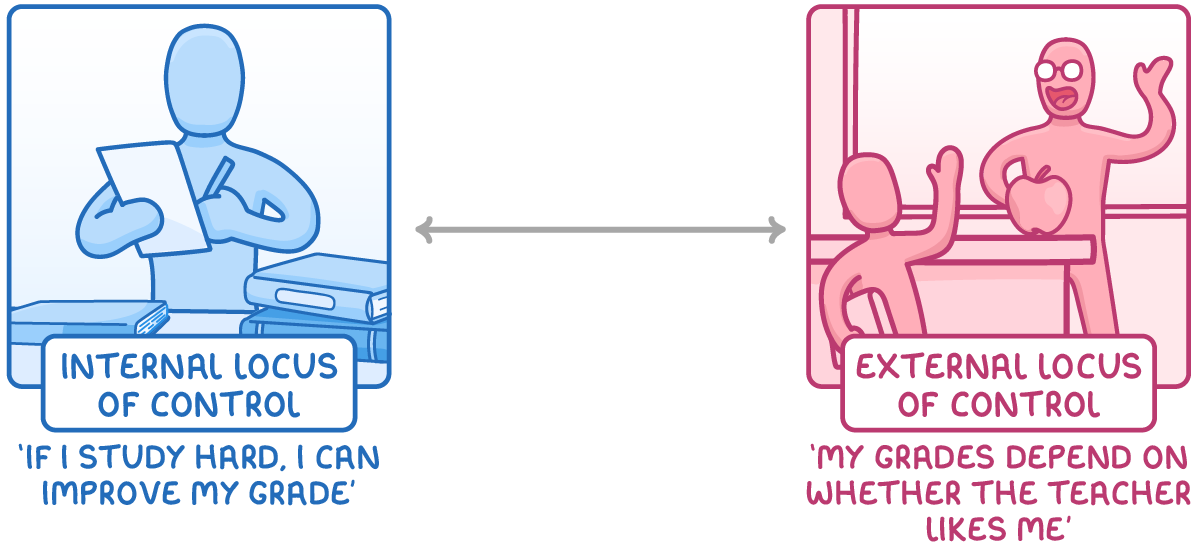
Locus of control refers to the extent to which individuals believe they can control events that affect them. This concept influences how people approach challenges, make decisions, and cope with outcomes.
Types of locus of control
- Internal locus of control - Individuals with an internal locus believe they have control over their own lives through their actions, decisions, and efforts. For example, they might think, "If I study hard, I can improve my grades." This often leads to greater motivation and persistence.
- External locus of control - Individuals with an external locus believe that outcomes are determined by external forces like luck, fate, or others' actions. For example, they might think, "My grades depend on whether the teacher likes me." This can result in feelings of helplessness or reduced effort.
Locus of control shapes how people respond to success and failure, impacting their mental processes and behaviors in various contexts, from academics to personal relationships.
Person perception: how we form impressions of others
Person perception is the process by which we form impressions and make judgments about others based on their behavior, appearance, and other cues. This process plays a crucial role in social interactions and influences how we behave toward others.
Person perception affects how we interpret others' actions, predict their future behavior, and decide how to interact with them. It's a foundation for building relationships but can also lead to stereotypes or misjudgments if based on incomplete or biased information.
Key effects in person perception
Several psychological phenomena influence how we perceive and interact with others. These effects shape our preferences, behaviors, and expectations in social settings.
The mere exposure effect
The mere exposure effect is the tendency to develop a preference for things or people simply because we are repeatedly exposed to them over time. Familiarity breeds comfort; the more we encounter a stimulus, the more likely we are to feel positively toward it, even if we're not consciously aware of the exposure. For example, hearing a song multiple times on the radio might make you like it more, even if you didn't initially enjoy it.
This effect highlights how subtle, repeated interactions can shape our attitudes without us realizing it.
Self-fulfilling prophecy
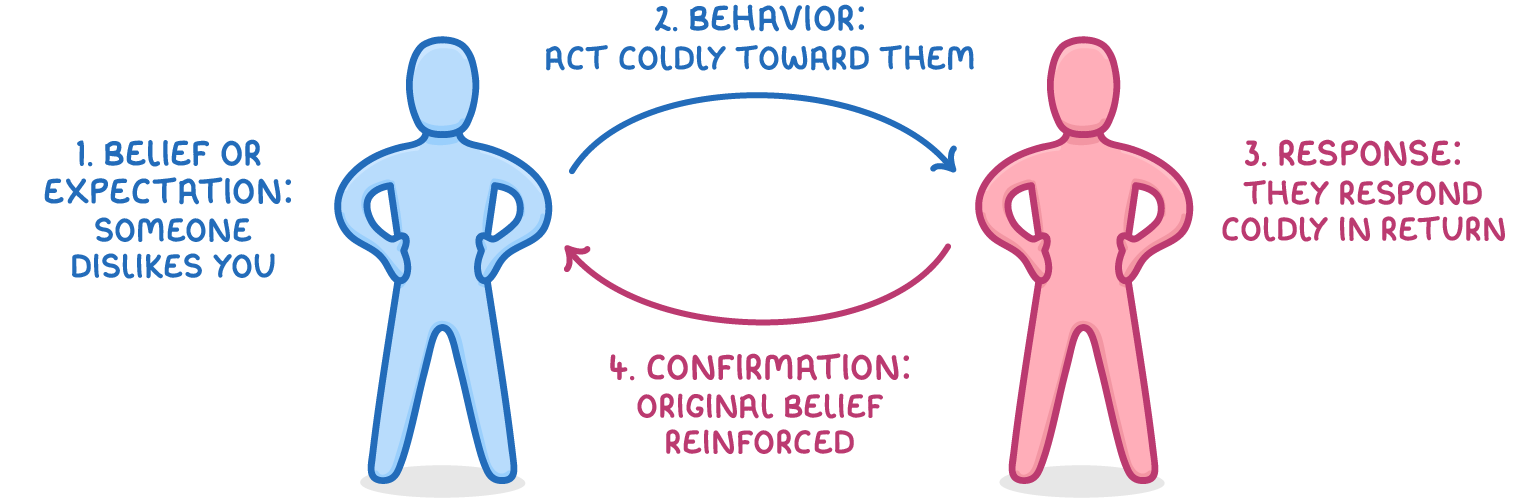
A self-fulfilling prophecy occurs when an individual's belief or expectation about themselves or others causes them to behave in ways that make the belief come true. Our expectations influence our actions, which then elicit responses from others that confirm the original belief. For example, if you believe someone dislikes you, you might act coldly toward them, prompting them to respond in kind, thus reinforcing your initial belief.
This process shows how perceptions can create a cycle of behavior that validates our assumptions, whether accurate or not.
Social comparison: evaluating ourselves through others
Social comparison is a type of person perception where individuals evaluate their own abilities, achievements, or worth by comparing themselves to others in society or their social circles. This process can have both positive and negative effects on self-esteem and motivation.
Types of social comparison
- Upward social comparison - Comparing ourselves to those who are better off or more successful in some way. This can inspire motivation to improve ("If they can do it, so can I") but may also lead to feelings of inadequacy or envy.
- Downward social comparison - Comparing ourselves to those who are worse off. This often boosts self-esteem ("At least I'm doing better than they are") but can sometimes foster complacency or a false sense of superiority.
Relative deprivation
Relative deprivation is the sense of being deprived or disadvantaged compared to others, even if one's absolute situation is not bad. This feeling arises from social comparison and can lead to dissatisfaction or resentment, especially when individuals perceive others as having more resources, opportunities, or success. For example, feeling deprived because a coworker received a promotion, even if your own job is stable, illustrates how comparison can overshadow objective circumstances.
Social comparison and relative deprivation demonstrate how our perceptions of others shape our self-concept and emotional well-being, often more than our actual situation does.