2.5 - Storing Memories
Types of memory storage processes
Memory storage is the process by which information is retained in our minds over time. It involves several distinct systems that vary in how long they hold information, how much they can store, and what kind of content they manage. Understanding these systems helps explain how we remember and why we forget.
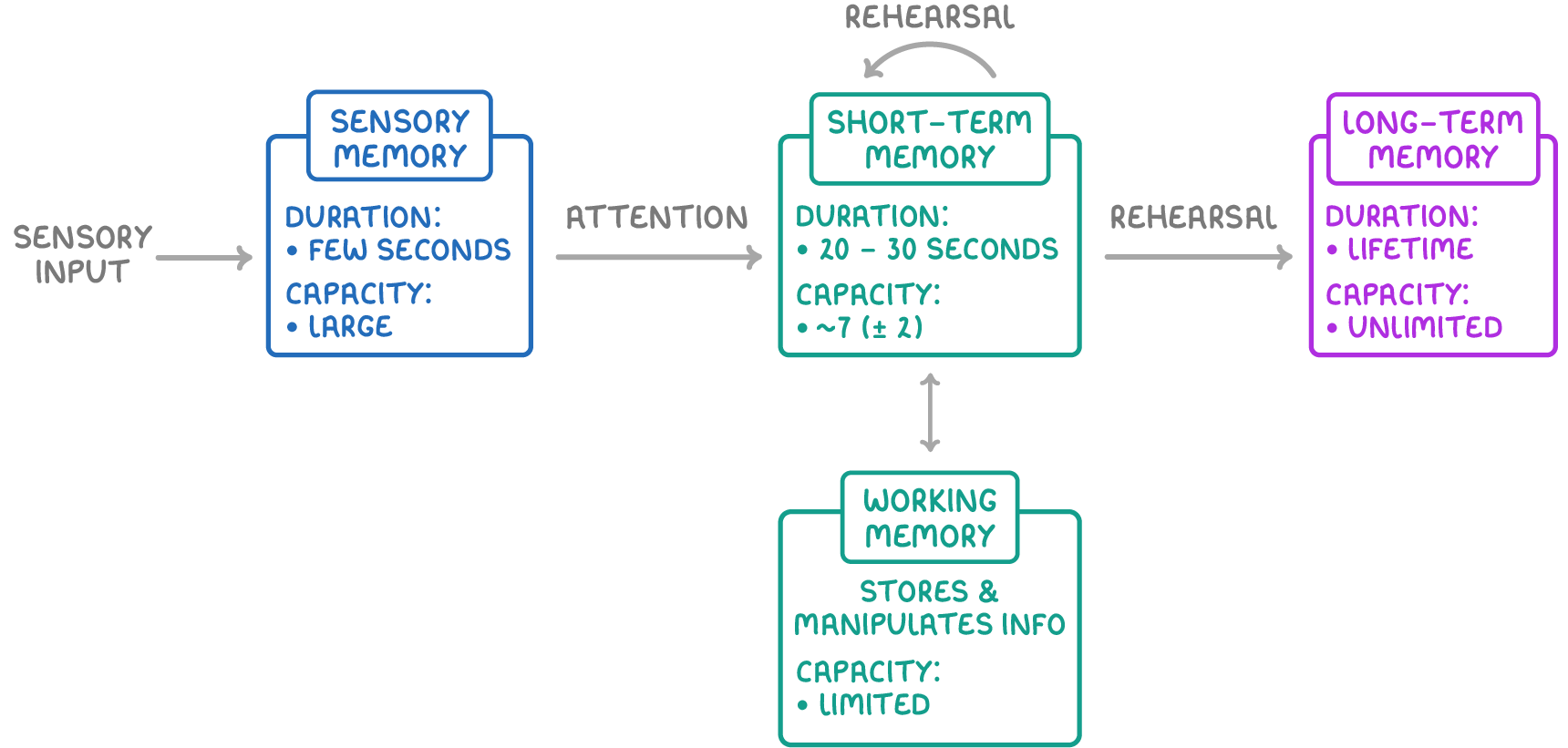
Key memory storage systems
- Sensory memory - This is the initial, fleeting storage of sensory information, lasting only a fraction of a second to a few seconds. It has a large capacity but holds raw, unprocessed data from our senses, like a brief snapshot of what we see or hear.
- Short-term memory (STM) - This system holds information for about 20-30 seconds with a limited capacity, often around 7 items (plus or minus 2). It stores content we are actively thinking about, such as a phone number you just heard.
- Working memory - A more dynamic form of short-term memory, working memory not only stores but also manipulates information temporarily. It's crucial for tasks like problem-solving or following multi-step instructions, with a similar limited capacity to STM.
- Long-term memory (LTM) - This system stores information for extended periods, potentially a lifetime, with a seemingly unlimited capacity. It holds a wide range of content, including facts, skills, and personal experiences, organized for later retrieval.
Each of these systems plays a unique role in how we process and retain information, forming a pipeline from brief sensory impressions to enduring knowledge.
Techniques for prolonging memory storage
Once information enters our memory systems, especially short-term or working memory, it can be lost quickly unless we take steps to retain it. Rehearsal is a key strategy for extending storage duration and transferring information to long-term memory for more permanent retention.
Methods of rehearsal for memory retention
- Maintenance rehearsal - This involves repeating information over and over to keep it in short-term memory longer. For example, repeating a grocery list in your head until you write it down. While effective for temporary retention, it often doesn't lead to deep understanding or long-term storage.
- Elaborative rehearsal - This strategy focuses on connecting new information to existing knowledge, making it more meaningful. For instance, linking a new vocabulary word to a personal experience or a related concept. This method enhances retention by embedding the information more deeply into long-term memory.
Using these techniques, especially elaborative rehearsal, can significantly improve how much and how well we remember over time, as meaning creates stronger memory traces.
The role of autobiographical memory in superior storage
Some individuals have exceptional memory abilities, particularly when it comes to recalling events from their own lives. This phenomenon ties into autobiographical memory, a subset of long-term memory that stores personal experiences and events related to oneself.
Autobiographical memory
Autobiographical memory refers to the recollection of specific events, emotions, and contexts from an individual's own life, like remembering your first day of school or a family vacation.
Superior memory abilities
Some people exhibit highly superior autobiographical memory (HSAM), where they can recall almost every detail of their lives on any given date. This suggests there may be unique biological processes or brain structures that enhance storage capacity and retrieval accuracy.
Impact on memorability
Memories tied to personal experiences or the self are often more vivid and easier to recall because they carry emotional significance or relevance. This connection to identity makes them stand out among other types of information in long-term memory. This highlights how personal relevance can act as a powerful tool for memory storage, sometimes leading to extraordinary retention abilities.
Factors negatively impacting memory storage
While memory storage systems are remarkable, they can be disrupted by various physical and developmental factors. These impairments can affect how information is retained or accessed, leading to gaps in memory or complete loss of storage ability.
Physical and developmental limitations on storage
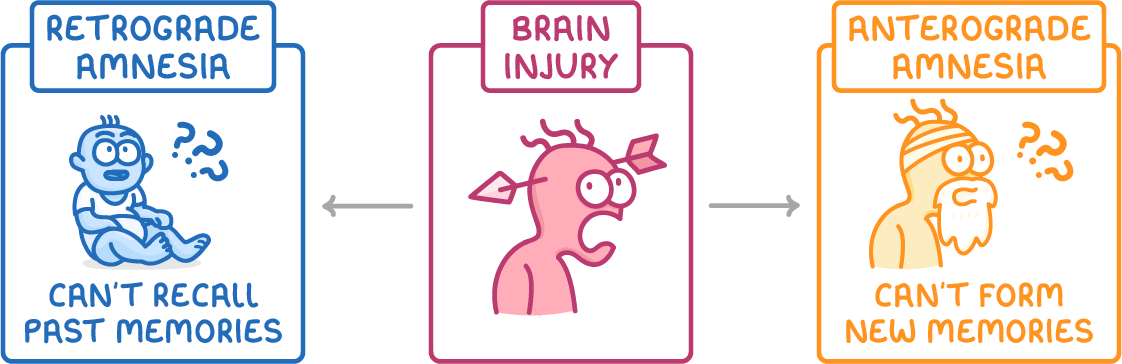
- Amnesia - This is a condition involving memory loss due to brain injury or trauma. There are two main types:
- Retrograde amnesia - The inability to recall past memories before the onset of the condition.
- Anterograde amnesia - The inability to form new memories after the condition begins.
- Alzheimer's disease - A progressive neurodegenerative disorder that primarily affects older adults, leading to severe memory loss, especially in long-term memory. It damages brain areas crucial for storage and retrieval, like the hippocampus, resulting in difficulty remembering recent events or learned information.
- Infantile amnesia - This refers to the natural inability of adults to recall memories from early childhood, typically before the age of 3-4 years. It's believed to result from underdeveloped brain structures for memory storage during infancy, as well as the lack of language to encode experiences meaningfully at that age.
These factors demonstrate how memory storage is not just a cognitive process but is deeply tied to biological and developmental conditions. Impairments in these areas can significantly alter how much and what kind of information we retain over time.