3.2 - Physical Development Across the Lifespan
Prenatal influences on physical and psychological development
Physical development begins long before birth, and the prenatal environment plays a critical role in shaping both the body and mind. Various factors during this period can have lasting effects on behavior and mental processes as the individual grows.
Factors affecting prenatal development
- Teratogens - These are harmful substances, such as drugs, alcohol, or toxins, that can cross the placenta and disrupt fetal development, potentially leading to physical abnormalities or cognitive impairments.
- Maternal illness - Infections or health conditions in the mother, like rubella or diabetes, can interfere with the developing fetus, sometimes causing developmental delays or physical defects.
- Genetic predispositions - Inherited traits and genetic conditions can influence milestones, such as the timing of physical growth or the risk of certain disorders.
- Hormonal factors - Imbalances in maternal hormones, like stress hormones (e.g., cortisol), can affect fetal brain development, potentially impacting later behavior and emotional regulation.
- Environmental factors - External conditions, such as exposure to pollution or poor maternal nutrition, can hinder physical growth and cognitive development, leading to long-term challenges.
These prenatal influences highlight the importance of a supportive environment during pregnancy, as early disruptions can shape psychological outcomes like learning abilities or emotional stability in later life.
Physical milestones in infancy and childhood
During infancy and childhood, physical development follows a predictable sequence, though the exact timing can differ between individuals. These changes are closely tied to behavioral and mental growth, enabling children to interact with their world in increasingly complex ways.
Development of motor skills
- Gross motor skills - These involve large muscle movements, such as crawling, walking, or jumping. They typically develop first and are crucial for mobility and exploration, which in turn foster cognitive and social skills.
- Fine motor skills - These involve smaller, precise movements, like grasping a toy or drawing with a crayon. They emerge later and are essential for tasks requiring dexterity, supporting independence and problem-solving abilities.
- Developmental order - Motor skills generally progress from head to toe (cephalocaudal) and from the center of the body outward (proximodistal). For example, infants control their head before their legs, and arm movements before finger coordination.
As these physical skills mature, children gain the ability to explore their environment, interact with others, and develop critical thinking through hands-on experiences.
Infant reflexes and developmental indicators
Reflexes are automatic, involuntary responses present at birth that indicate normal physical and neurological development. They are crucial for survival and early interaction with the environment.
An example is the rooting reflex:
- When a baby's cheek is stroked, they turn their head toward the stimulus and begin to suck, aiding in feeding.
- This reflex shows that the infant's nervous system is functioning properly and supports early bonding with caregivers.
The presence and eventual disappearance of these reflexes mark important milestones in brain and motor development, reflecting the infant's growing control over voluntary movements.
Research and critical periods in early development
Research in developmental psychology has provided valuable insights into how physical abilities in infancy and childhood relate to mental processes. Certain time windows and innovative studies reveal how early experiences shape lifelong skills.
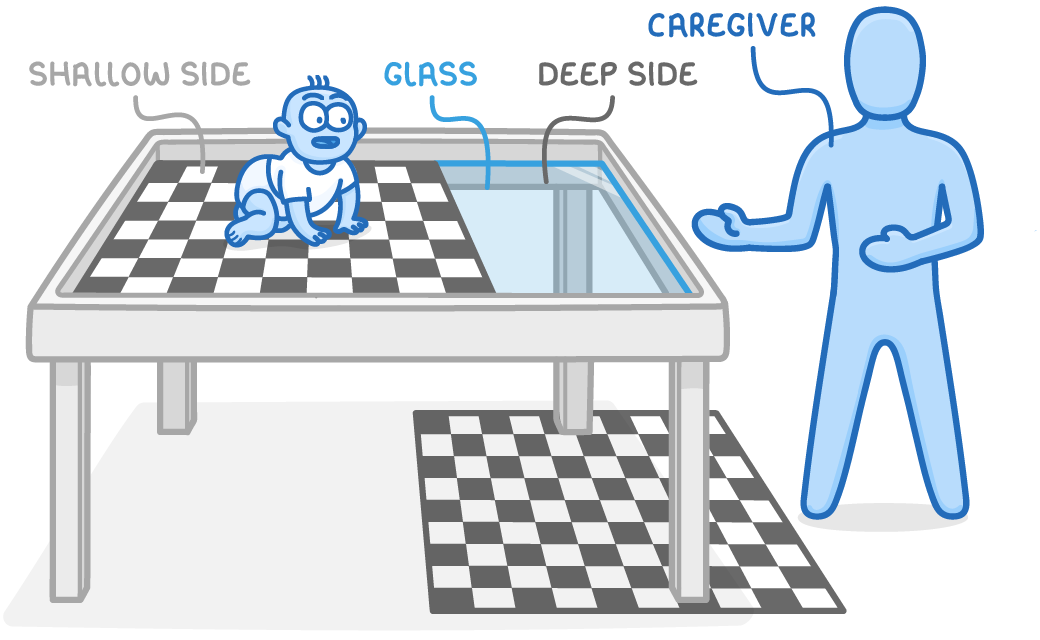
Understanding depth perception through the visual cliff
- Visual cliff apparatus - This is an experimental setup used to test depth perception in infants. It consists of a glass platform with a shallow side and a deep side (a visual "cliff"), covered by glass to ensure safety.
- Method - Infants are placed on the shallow side and encouraged to crawl toward a caregiver on the deep side. Researchers observe whether the infant hesitates or refuses to cross, indicating they perceive the depth.
- Results - Most infants, as young as 6-8 months, show reluctance to cross the deep side, suggesting an early ability to perceive depth before they can verbally express it.
- Implications - This demonstrates that physical development (crawling) and perceptual skills (depth recognition) are linked, influencing cautious behavior to avoid potential danger.
This research method highlights how physical maturation allows infants to develop protective behaviors, shaping their interaction with the environment.
Critical and sensitive periods in development
- Critical periods - These are specific time windows during which certain skills or abilities must develop, or they may be permanently impaired. For example, if language exposure does not occur in early childhood, fluency may never fully develop.
- Sensitive periods - These are broader time frames when the brain is particularly receptive to learning specific skills, like language or social bonding. While not as rigid as critical periods, learning is most effective during these times.
- Non-human imprinting - In some animals, a behavior called imprinting occurs, where newborns form an immediate attachment to the first moving object they see, often a parent, as a survival mechanism. This illustrates how early physical and environmental interactions can shape behavior.
These periods emphasize the importance of timing in physical and psychological development, as missed opportunities can have lasting effects on skills like communication or attachment.
Physical changes in adolescence and psychological impact
Adolescence is a transformative period marked by rapid physical changes that pave the way for reproductive maturity. These developments significantly influence behavior and mental processes during this stage of life.
Key milestones of adolescent development
- Adolescent growth spurt - A rapid increase in height and weight, often occurring between ages 10-14 for girls and 12-16 for boys. This physical change can affect self-image and social interactions, sometimes leading to awkwardness or boosted confidence.
- Puberty - The process of sexual maturation, during which the body becomes capable of reproduction. Hormonal shifts drive these changes, often impacting mood, emotional regulation, and identity formation.
- Primary sex characteristics - These are directly related to reproduction, such as the development of ovaries and testes. Their maturation marks the biological readiness for reproduction.
- Secondary sex characteristics - These are traits that distinguish males and females but are not directly involved in reproduction, such as breast development in females or facial hair in males. They often influence social perceptions and peer relationships.
- Menarche - The onset of menstruation in females, typically occurring between ages 11-14, signaling reproductive capability. It can bring mixed emotions, from pride to anxiety, due to cultural and personal significance.
- Spermarche - The first ejaculation in males, usually around ages 13-15, marking the start of sperm production. This can also evoke a range of psychological responses tied to maturity and identity.
These physical transformations during adolescence often lead to heightened self-awareness, shifts in social dynamics, and the exploration of personal identity as teens navigate their changing bodies and societal roles.
Physical development in adulthood and behavioral effects
Adulthood encompasses the longest portion of the lifespan, during which physical abilities generally stabilize before gradually declining. These changes influence behavior, mental processes, and overall quality of life.
Trends in adult physical development
- Leveling off of abilities - In early adulthood (20s to 30s), physical capabilities like strength, coordination, and sensory acuity typically reach their peak and remain stable for a period.
- Decline in reproductive ability - As individuals age, reproductive functions diminish. For women, this includes menopause, the cessation of menstruation usually occurring between ages 45-55, accompanied by hormonal changes that can affect mood and energy levels.
- Reduced mobility and flexibility - With advancing age (often after 40), muscle mass and joint flexibility decrease, impacting physical activities and potentially limiting independence or social engagement.
- Slower reaction time - Neural processing speed tends to slow in middle to late adulthood, affecting tasks requiring quick responses, such as driving or sports, and sometimes leading to frustration or caution in behavior.
- Decreased sensory acuity - Vision and hearing often decline with age, starting subtly in the 40s and becoming more pronounced later. This can influence communication, safety, and social interactions, sometimes contributing to isolation if not addressed.
These physical changes in adulthood often prompt adjustments in lifestyle, such as adopting new health routines or relying on assistive devices. They also impact psychological well-being, as individuals adapt to shifting capabilities while striving to maintain autonomy and connection with others.