5.5 - Treatment of Psychological Disorders
Research and trends in treating psychological disorders
The field of psychology has seen significant advancements in understanding and treating psychological disorders. Research plays a crucial role in shaping how therapists approach treatment, ensuring that methods are effective and tailored to individual needs.
Effectiveness of psychotherapy
- Meta-analytic studies - These are comprehensive reviews of multiple research studies. Many meta-analyses conclude that psychotherapies are generally effective in treating a wide range of psychological disorders.
- Evidence-based interventions - Therapists often rely on treatments supported by scientific evidence to develop personalized treatment plans that address specific patient issues.
- Cultural humility - This refers to a therapist's openness to understanding and respecting a patient's cultural background, which is essential for effective therapy.
- Therapeutic alliance - A strong, trusting relationship between therapist and patient is critical for successful treatment outcomes, fostering collaboration and mutual understanding.
Shifts in treatment approaches over time
- Deinstitutionalization - In the mid-20th century, the increased effectiveness of psychotropic medications (drugs that affect mental states) led to a major shift. Many individuals were released from hospitals and asylums, reducing the reliance on long-term institutional care.
- Decentralized treatment - Modern approaches favor community-based care over centralized institutions. Therapists often combine medication with psychological therapies to provide more holistic and flexible treatment options.
Ethical principles in the treatment of psychological disorders
When providing therapy or conducting clinical work, psychologists must adhere to strict ethical guidelines to protect patients and maintain professional standards. These guidelines are set by the American Psychological Association (APA), a leading authority in the field.
Core ethical principles for therapists
- Nonmaleficence - This principle means "do no harm." Therapists must avoid actions that could cause physical or psychological harm to patients.
- Fidelity - Therapists are expected to be loyal and committed to their patients, honoring agreements and maintaining trust.
- Integrity - This involves being honest and accurate in professional interactions, ensuring transparency in therapeutic practices.
- Respect for psychological rights and dignity - Therapists must value each patient's autonomy, privacy, and worth, ensuring that treatment respects individual differences and rights.
Techniques used in psychological therapies
Psychological therapies encompass a variety of approaches, each with unique techniques designed to address specific aspects of mental health. These therapies stem from different theoretical perspectives, offering diverse tools to help patients.
Psychodynamic therapies
Psychodynamic therapies aim to uncover unconscious conflicts and past experiences influencing current behavior.
Techniques used in psychodynamic therapies:
- Free association - Patients speak freely about whatever comes to mind, helping to reveal hidden thoughts and feelings.
- Dream interpretation - Therapists analyze dreams to gain insight into unconscious desires and fears.
Cognitive therapies
Cognitive therapies target maladaptive thought patterns that contribute to emotional distress.
Techniques used in cognitive therapies:
- Cognitive restructuring - Helps patients identify and challenge negative or irrational thoughts, replacing them with more realistic ones.
- Fear hierarchies - Used to gradually confront fears in a controlled way, often in treating phobias.
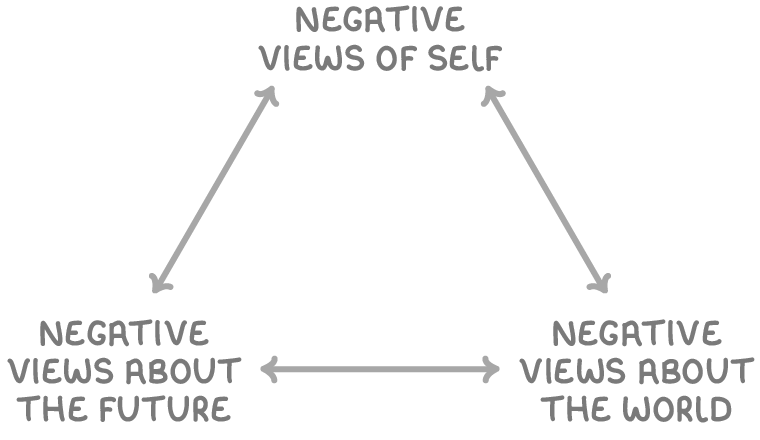
Beck's cognitive triad describes three interconnected negative views - about yourself, the world, and the future - that reinforce each other: for example, a negative view of yourself can fuel a negative view of the future, which in turn deepens negative views about the world. Cognitive therapists work to identify and break these cycles.
Applied behavior analysis
Applied behavior analysis applies principles of conditioning to modify behaviors associated with mental disorders or developmental disabilities.
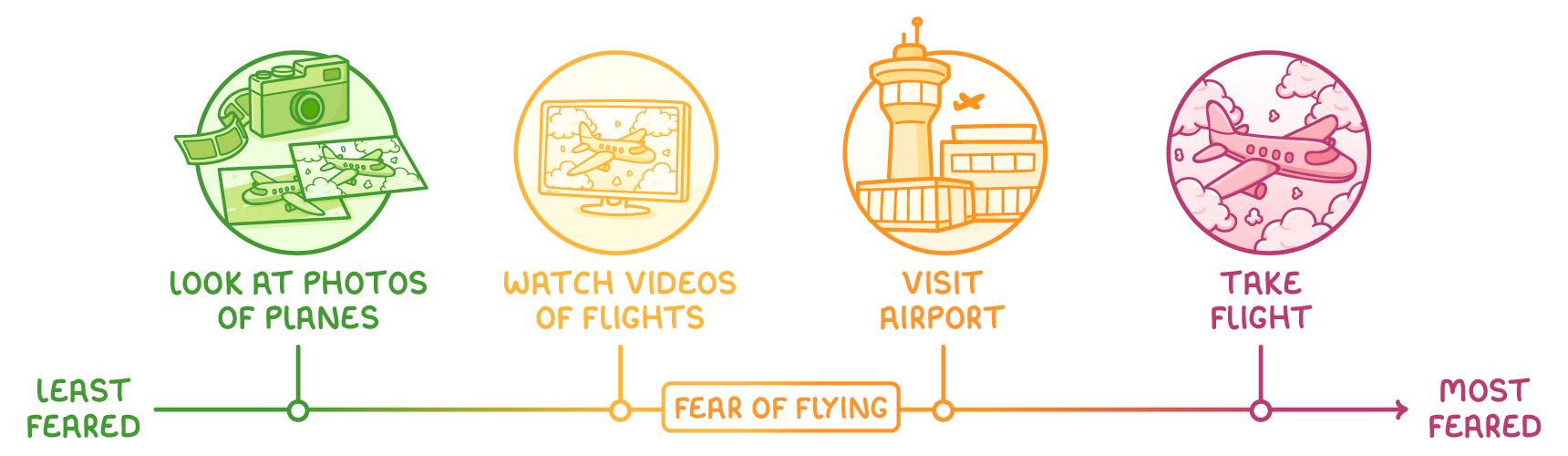
Techniques used in applied behavior analysis:
- Exposure therapies - Such as systematic desensitization, where patients are gradually exposed to feared stimuli to reduce anxiety. For instance, a patient with a fear of flying might be exposed to increasingly feared aspects of flying until they are more comfortable.
- Aversion therapies - Pair undesirable behaviors with negative stimuli to discourage them.
- Token economies - Use rewards (tokens) to reinforce positive behaviors, often in institutional settings.
- Biofeedback - Helps patients gain control over bodily processes like heart rate or muscle tension, reducing anxiety or depression by regulating the sympathetic (fight-or-flight) and parasympathetic (rest-and-digest) nervous systems.
Cognitive-behavioral therapies (CBT)
Cognitive-behavioral therapies combine cognitive and behavioral techniques to treat a range of mental and behavioral disorders.
Examples of cognitive-behavioral therapies:
- Dialectical behavior therapy (DBT) - Focuses on emotional regulation and interpersonal effectiveness, often used for borderline personality disorder.
- Rational-emotive behavior therapy (REBT) - Targets irrational beliefs to improve emotional responses and behaviors.
Humanistic therapies
Humanistic therapies emphasize personal growth and self-actualization, viewing patients as inherently capable of positive change. The key approach is often called person-centered therapy, developed by Carl Rogers.
Techniques used in humanistic therapies:
- Active listening - Therapists fully engage with and reflect on what the patient says, showing empathy.
- Unconditional positive regard - Therapists offer nonjudgmental acceptance, creating a safe space for patients to explore feelings.
Differences between group and individual therapy
Therapy can be delivered in different formats, each with distinct characteristics and benefits. Understanding these differences helps in choosing the most suitable approach for a patient's needs.
Comparing individual and group therapy
| Aspect | Individual therapy | Group therapy |
|---|---|---|
| Setting | One-on-one sessions with a therapist | Sessions with a therapist and multiple patients |
| Focus | Personalized attention to the patient's specific issues | Shared experiences and collective problem-solving |
| Benefits | Deep exploration of personal issues, privacy | Peer support, diverse perspectives, cost-effective |
| Challenges | May feel isolating, higher cost | Less individual focus, potential for conflict |
| Common uses | Severe personal trauma, specific phobias | Addiction recovery, social skills development |
Group therapy often fosters a sense of community, as participants realize they are not alone in their struggles. Individual therapy, on the other hand, allows for tailored interventions that dive deeply into unique personal challenges.
Effective uses of hypnosis in treatment
Hypnosis is a therapeutic technique that induces a trance-like state to focus attention and increase suggestibility. While it has specific applications, its effectiveness is limited to certain areas.
Applications and limitations of hypnosis
Effective uses:
- Pain management - Hypnosis can help reduce chronic pain by altering the perception of discomfort.
- Anxiety reduction - It can calm the mind and decrease stress responses in anxious individuals.
However, research does not support hypnosis as a reliable method for recovering accurate memories of repressed trauma. Suggestibility during hypnosis can lead to false or distorted recollections.
Interventions derived from the biological perspective
Biological interventions focus on the physiological aspects of psychological disorders, targeting brain chemistry or structure to alleviate symptoms. These approaches are often used when psychological therapies alone are insufficient.
Psychoactive medications
Psychoactive medications interact with neurotransmitters (chemical messengers in the brain) to address biochemical imbalances linked to mental disorders.
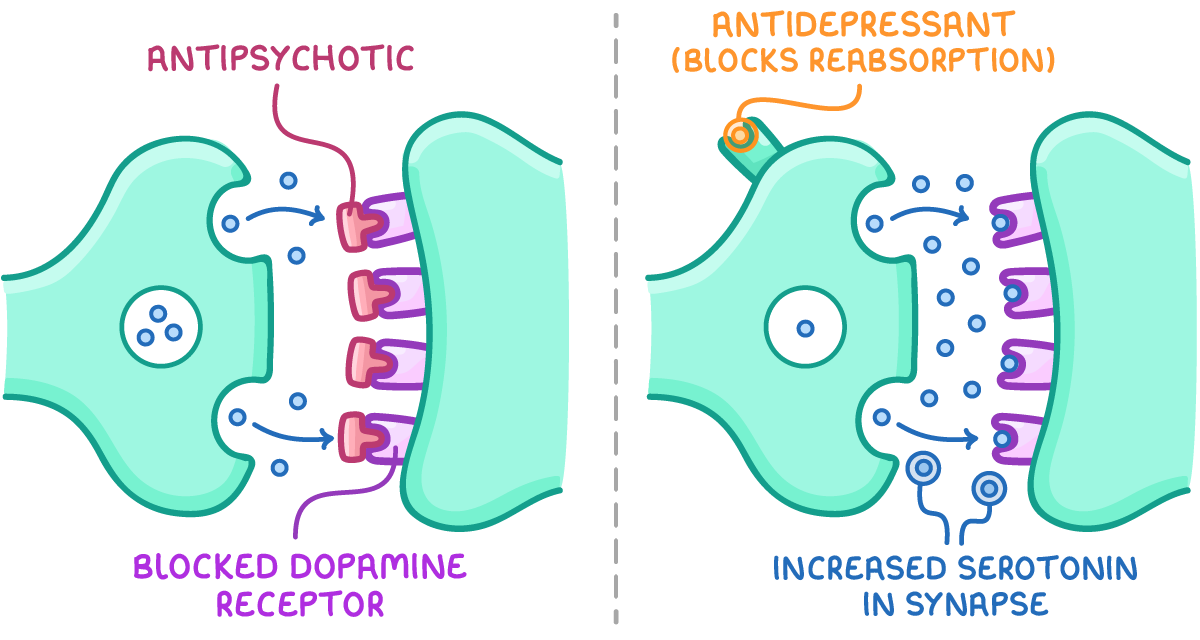
Types and examples of psychoactive medications:
- Antipsychotic medications - Manage symptoms of schizophrenia by blocking dopamine receptors.
- Antidepressants - Treat depression by increasing serotonin or other mood-regulating neurotransmitters.
- Antianxiety drugs - Reduce anxiety symptoms by calming neural activity, often targeting GABA (gamma-aminobutyric acid) receptors.
- Lithium - Used primarily for bipolar disorder to stabilize mood swings.
Medications can cause adverse effects, such as tardive dyskinesia, a movement disorder associated with long-term use of antipsychotics due to dopamine dysregulation.
Surgical and invasive interventions
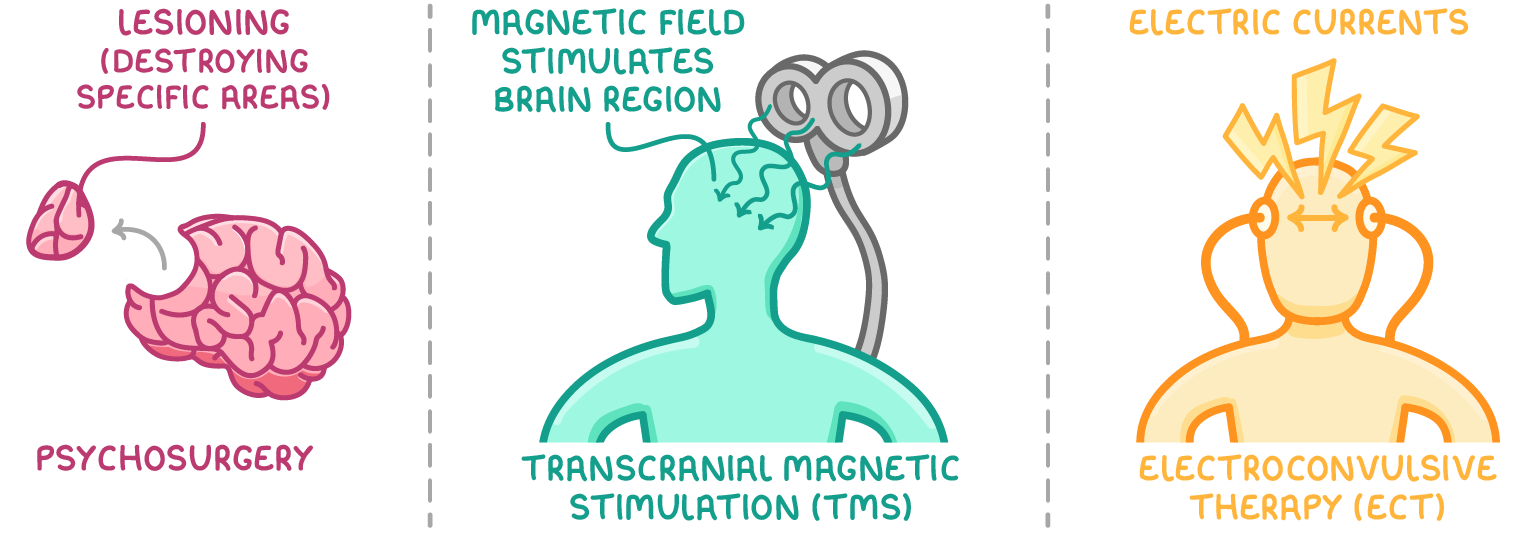
These methods directly alter brain function or structure to treat severe, treatment-resistant disorders.
Types and examples of surgical and invasive interventions:
- Psychosurgery - Involves surgically altering brain tissue, sometimes through lesioning (destroying specific areas). A historical example is the lobotomy, a procedure popular in the mid-20th century to treat severe mental illness by severing connections in the frontal lobes. It is now rarely, if ever, performed due to ethical concerns and severe side effects.
- Transcranial magnetic stimulation (TMS) - A non-invasive method using magnetic fields to stimulate specific brain regions, often used for depression.
- Electroconvulsive therapy (ECT) - Involves passing electric currents through the brain to induce controlled seizures, typically used for severe depression when other treatments fail.
These biological interventions highlight the interplay between mind and body, addressing disorders at a physiological level while often being combined with psychological therapies for comprehensive care.