1.1 - Structure of Water & Hydrogen Bonding
The molecular structure of water and its polarity
Water is a simple molecule with a profound impact on life. It consists of two hydrogen atoms bonded to one oxygen atom, forming H2O. This structure might seem basic, but it gives water unique characteristics essential for biological systems.
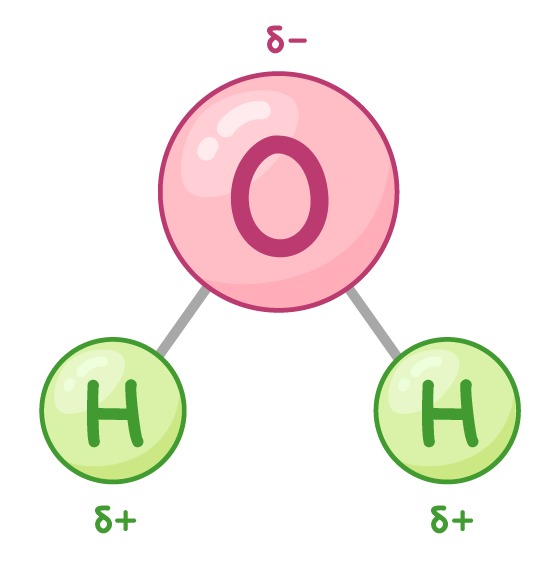
What makes water polar?
- Polar covalent bonds - Within a water molecule, oxygen attracts electrons more strongly than hydrogen due to its higher electronegativity. This unequal sharing of electrons creates a partial negative charge near the oxygen atom and partial positive charges near the hydrogen atoms.
- Molecular shape - Water has a bent, or V-shaped, structure. This geometry ensures that the partial charges are not canceled out, making the entire molecule polar.
- Polarity's role - The polarity of water allows it to interact with other polar molecules and ions, making it an excellent solvent in biological processes. This means water can dissolve many substances, facilitating chemical reactions in living organisms.
This polarity sets the stage for water's ability to form hydrogen bonds, a key feature that drives many of its life-sustaining properties.
The role of hydrogen bonding in water's unique properties
Hydrogen bonding is a special type of interaction that occurs between water molecules due to their polarity. This bonding is crucial for the structural and functional properties of water in biological systems.
Hydrogen bonding
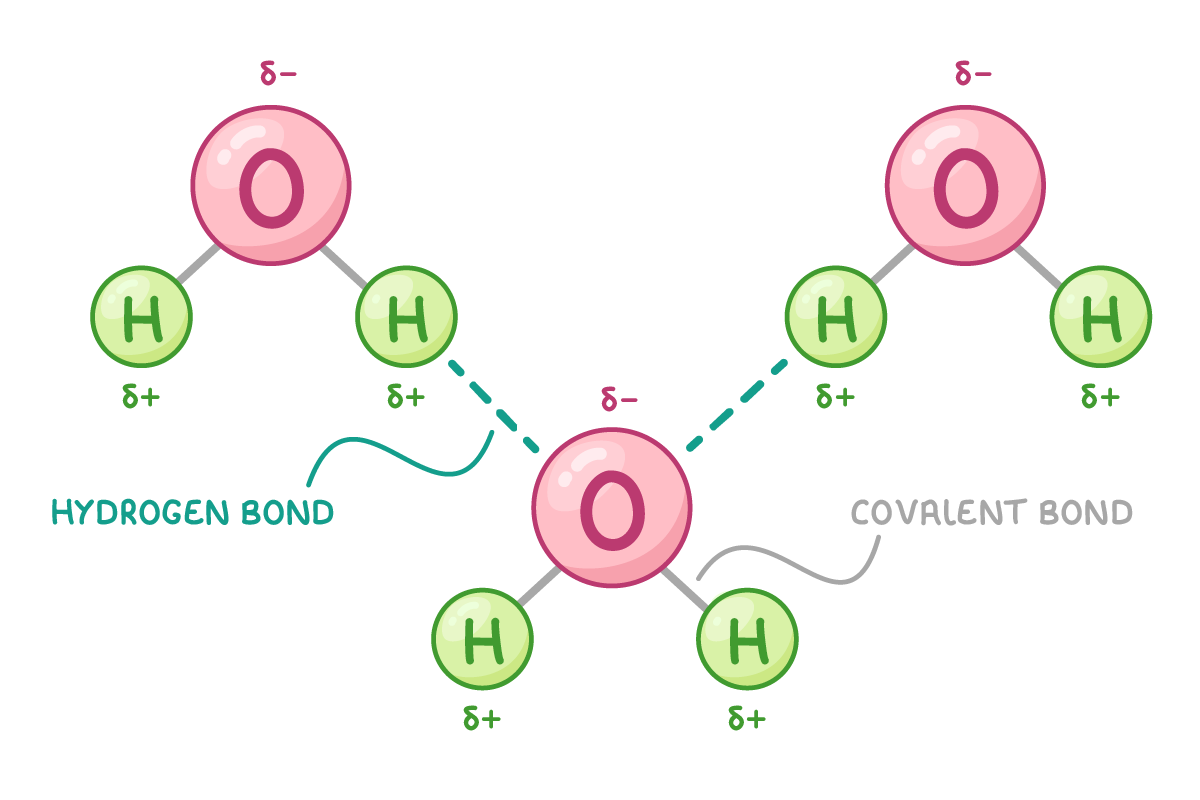
A hydrogen bond is a weak attraction between the partially positive hydrogen atom of one water molecule and the partially negative oxygen atom of another water molecule. Although individual hydrogen bonds are weak, the sheer number of them in a sample of water creates significant collective strength, influencing water's behavior.
Biological impact of hydrogen bonding:
- Hydrogen bonding occurs between water molecules
- It also occurs between water and other polar biological molecules, like proteins and DNA, stabilizing their structures
These interactions are the foundation for many of water's properties that support life, as they influence how water molecules stick together and interact with their environment.
Water's high specific heat capacity and its biological importance
Water's ability to absorb and store heat is remarkable and plays a vital role in maintaining stable conditions within living organisms. This property is known as high specific heat capacity.
Specific heat capacity
Specific heat capacity is the amount of heat energy required to raise the temperature of a given mass of a substance by one degree Celsius. Water has a high specific heat capacity, meaning it can absorb a lot of heat before its temperature changes significantly.
Cause and biological significance:
- Cause - This property arises from hydrogen bonding. Energy absorbed by water is used to break these bonds rather than immediately increasing the temperature, allowing water to act as a thermal buffer.
- Biological significance - In organisms, water's high specific heat capacity helps maintain homeostasis and a consistent internal body temperature. For example, blood, which is mostly water, distributes heat throughout the body, preventing drastic temperature fluctuations despite external changes.
This buffering effect is critical for life, as it protects cells and tissues from rapid temperature shifts that could disrupt metabolic processes.
Water's high heat of vaporization and evaporative cooling
Another remarkable property of water is its high heat of vaporization, which allows it to cool environments and organisms through evaporation. This process is essential for temperature regulation in living systems.
Heat of vaporization
Heat of vaporization is the amount of energy needed to convert a liquid into a gas. Water requires a large amount of heat to evaporate due to the extensive hydrogen bonding between its molecules.
Mechanism and biological role:
- Mechanism - When water evaporates, the molecules with the highest energy escape as vapor, taking heat away from the remaining liquid or surface. This results in a cooling effect.
- Biological role - In organisms, this property enables evaporative cooling. For instance, sweat on human skin evaporates, removing heat and helping to lower body temperature during overheating. Similarly, plants lose water through transpiration, cooling their leaves in hot conditions.
This cooling mechanism is a direct result of water's hydrogen bonding and is vital for preventing overheating in biological systems.
The effects of hydrogen bonding on cohesion, adhesion, and surface tension
Hydrogen bonding between water molecules leads to several physical properties that are crucial in biological contexts. These properties include cohesion, adhesion, and surface tension, each contributing to water's functionality in living organisms.
Key properties from hydrogen bonding
- Cohesion - This is the attraction between like molecules, specifically between water molecules due to hydrogen bonding. Cohesion allows water to form droplets and maintain a continuous column in plant vascular tissues, aiding in the upward transport of water against gravity in xylem vessels.
- Adhesion - This refers to the attraction between water molecules and other substances. Water adheres to the walls of narrow tubes or cell walls in plants, facilitating capillary action, which helps water move through tiny spaces in soils and plant tissues.
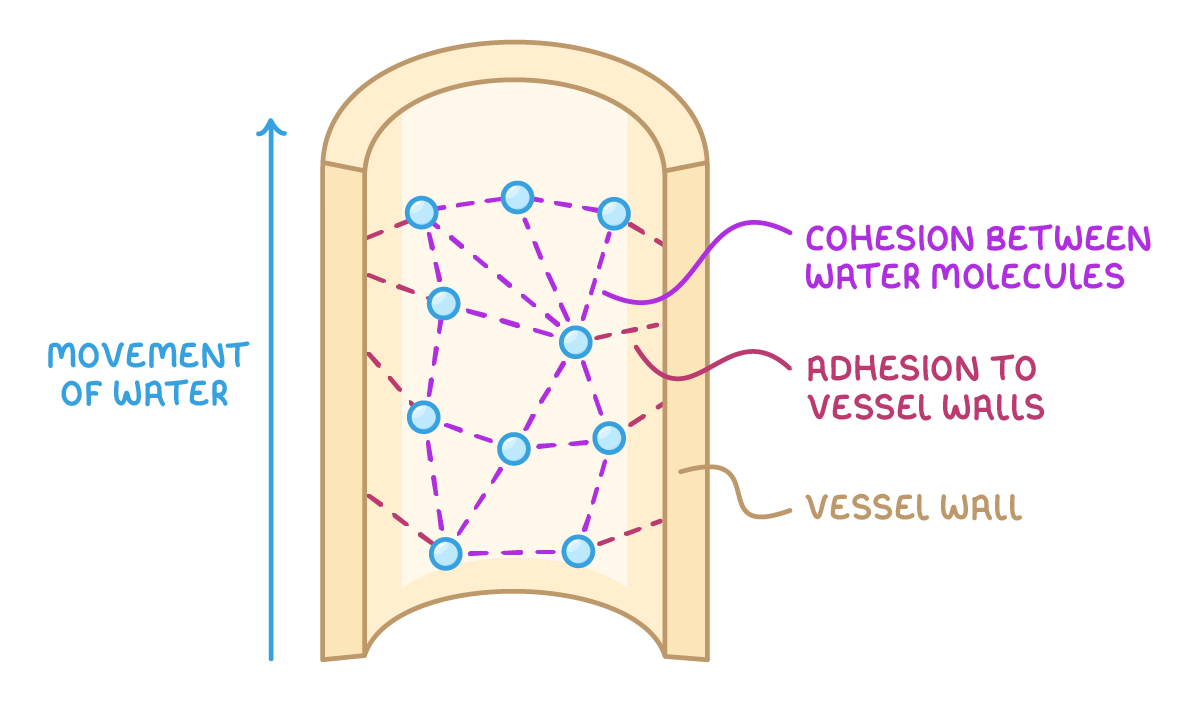
Another key property is surface tension, which makes the surface of water behave like a thin, elastic layer. It results from hydrogen bonds pulling water molecules at the surface inward, creating a tight surface. This allows small insects to walk on water and supports the formation of small water droplets.
These properties are essential for processes like water transport in plants and maintaining structural integrity in small aquatic environments, demonstrating how hydrogen bonding directly impacts biological functions.
The significance of water's properties in biological systems
Water's unique properties, driven by its polarity and hydrogen bonding, are indispensable to life. They underpin numerous biological processes and interactions that sustain living organisms.
Why water is vital for life
- Solvent for biochemical reactions - Water's polarity makes it an excellent medium for dissolving polar molecules and ions, enabling essential chemical reactions in cells, such as nutrient transport and waste removal.
- Temperature regulation - Through its high specific heat capacity and heat of vaporization, water stabilizes temperatures in organisms and their environments, protecting against thermal stress.
- Structural support and transport - Cohesion and adhesion ensure water can move through organisms, providing structural support in plant tissues via turgor pressure and transporting nutrients and gases in blood and sap.
- Interaction with biomolecules - Hydrogen bonding between water and biological molecules like proteins and nucleic acids helps maintain their shapes and functions, which are critical for cellular processes.
Water's combined properties create a foundation for the complex interactions within biological systems, making it a cornerstone of life as we know it.