3.1 - Enzymes
The role of enzymes as biological catalysts
Enzymes are specialized proteins that play a crucial role in biological systems by speeding up chemical reactions inside cells. They act as biological catalysts, meaning they facilitate reactions without being consumed or altered in the process. This ability is vital for the growth, reproduction, and maintenance of dynamic homeostasis in living organisms.
Key characteristics of enzymes as catalysts
- Speed up reactions - Enzymes increase the rate of chemical reactions, allowing essential processes like digestion and energy production to occur efficiently.
- Unchanged by reactions - They remain unchanged after catalyzing a reaction, ready to assist in another reaction cycle.
- Essential for life - Without enzymes, many biological reactions would occur too slowly to sustain life, as they often require high energy or specific conditions not present in cells.
Enzymes are fundamental to cellular energetics, ensuring that metabolic pathways proceed at a pace necessary for survival.
How enzyme structure and function regulate biological processes
The structure of an enzyme is intricately linked to its function, enabling precise control over biological processes. Each enzyme has a unique three-dimensional shape that determines its specific role within the cell. This structure allows enzymes to interact with particular molecules, orchestrating the complex network of reactions needed for life.
Structural features of enzymes
- Active site - A specific region on the enzyme where the reaction occurs. This site has a unique shape and charge that fits only certain molecules, much like a lock fits a specific key.
- Protein composition - Enzymes are made of folded polypeptide chains, and their specific folding creates the functional active site necessary for catalytic activity.
- Regulation of processes - By selectively binding to specific molecules, enzymes control which reactions happen, when they occur, and at what rate, thus maintaining cellular balance.
This structural specificity ensures that enzymes effectively regulate metabolic pathways, preventing chaos in cellular chemistry by targeting only the necessary reactions.
The enzyme-substrate complex model and specificity
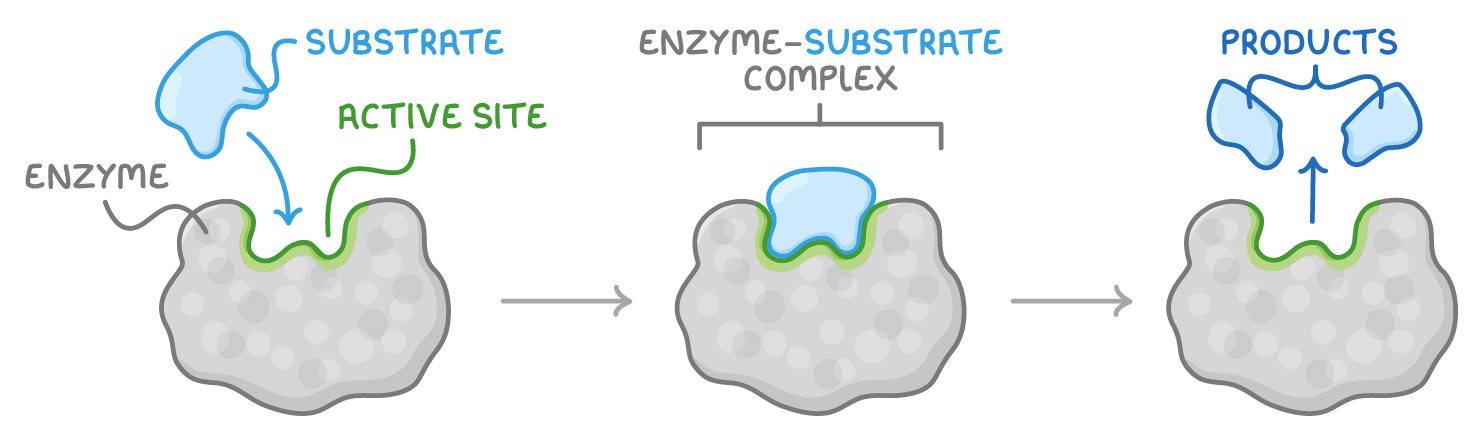
For an enzyme to catalyze a reaction, it must interact with a specific molecule known as the substrate. The enzyme-substrate complex model explains how this interaction works, emphasizing the importance of compatibility between the enzyme's active site and the substrate.
Formation of the enzyme-substrate complex
- Substrate binding - The substrate, the molecule upon which the enzyme acts, binds to the enzyme's active site. This binding is highly specific due to the complementary shape and charge of the active site and substrate.
- Formation of complex - When the substrate binds, it forms a temporary enzyme-substrate complex. This interaction positions the substrate in a way that facilitates the chemical reaction.
- Product release - After the reaction, the products are released from the active site, and the enzyme is free to bind another substrate molecule.
Importance of specificity
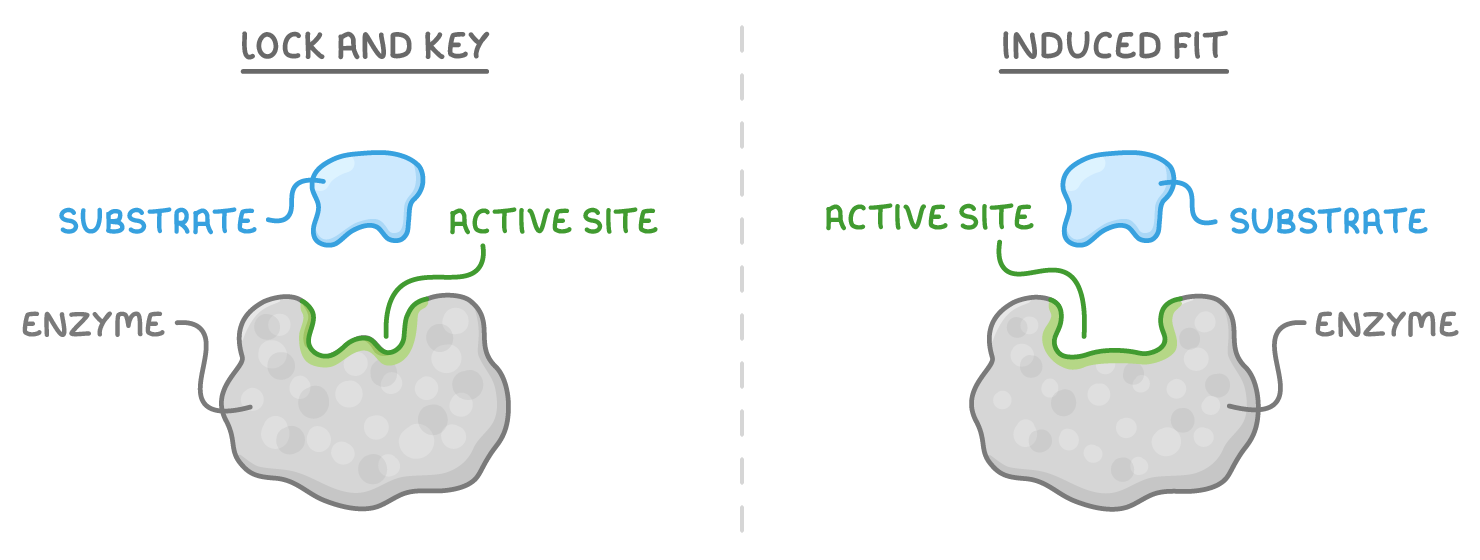
- Lock-and-key analogy - The active site and substrate fit together precisely, like a key into a lock, ensuring that only the correct substrate triggers the reaction.
- Induced fit model - In some cases, the enzyme slightly changes shape upon substrate binding to achieve an even better fit, enhancing the reaction efficiency.
- Preventing errors - Specificity prevents enzymes from catalyzing unintended reactions, maintaining order in cellular processes.
This model highlights why each enzyme typically works with only one type of substrate, ensuring accuracy in biochemical reactions.
The impact of enzymes on activation energy and reaction rates
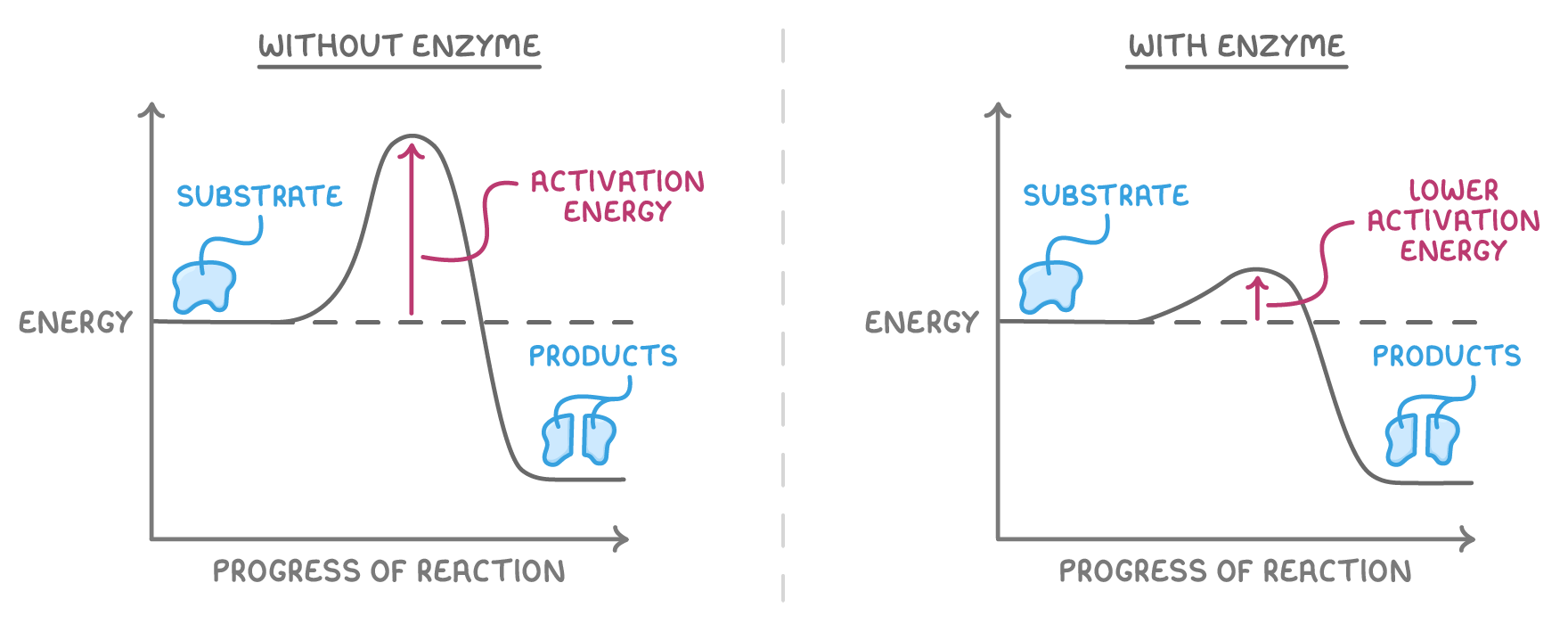
Enzymes dramatically increase the speed of biological reactions by lowering the activation energy required for the reaction to start. Activation energy is the initial energy barrier that reactants must overcome to transform into products. By reducing this barrier, enzymes make reactions feasible under the mild conditions found in cells.
How enzymes lower activation energy
- Stabilizing transition state - Enzymes stabilize the high-energy transition state of the reaction, reducing the energy needed to reach this state. This occurs because the enzyme-substrate complex aligns the reactants in an optimal orientation for the reaction.
- Providing an alternative pathway - Enzymes offer a pathway with a lower energy requirement compared to the uncatalyzed reaction, speeding up the process significantly.
- Resulting in faster rates - As a result of lowered activation energy, reactions that might take hours or days without enzymes can occur in seconds or milliseconds with their help.
Consequences for biological systems
- Efficient metabolism - Lowering activation energy allows metabolic reactions to proceed quickly, supporting energy production and biosynthesis.
- Regulation of pathways - Enzymes control the flow of biochemical pathways by selectively lowering activation energy for specific reactions, ensuring resources are used efficiently.
- Adaptation to conditions - This mechanism enables cells to perform complex reactions under normal physiological conditions, without needing extreme heat or pressure.
By lowering activation energy, enzymes ensure that biological reactions happen at rates compatible with life, making them indispensable for cellular energetics.