3.5 - Cellular Respiration
The purpose and importance of cellular respiration
Cellular respiration is a fundamental biological process that allows organisms to extract energy from biological macromolecules, such as carbohydrates, fats, and proteins, to produce adenosine triphosphate (ATP). ATP serves as the primary energy currency of the cell, driving various cellular functions like muscle contraction, active transport, and synthesis of molecules. This process is characteristic of all forms of life, highlighting its critical role in sustaining life and maintaining dynamic homeostasis - the balance of internal conditions despite external changes.
Why cellular respiration matters
- Energy conversion - It transforms the chemical energy stored in food molecules into ATP, which cells can readily use.
- Universal process - Found in all living organisms, from bacteria to humans, though the specifics can vary (aerobic vs. anaerobic).
- Support for growth and maintenance - Provides the energy needed for growth, reproduction, and repair of tissues by powering biochemical reactions.
The role of mitochondria in ATP production
In eukaryotic cells, mitochondria are the primary site of ATP production through cellular respiration. These organelles have specialized structural features that enhance their ability to generate energy efficiently from biological macromolecules.
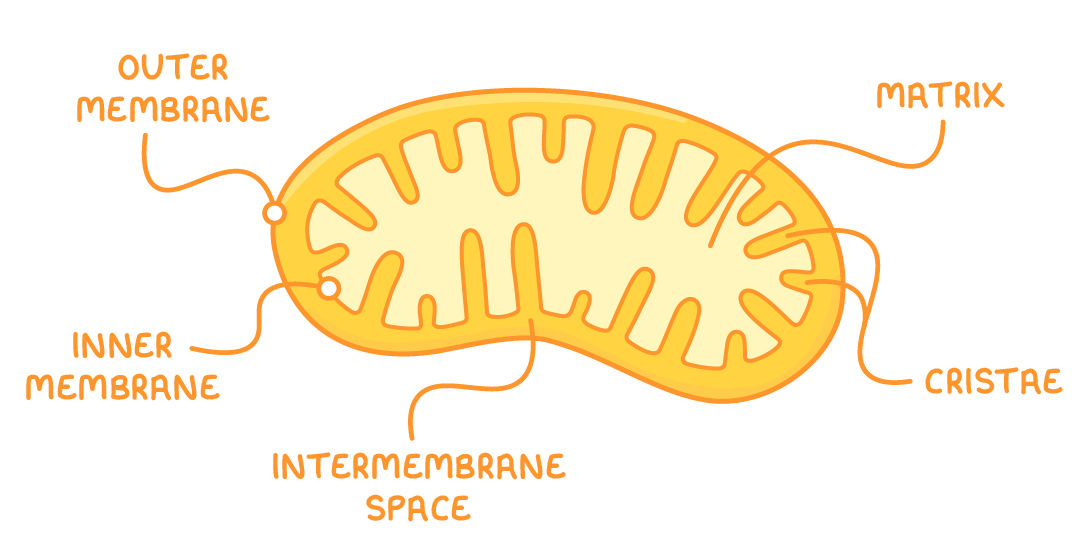
Structural features of mitochondria
- Double membrane - Mitochondria have an outer membrane and a highly folded inner membrane, known as cristae. The folding increases the surface area for energy-producing reactions.
- Intermembrane space - The space between the outer and inner membranes where protons (H+ ions) accumulate, creating a concentration gradient crucial for ATP synthesis.
- Mitochondrial matrix - The inner compartment enclosed by the inner membrane, where key reactions of cellular respiration occur and enzymes are located.
Functional importance of mitochondria
- Energy synthesis hub - Mitochondria host the majority of reactions in aerobic cellular respiration, converting energy from macromolecules into ATP.
- Surface area optimization - The folded cristae provide more space for the electron transport chain (ETC), a series of proteins that transfer electrons to generate energy, allowing for greater ATP production.
- Gradient formation - The structure supports the creation of an electrochemical gradient across the inner membrane, which drives ATP formation.
The stages of aerobic cellular respiration in eukaryotes
Aerobic cellular respiration is a series of coordinated enzyme-catalyzed reactions that capture energy from biological macromolecules in the presence of oxygen. This process occurs in distinct stages, each contributing to the overall production of ATP. It is divided into three main stages: glycolysis, the Krebs cycle (also called the citric acid cycle), and the electron transport chain with oxidative phosphorylation.
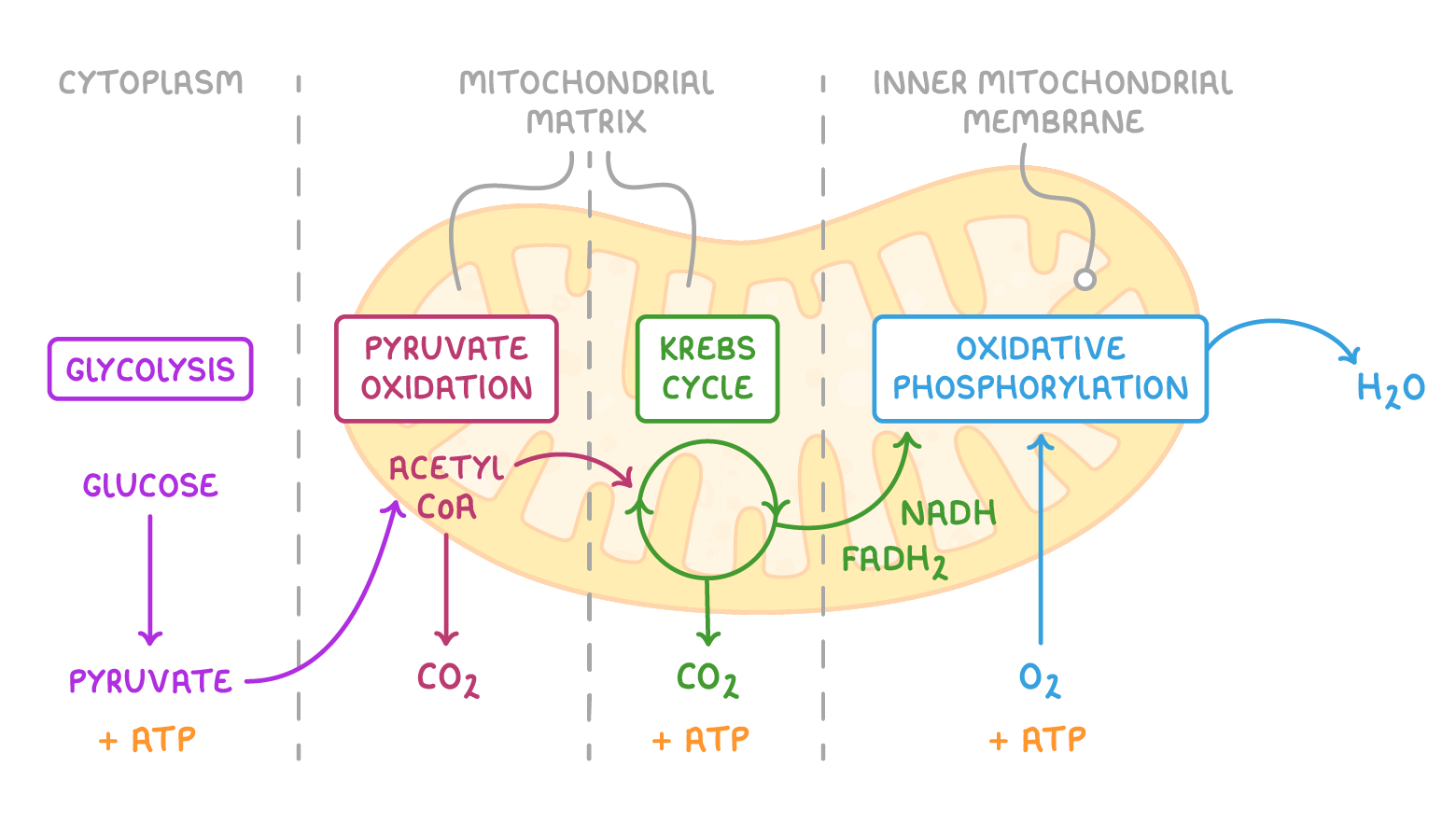
Stage 1: Glycolysis
Glycolysis is the first stage of cellular respiration, occurring in the cytosol of the cell (the fluid-filled space outside the organelles). It does not require oxygen, making it a universal step in both aerobic and anaerobic respiration.
Key steps in glycolysis:
- Input and breakdown - A single glucose molecule (a six-carbon sugar) is broken down into two molecules of pyruvate (a three-carbon compound).
- Energy release - This process releases a small amount of energy, producing a net gain of 2 ATP molecules from ADP (adenosine diphosphate) and inorganic phosphate.
- Electron carriers - It also generates 2 NADH molecules (from NAD+), which are electron carriers that will be used later to produce more ATP.
- Outcome - Pyruvate moves to the next stage if oxygen is present; otherwise, fermentation may occur.
Stage 2: Pyruvate oxidation and the Krebs cycle
If oxygen is available, pyruvate is transported from the cytosol into the mitochondrial matrix, where it undergoes further oxidation. This stage includes pyruvate oxidation and the Krebs cycle, both occurring inside the mitochondria.
Pyruvate oxidation:
- Conversion - Each pyruvate molecule is converted into a compound called acetyl-CoA, releasing carbon dioxide (CO2) as a waste product.
- Electron transfer - During this step, NAD+ is reduced to NADH, capturing electrons for later use in ATP production.
Krebs cycle:
- Location - Takes place in the mitochondrial matrix.
- Cycle process - Acetyl-CoA enters the cycle, combining with other molecules to form intermediates that are progressively broken down, releasing CO2.
- Energy capture - For each glucose molecule (which produces two pyruvate), the cycle generates 2 ATP, 6 NADH, and 2 FADH2 (another electron carrier) from FAD.
- Purpose - The main role is to extract electrons from intermediates and transfer them to NADH and FADH2 for the next stage.
Stage 3: Electron transport chain and oxidative phosphorylation
The final stage occurs along the inner mitochondrial membrane and is where the majority of ATP is produced. It involves the electron transport chain (ETC) and a process called oxidative phosphorylation.
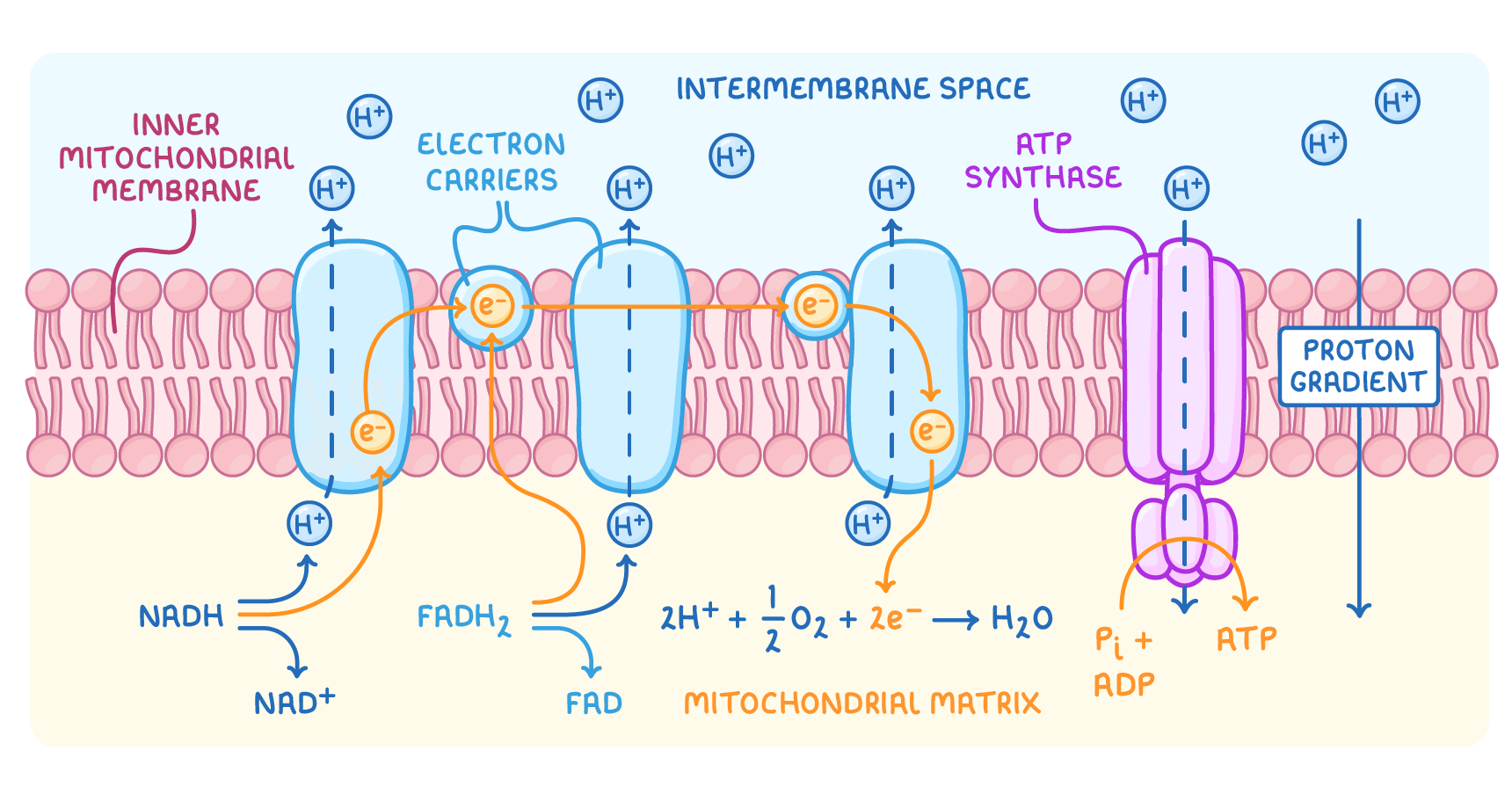
Electron transport chain (ETC):
- Electron delivery - NADH and FADH2 deliver electrons extracted from earlier stages to the ETC, a series of protein complexes embedded in the inner membrane.
- Electron transfer - Electrons pass through the ETC in a series of oxidation-reduction reactions, moving toward oxygen, the terminal electron acceptor, which combines with protons to form water (H2O).
- Proton gradient formation - As electrons move, energy released drives the pumping of protons (H+ ions) from the matrix into the intermembrane space, creating a proton gradient - a higher concentration of protons outside the inner membrane than inside.
- pH difference - This results in a higher pH (less acidic) in the matrix compared to the intermembrane space.
Oxidative phosphorylation:
- Chemiosmosis - The proton gradient drives protons to flow back into the matrix through a membrane-bound enzyme called ATP synthase, moving from high to low concentration.
- ATP synthesis - This flow of protons powers ATP synthase to convert ADP and inorganic phosphate (Pi) into ATP. Together, chemiosmosis and ATP synthesis make up oxidative phosphorylation.
- Energy yield - This stage produces the majority of ATP in aerobic respiration, significantly more than glycolysis or the Krebs cycle.
The process of fermentation as an alternative energy pathway
When oxygen is absent, cells cannot perform aerobic respiration beyond glycolysis. Instead, they use fermentation to regenerate NAD+, allowing glycolysis to continue producing a small amount of ATP. Fermentation occurs in the cytosol and does not involve mitochondria.
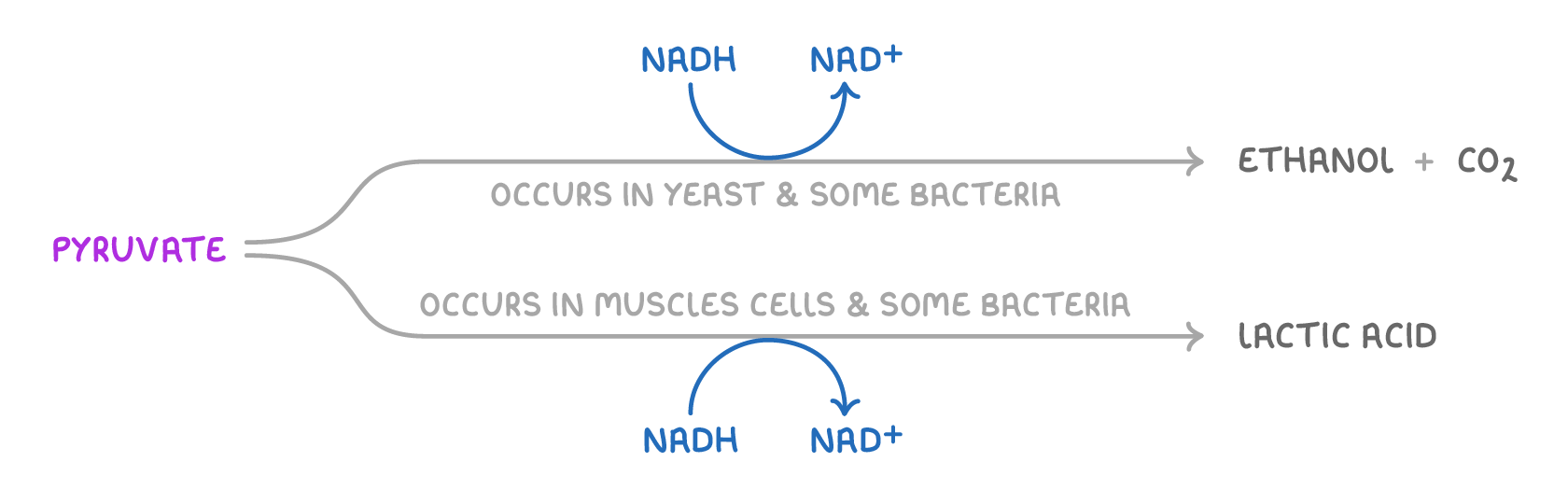
How fermentation works
Fermentation converts pyruvate into other organic molecules to recycle NAD+, which is essential for glycolysis to keep running.
Types of fermentation:
- Lactic acid fermentation - Occurs in muscle cells and some bacteria, converting pyruvate into lactic acid. This can cause muscle fatigue during intense exercise.
- Alcohol fermentation - Occurs in yeast and some bacteria, converting pyruvate into ethanol and CO2, used in brewing and baking.
Fermentation produces only 2 ATP per glucose molecule through glycolysis, far less efficient than aerobic respiration.
Significance of fermentation
- Survival mechanism - Enables cells to generate energy under anaerobic conditions (without oxygen), such as in deep-sea environments or during short bursts of activity.
- Temporary solution - Provides a quick but limited energy supply until oxygen becomes available for more efficient aerobic respiration.
The significance of electron transfer and proton gradients in ATP synthesis
The electron transport chain and the resulting proton gradient are central to the high energy yield of aerobic respiration. These processes explain how cells maximize energy extraction from macromolecules.
Key mechanisms in ATP synthesis
- Electron transfer in ETC - Electrons from NADH and FADH2 move through the ETC, releasing energy at each step. This energy pumps protons across the inner mitochondrial membrane.
- Electrochemical gradient - The accumulation of protons in the intermembrane space creates both a concentration gradient and an electrical gradient (due to positive charge), driving protons back into the matrix through ATP synthase.
- Chemiosmosis and ATP production - The proton flow through ATP synthase provides the energy to bind ADP and inorganic phosphate into ATP, a process critical to powering cellular activities.
Additional role in endothermic organisms
- Heat generation - In some cases, oxidative phosphorylation can be decoupled from electron transport, meaning the proton gradient's energy is released as heat instead of ATP.
- Body temperature regulation - This heat is used by endothermic organisms (like mammals) to maintain body temperature, especially in cold environments.
How cellular respiration powers cellular functions
Cellular respiration is the primary way cells obtain energy from biological macromolecules to fuel their activities. By breaking down molecules like glucose, cells produce ATP, which directly powers a wide range of processes essential for life.
Cellular functions driven by ATP
- Active transport - Moves molecules against their concentration gradient, such as sodium-potassium pumps in nerve cells maintaining electrical signals.
- Muscle contraction - Provides energy for actin and myosin filaments to slide past each other during movement.
- Biosynthesis - Supports the synthesis of proteins, lipids, and other macromolecules needed for cell growth and repair.
- Cell division - Fuels the processes of mitosis and cytokinesis during growth and tissue regeneration.
Efficiency and adaptability
- High efficiency in aerobic conditions - Aerobic respiration maximizes ATP production (up to 36-38 ATP per glucose) compared to fermentation (2 ATP per glucose).
- Adaptability to conditions - Cells switch between aerobic respiration and fermentation based on oxygen availability, ensuring energy production continues even in challenging environments.