5.4 - Non-mendelian Genetics
Deviations from Mendel's inheritance patterns
Mendel's laws of inheritance, such as the law of segregation and the law of independent assortment, provide a foundational understanding of how traits are passed from parents to offspring. However, many traits do not follow the simple ratios Mendel predicted (like 3:1 or 9:3:3:1). These deviations occur due to complex genetic interactions and can often be identified through quantitative analysis, where observed phenotypic ratios statistically differ from the expected ratios.
Why deviations occur
- Complex gene interactions - Some traits are influenced by multiple genes or unique inheritance patterns that do not align with Mendel's simple dominance-recessive model.
- Statistical analysis - By comparing observed data with expected Mendelian ratios using tools like chi-square hypothesis testing, scientists can confirm deviations.
- Diverse mechanisms - Factors like gene location, expression patterns, and non-nuclear DNA contribute to inheritance patterns beyond Mendel's predictions.
This section explores specific mechanisms that cause these deviations, building a deeper understanding of genetic inheritance.
Genetic linkage and gene mapping
Genes located on the same chromosome are often inherited together because they do not assort independently during meiosis. This phenomenon is known as genetic linkage, and it directly contradicts Mendel's law of independent assortment.
Genetic linkage
Genetic linkage occurs when genes on the same chromosome are inherited together because they do not segregate independently during meiosis.
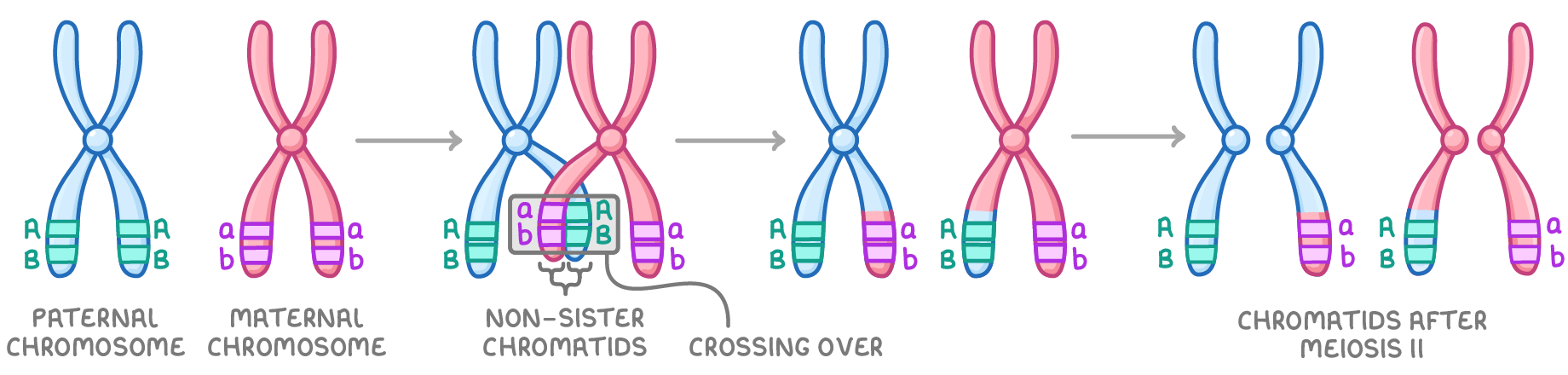
Key features of genetic linkage:
- Linked genes - Genes on the same chromosome are referred to as genetically linked, meaning they are likely to be passed on together to offspring.
- Reduced recombination - Since linked genes are close on the chromosome, the chance of crossing over (exchange of genetic material between homologous chromosomes) separating them is lower.
- Impact on inheritance - Linked genes produce phenotypic ratios that deviate from Mendelian predictions because they do not segregate independently.
Gene mapping and map units
The probability that linked genes will segregate together can be used to calculate the distance between them on a chromosome. This process is called gene mapping, and the distance is measured in map units (also known as centimorgans).
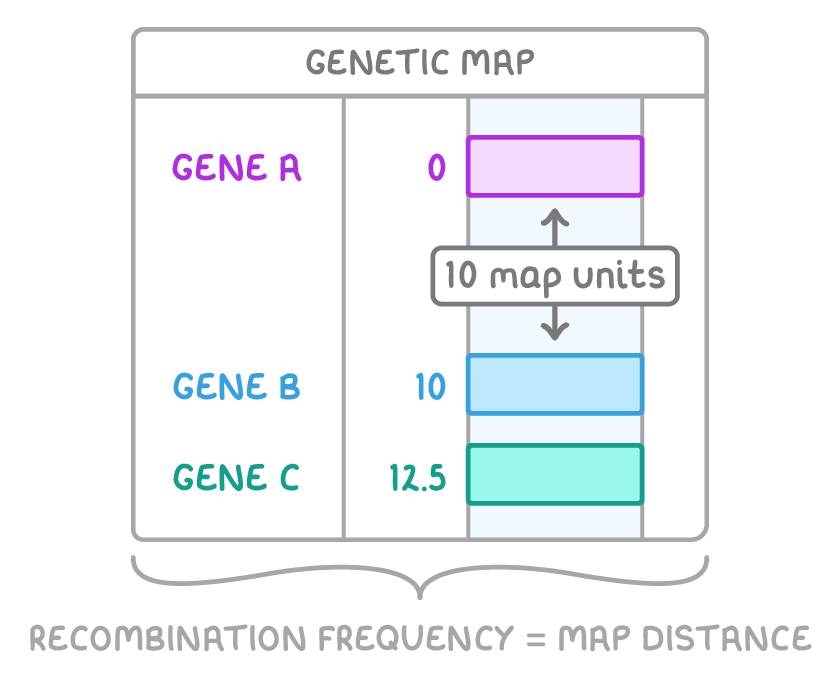
How gene mapping works:
- Recombination frequency - The percentage of offspring showing recombinant traits (due to crossing over) indicates how far apart two genes are on a chromosome.
- Map distance calculation - If 10% of offspring show recombination between two genes, the genes are 10 map units apart. A higher recombination frequency means the genes are farther apart.
- Purpose - Mapping helps scientists understand the relative positions of genes on chromosomes, aiding in genetic research and predicting inheritance patterns.
Codominance and incomplete dominance in trait expression
Not all traits follow the simple dominant-recessive pattern Mendel described. Two key exceptions are codominance and incomplete dominance, where alleles interact in ways that produce unique phenotypes in heterozygous individuals.
Codominance
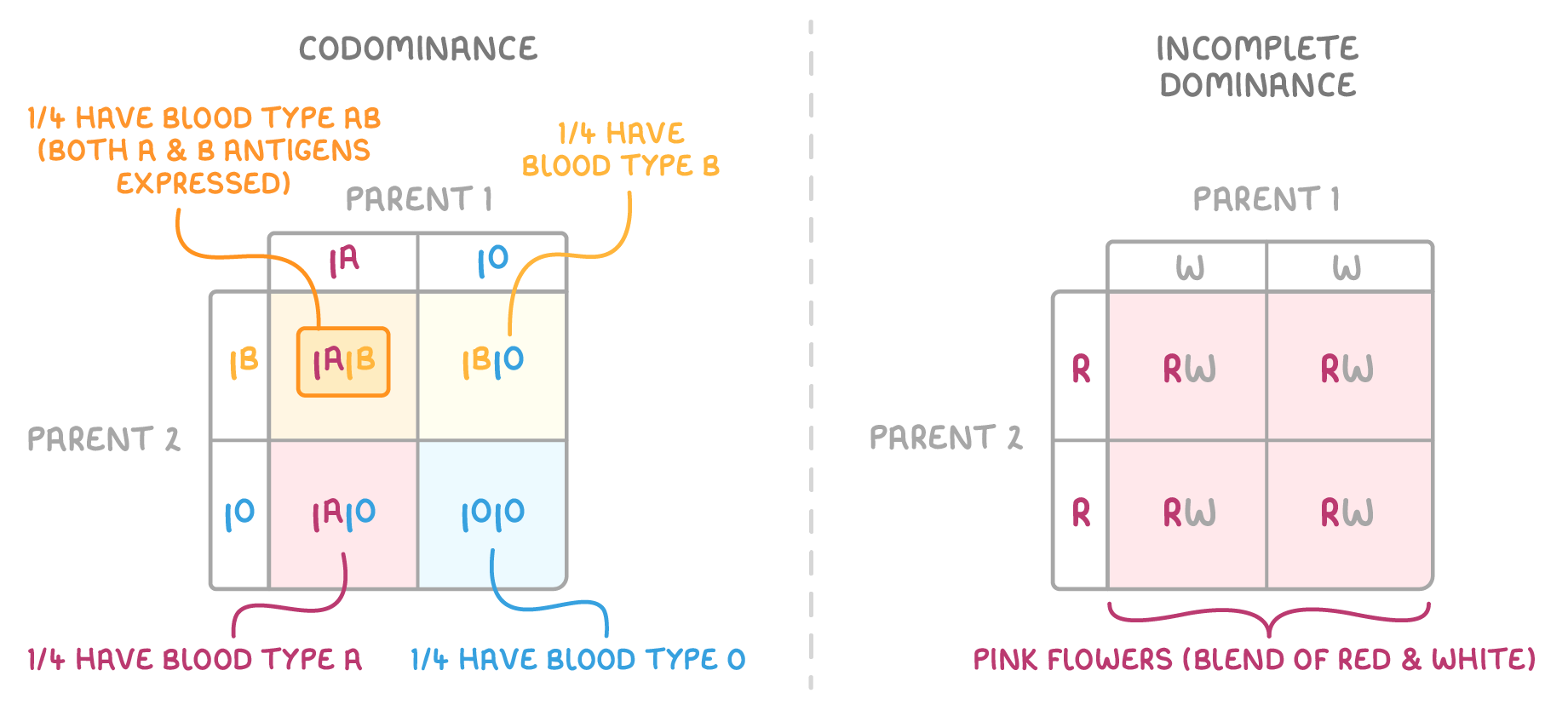
Codominance occurs when both alleles of a gene are fully expressed in the heterozygous state, resulting in a phenotype that shows traits of both alleles simultaneously.
Characteristics of codominance:
- Example - In human blood types, the ABO system demonstrates codominance. Individuals with AB blood type express both A and B antigens on their red blood cells, rather than one masking the other.
- Phenotypic outcome - The heterozygous phenotype is distinct from either homozygous phenotype, as both traits are visible.
Incomplete dominance
Incomplete dominance happens when neither allele completely masks the other, leading to a phenotype in heterozygotes that is an intermediate blend of the two homozygous phenotypes.
Characteristics of incomplete dominance:
- Example - In snapdragon flowers, crossing a red-flowered plant (RR) with a white-flowered plant (WW) produces pink-flowered offspring (RW). The pink color is a blend of red and white.
- Phenotypic outcome - The heterozygous phenotype is a mix, not resembling either homozygous trait fully.
These patterns show how allele interactions can create diverse phenotypes beyond simple dominance, explaining deviations from Mendelian ratios.
Sex-linked inheritance and its patterns
Some traits are determined by genes located on sex chromosomes (X or Y in humans), leading to unique inheritance patterns that differ from autosomal traits. These are called sex-linked traits, and their inheritance can often be predicted using data such as pedigrees, which show genotypes and phenotypes across generations.
Sex-linked traits
Sex-linked traits are controlled by genes located on sex chromosomes, creating inheritance patterns that differ from autosomal traits.
Key features of sex-linked inheritance:
- Sex chromosomes - In humans, females have two X chromosomes (XX), while males have one X and one Y chromosome (XY). Genes on these chromosomes control sex-linked traits.
- X-linked traits - Most sex-linked traits are on the X chromosome. Since males have only one X chromosome, they express X-linked recessive traits more frequently than females, who need two copies of the recessive allele to show the trait.
- Y-linked traits - Traits on the Y chromosome are passed only from father to son, as only males inherit the Y chromosome.
- Inheritance patterns - Sex-linked traits often show skewed ratios in offspring. For example, X-linked recessive disorders like color blindness are more common in males (XY) than in females (XX) because males lack a second X chromosome to mask the recessive allele.
Examples and variations
- Higher incidence in males - X-linked recessive traits, such as hemophilia (a blood clotting disorder), appear at higher rates in males because they inherit only one X chromosome.
- Alternative sex determination - Not all species use X and Y chromosomes for sex determination. For instance, birds use a ZW system (females are ZW, males are ZZ), and bees use haploidiploidy (males are haploid, females are diploid), leading to different sex-linked inheritance patterns.
Pedigree analysis is a key tool for predicting these patterns, revealing how sex-linked traits are transmitted through families.
Pleiotropy and its impact on multiple traits
Sometimes, a single gene influences more than one trait, a phenomenon known as pleiotropy. This results in multiple phenotypic effects from the expression of just one gene, leading to traits that do not segregate independently as Mendel predicted.
Pleiotropy
Pleiotropy occurs when one gene affects multiple, often unrelated, traits in an organism.
How pleiotropy works:
- Mechanism - The gene may code for a protein that plays roles in different biological pathways, impacting various characteristics.
- Example - In humans, the gene causing sickle cell anemia affects red blood cell shape but also influences resistance to malaria. This single gene has multiple effects on the body.
- Impact on inheritance - Since one gene controls several traits, these traits are inherited together, deviating from Mendel's independent assortment rule.
Pleiotropy illustrates the complexity of genetic interactions, where a single genetic change can ripple through multiple aspects of an organism's phenotype.
Non-nuclear inheritance in mitochondria and chloroplasts
Not all genetic material is found in the nucleus of a cell. Some traits are determined by DNA in organelles like mitochondria and chloroplasts, leading to inheritance patterns that do not follow Mendelian rules. This is called non-nuclear inheritance.
Characteristics of non-nuclear inheritance
- Random assortment - Unlike nuclear genes, mitochondrial and chloroplast DNA are randomly assorted to gametes and daughter cells during reproduction. This randomness results in unpredictable inheritance patterns.
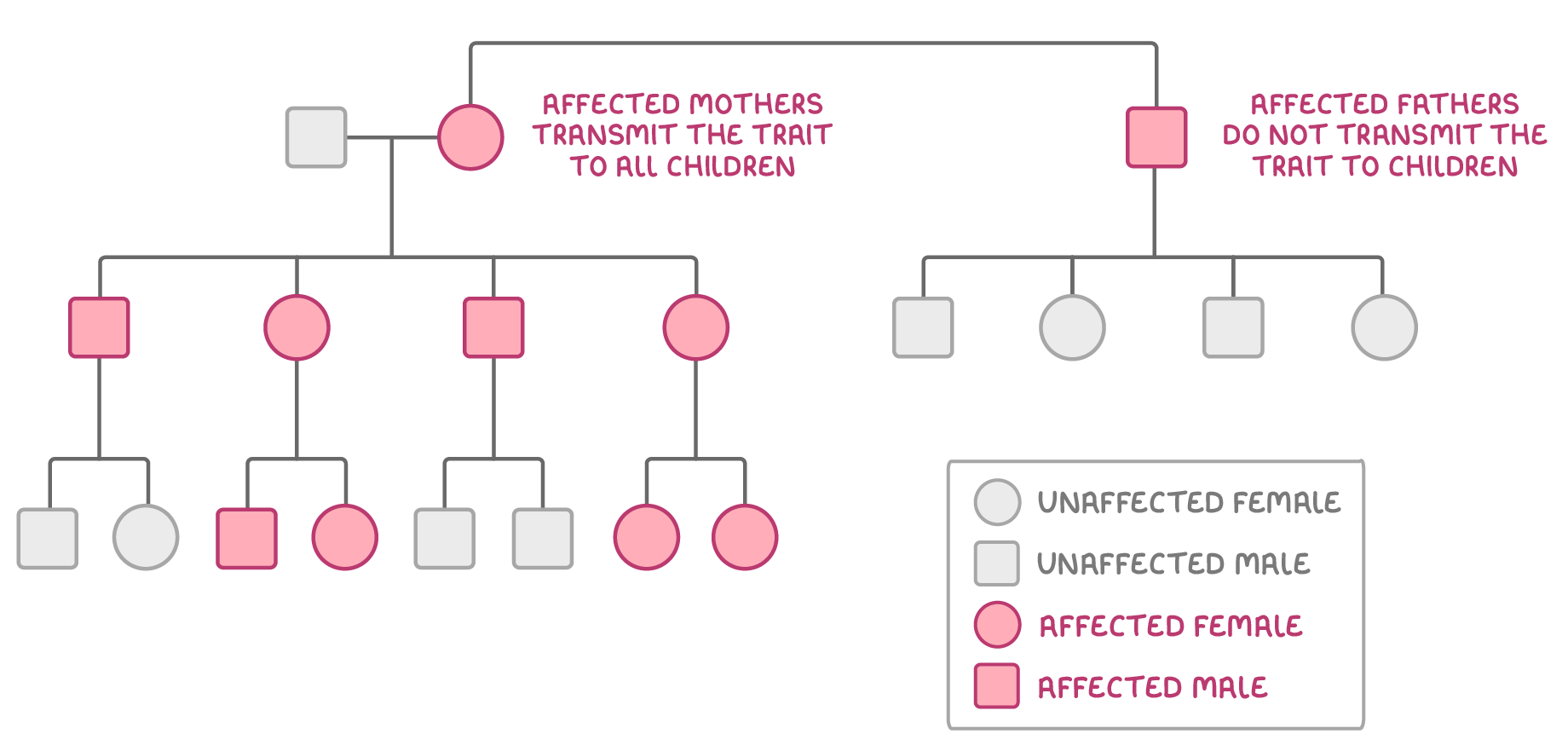
- Maternal inheritance in animals - In most animals, mitochondria are transmitted through the egg, not the sperm. Therefore, traits determined by mitochondrial DNA are typically passed from mother to offspring.
- Maternal inheritance in plants - In plants, both mitochondria and chloroplasts are transmitted through the ovule (the structure that becomes the seed), not the pollen. As a result, traits determined by these organelles are also maternally inherited.
Examples and implications
- Human mitochondrial disorders - Conditions like Leber's hereditary optic neuropathy, caused by mutations in mitochondrial DNA, are passed from mother to child because only the egg contributes mitochondria.
- Plant variegation - Some plants show leaf variegation (mixed green and white patterns) due to chloroplast DNA mutations. Since chloroplasts are inherited through the ovule, this trait follows maternal lines.
Non-nuclear inheritance highlights how genetic material outside the nucleus contributes to phenotypic diversity, creating inheritance patterns that deviate from Mendelian expectations.