6.4 - Translation
The role of translation in determining phenotype from genotype
The phenotype of an organism, which refers to its observable traits, is determined by its genotype, the specific set of genes it carries. This connection is made through the process of gene expression, where genetic information is used to create functional products like proteins. Translation is a critical step in this process, as it converts the genetic code carried in messenger RNA (mRNA) into a sequence of amino acids that form a polypeptide, ultimately becoming a functional protein that influences traits.
How translation bridges genotype to phenotype
- Genetic code in mRNA - The genotype is encoded in DNA, which is transcribed into mRNA during the first step of gene expression.
- Protein synthesis - Translation reads the mRNA sequence to assemble amino acids into proteins, which directly contribute to physical and biochemical traits.
- Functional outcome - Proteins determine cell structure, function, and interactions, thus shaping the organism's phenotype, such as eye color or enzyme activity.
This process ensures that the instructions in an organism's DNA are expressed as visible or functional characteristics through the synthesis of specific proteins.
Location and timing of translation in cells
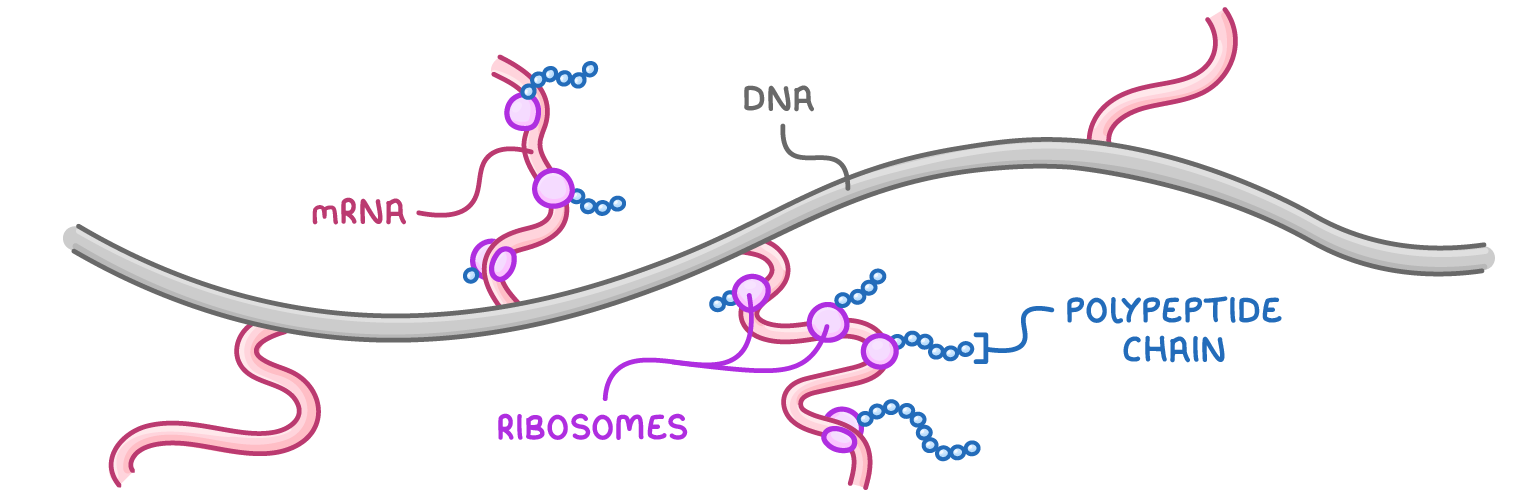
Translation occurs on specialized structures called ribosomes, which are molecular machines responsible for protein synthesis. However, the location and timing of translation differ between prokaryotic and eukaryotic organisms due to differences in their cellular organization.
Translation in prokaryotic cells
- Location - Takes place in the cytoplasm, as prokaryotes lack membrane-bound organelles.
- Timing - Occurs simultaneously with transcription, the process of making mRNA from DNA. This means that as soon as a segment of mRNA is transcribed, ribosomes can begin translating it into a protein.
- Efficiency - This coupling of transcription and translation allows for rapid protein production in response to environmental changes.
Translation in eukaryotic cells
- Location - Happens in the cytoplasm on free ribosomes or on ribosomes attached to the rough endoplasmic reticulum (rough ER), a network of membranes involved in protein processing. Proteins destined for secretion or membrane insertion are typically translated on the rough ER.
- Timing - Occurs after transcription is complete. In eukaryotes, transcription happens in the nucleus, and the mRNA must be processed and transported to the cytoplasm before translation begins.
- Regulation - The separation of transcription and translation allows for additional control points, ensuring proper mRNA processing before protein synthesis.
These differences highlight how cellular structure influences the timing and location of translation, affecting how quickly and where proteins are made.
The stages of translation: initiation, elongation, and termination
Translation is a highly organized process that occurs in three main stages: initiation, elongation, and termination. Each stage involves specific molecular interactions to ensure that the mRNA sequence is accurately converted into a polypeptide chain.
Initiation of translation
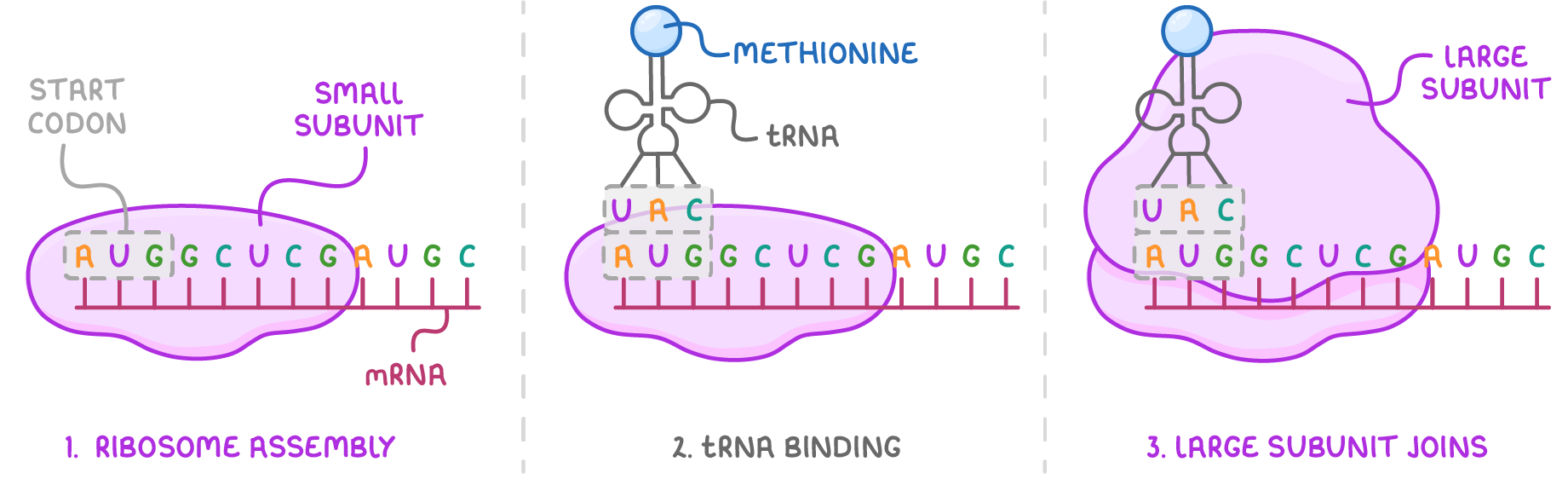
- Ribosome assembly - The process begins when the small subunit of the ribosome binds to the mRNA at a specific sequence near the start codon, a triplet of nucleotides that signals the beginning of the protein-coding region.
- Start codon recognition - The start codon is always AUG, which codes for the amino acid methionine. This codon sets the reading frame for the entire mRNA sequence.
- tRNA binding - A transfer RNA (tRNA) molecule, carrying methionine, pairs with the start codon through complementary base pairing.
- Large subunit joins - The large subunit of the ribosome joins the complex, forming a complete ribosome ready to synthesize the protein.
This stage ensures that translation starts at the correct point on the mRNA, establishing the foundation for accurate protein assembly.
Elongation of the polypeptide chain
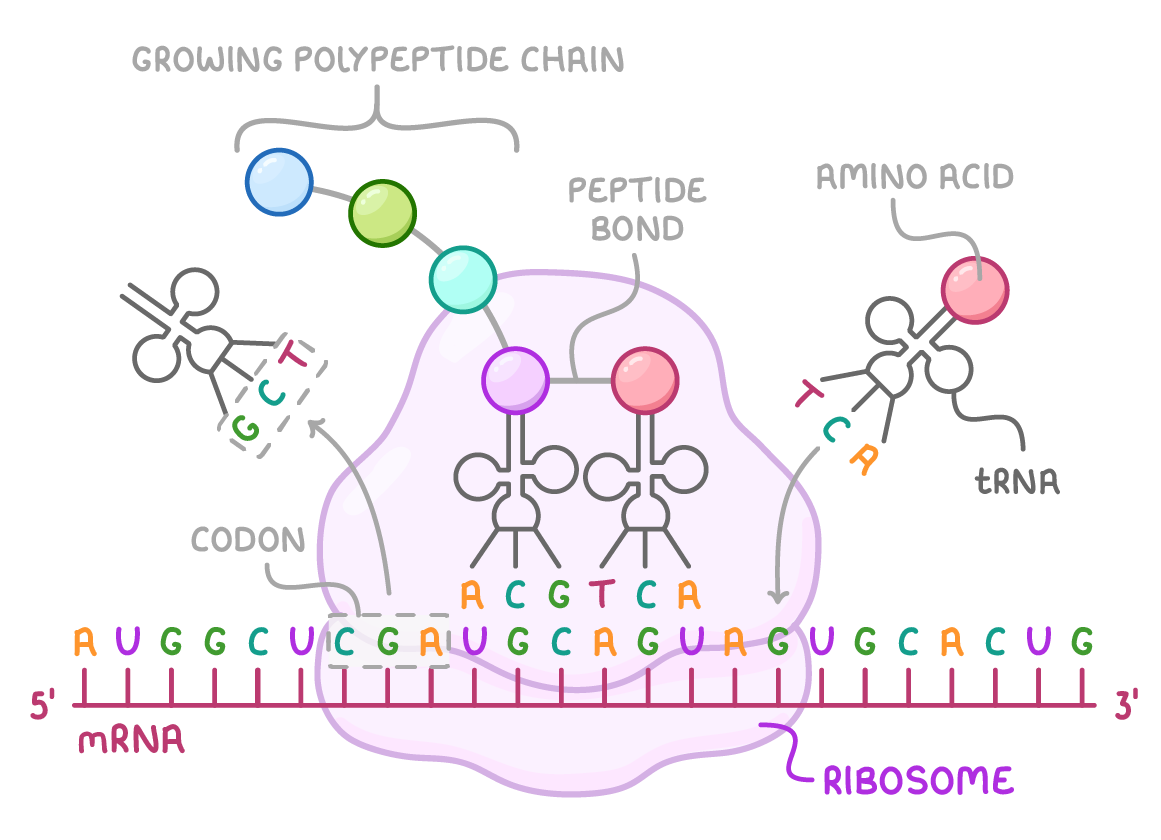
- Codon reading - The ribosome moves along the mRNA, reading the sequence in groups of three nucleotides called codons. Each codon specifies a particular amino acid.
- tRNA delivery - For each codon, a matching tRNA molecule brings the corresponding amino acid to the ribosome. The tRNA binds temporarily to the codon via base pairing.
- Peptide bond formation - The amino acid from the tRNA is transferred to the growing polypeptide chain through a chemical reaction that links it to the previous amino acid, forming a peptide bond.
- Ribosome movement - The ribosome shifts to the next codon, releasing the empty tRNA and making room for the next one. This process repeats, extending the polypeptide chain.
Elongation continues codon by codon, building the protein one amino acid at a time until the entire sequence is read.
Termination of translation
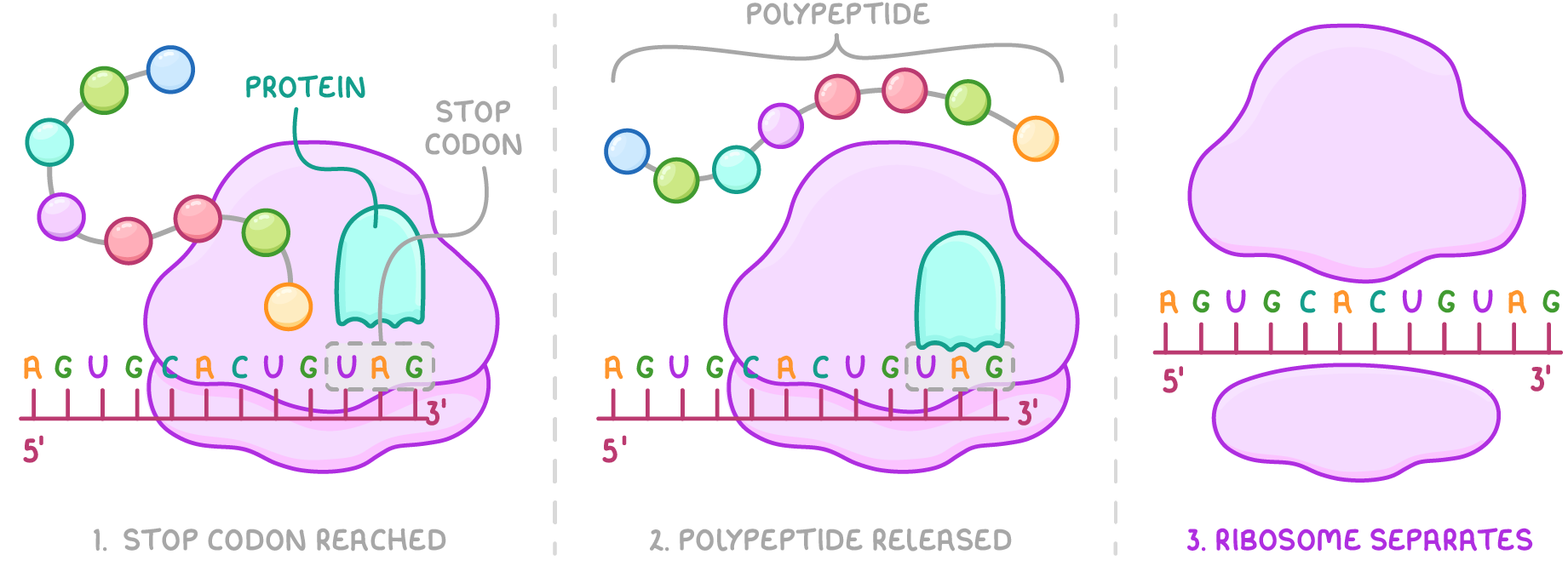
- Stop codon encounter - The process stops when the ribosome reaches a stop codon on the mRNA. Stop codons do not code for amino acids but signal the end of translation.
- Release of polypeptide - Special proteins bind to the stop codon, triggering the release of the newly synthesized polypeptide chain from the ribosome.
- Ribosome disassembly - The ribosome components separate from the mRNA, ready to be reused for another round of translation.
Termination completes the synthesis of the protein, which then folds into its functional shape or undergoes further modifications.
The genetic code and its universal nature
The genetic code is the set of rules by which the nucleotide sequence in mRNA is translated into a sequence of amino acids in a protein. This code is nearly identical across all living organisms, providing strong evidence for the shared ancestry of life on Earth.
Key features of the genetic code
- Triplet code - Each set of three nucleotides, or codon, specifies one amino acid. This means that the mRNA is read in groups of three bases at a time.
- Redundancy - Many amino acids are encoded by multiple codons. For example, several different codons can code for the same amino acid, which provides a buffer against certain mutations.
- Start and stop signals - The codon AUG serves as the start signal and codes for methionine, while specific codons act as stop signals to end translation.
- Universality - With very few exceptions, the same codons code for the same amino acids in bacteria, plants, animals, and other organisms. This shared code suggests that all life evolved from a common ancestor.
The universal nature of the genetic code underscores the fundamental unity of life, as the same molecular language is used to build proteins across diverse species.
Special case: Genetic information flow in retroviruses
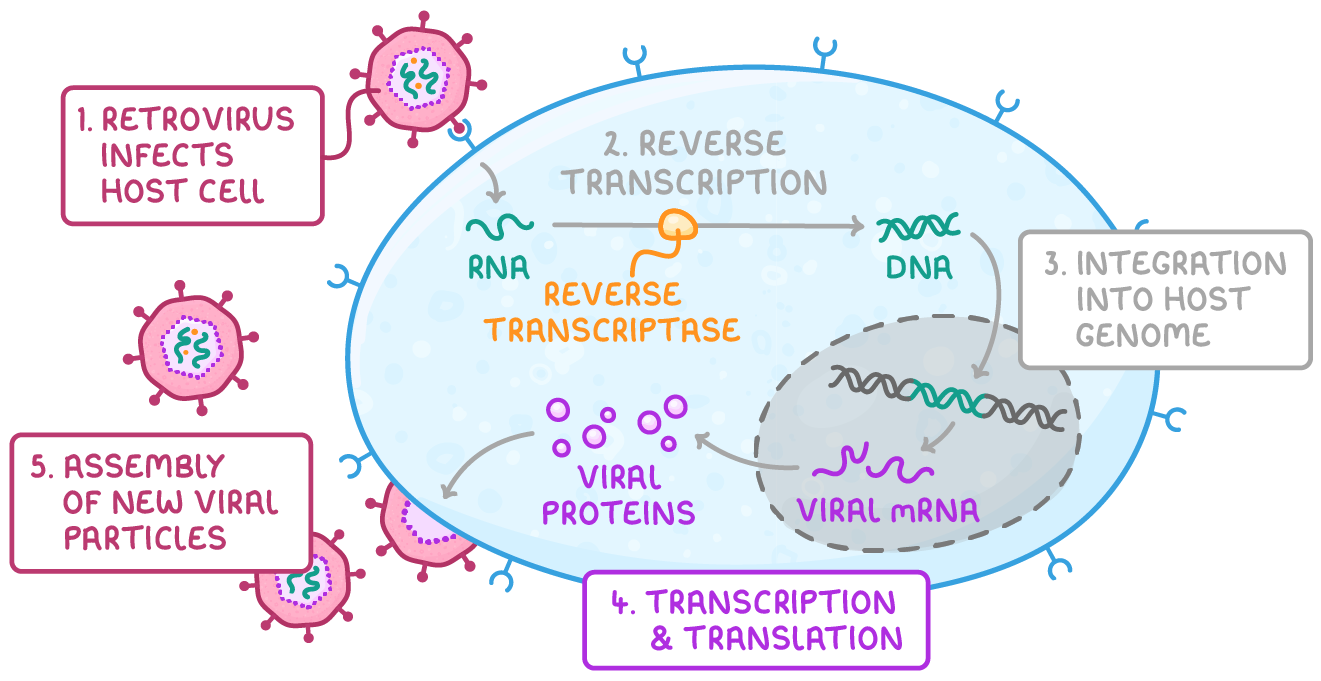
While the typical flow of genetic information in most organisms is from DNA to RNA to protein, retroviruses represent a unique exception. These viruses use an alternate pathway to replicate and integrate into host cells, demonstrating the flexibility of genetic processes.
Retrovirus replication process
- RNA as genetic material - Unlike most organisms, retroviruses store their genetic information in RNA rather than DNA.
- Reverse transcription - Upon infecting a host cell, retroviruses use an enzyme called reverse transcriptase to copy their RNA genome into DNA. This step reverses the usual direction of information flow.
- Integration into host genome - The newly synthesized viral DNA integrates into the host cell's DNA, becoming a permanent part of the host genome.
- Transcription and translation - The integrated viral DNA is transcribed into mRNA by the host's machinery, and this mRNA is translated to produce viral proteins necessary for assembling new viral particles.
- Assembly of progeny - The viral proteins and RNA come together to form new retrovirus particles, which can then infect other cells.
This unique flow of information, from RNA to DNA, highlights the adaptability of genetic systems and is a key feature of retroviruses like HIV (human immunodeficiency virus). It also illustrates how exceptions to standard biological processes can have significant impacts, such as in viral infections.