8.2 - Energy Flow Through Ecosystems
Strategies organisms use to acquire and use energy
Organisms rely on energy to perform essential life functions such as growth, reproduction, and maintaining homeostasis (a stable internal environment despite external changes). Different species have evolved unique strategies to acquire and manage energy, which directly influence their survival and reproductive success.
Regulation of body temperature and metabolism
Organisms use distinct methods to control body temperature and metabolism, which are critical for energy management.
Temperature regulation strategies:
- Endotherms - These organisms, such as mammals and birds, generate thermal energy through metabolism to maintain a constant body temperature. This allows them to remain active in a wide range of environmental conditions but requires significant energy input.
- Ectotherms - These organisms, including reptiles and amphibians, lack efficient internal mechanisms for temperature regulation. Instead, they rely on behavioral strategies like basking in the sun or seeking shade to manage body temperature, which conserves energy but limits activity in extreme conditions.
Energy balance and its impacts
The balance between energy intake and expenditure determines an organism's overall health and reproductive capacity.
Effects of energy balance:
- Net energy gain - When organisms acquire more energy than they expend, the surplus is stored (often as fat or carbohydrates), leading to growth and increased reproductive output.
- Net energy loss - When energy expenditure exceeds intake, organisms lose mass, experience reduced reproductive success, and, if prolonged, may face death due to insufficient energy for basic functions.
Reproductive strategies linked to energy availability
Energy availability influences how organisms reproduce, with strategies often adapted to maximize success under varying conditions.
Reproductive strategies:
- Seasonal reproduction - Many animals and plants time their reproductive cycles to periods of high energy availability, such as spring or rainy seasons, ensuring resources for offspring.
- Alternating reproductive modes - Some organisms switch between asexual reproduction (requiring less energy) during times of scarcity and sexual reproduction (more energy-intensive but increasing genetic diversity) when energy is abundant.
- Life-history strategies - Certain species, like biennial plants (plants that complete their life cycle over two years), store energy in the first year to reproduce in the second. Others may enter reproductive diapause (a temporary halt in reproduction) during energy shortages to conserve resources.
Energy flow and matter cycling through trophic levels
Ecosystems are organized into hierarchical levels, and energy flows through these levels while matter is recycled. Understanding these dynamics is crucial to grasping how life is sustained within an ecosystem.
Ecological levels of organization
Ecosystems are structured into progressively larger units, each encompassing interactions among living and non-living components.
Levels of organization:
- Populations - Groups of individuals of the same species living in a specific area.
- Communities - Collections of different populations interacting in a shared environment.
- Ecosystems - Communities plus their abiotic (non-living) environment, including energy and nutrient flows.
- Biomes - Large-scale ecosystems with similar climate and vegetation, such as deserts or tropical rainforests.
Overview of energy flow and matter cycling
Energy and matter move through ecosystems in fundamentally different ways, supporting life at every level.
Key differences:
- Energy flow - Energy enters ecosystems primarily through sunlight, captured by producers, and flows unidirectionally through trophic levels, with significant loss as heat at each step.
- Matter cycling - Unlike energy, matter (such as carbon, nitrogen, and water) is conserved and recycled through biogeochemical cycles. These cycles involve both abiotic (non-living) and biotic (living) components and are interdependent, ensuring a continuous supply of essential elements for life.
Key biogeochemical cycles in ecosystems
Biogeochemical cycles describe how matter moves between living organisms and the environment. Each cycle involves reservoirs (where matter is stored) and processes (how matter moves between reservoirs). Below are the major cycles critical to ecosystem function.
The hydrologic (water) cycle
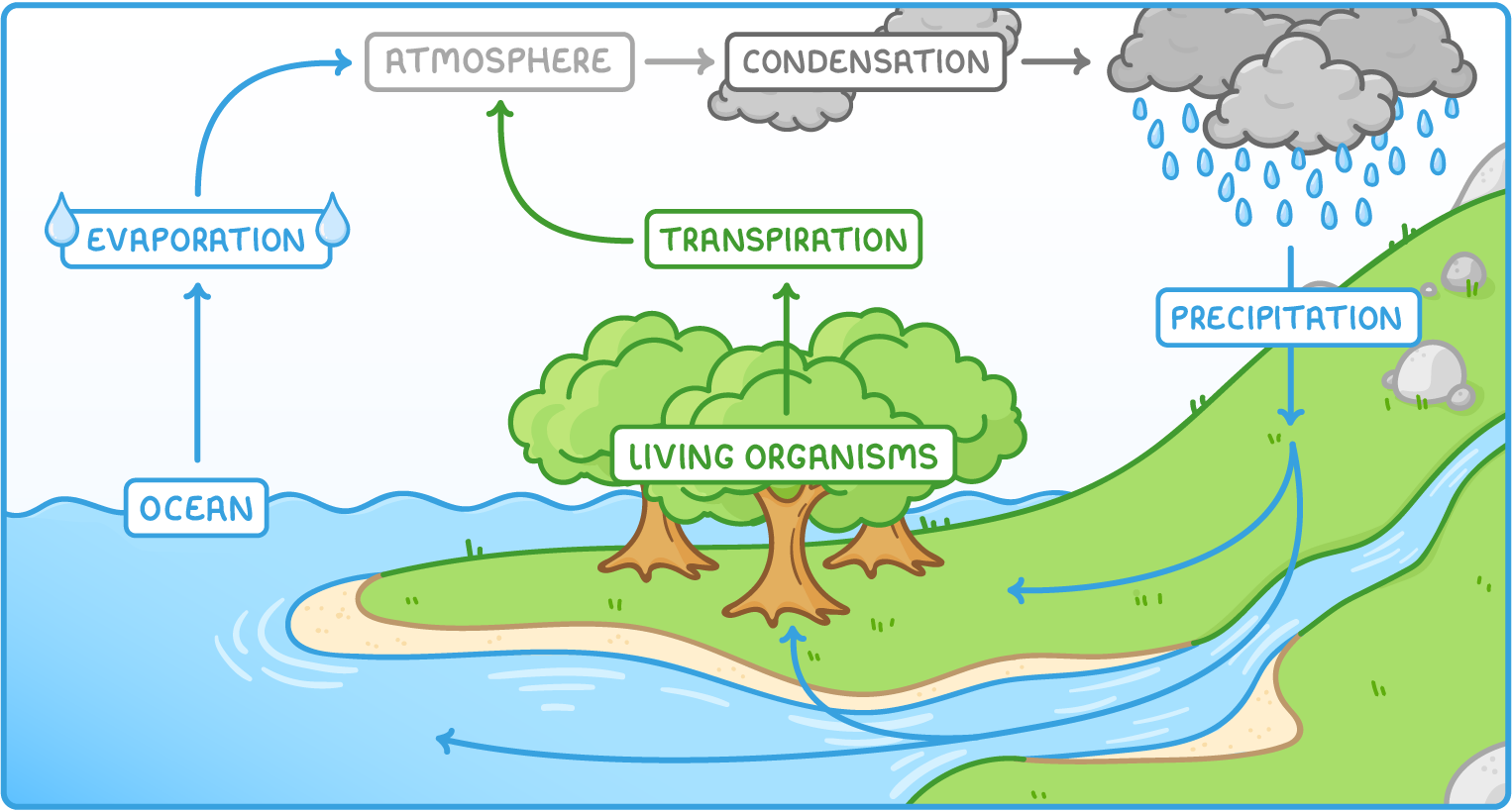
The hydrologic cycle describes the movement and storage of water within the hydrosphere (the combined mass of water on Earth).
Reservoirs:
- Oceans (largest reservoir)
- Surface water (lakes, rivers)
- Atmosphere (water vapor)
- Living organisms
Key processes:
- Evaporation - Water transforms from liquid to vapor, moving from oceans and surface water to the atmosphere.
- Condensation - Water vapor cools and forms clouds in the atmosphere.
- Precipitation - Water returns to the surface as rain, snow, or other forms.
- Transpiration - Plants release water vapor into the atmosphere through tiny pores in their leaves.
The carbon cycle
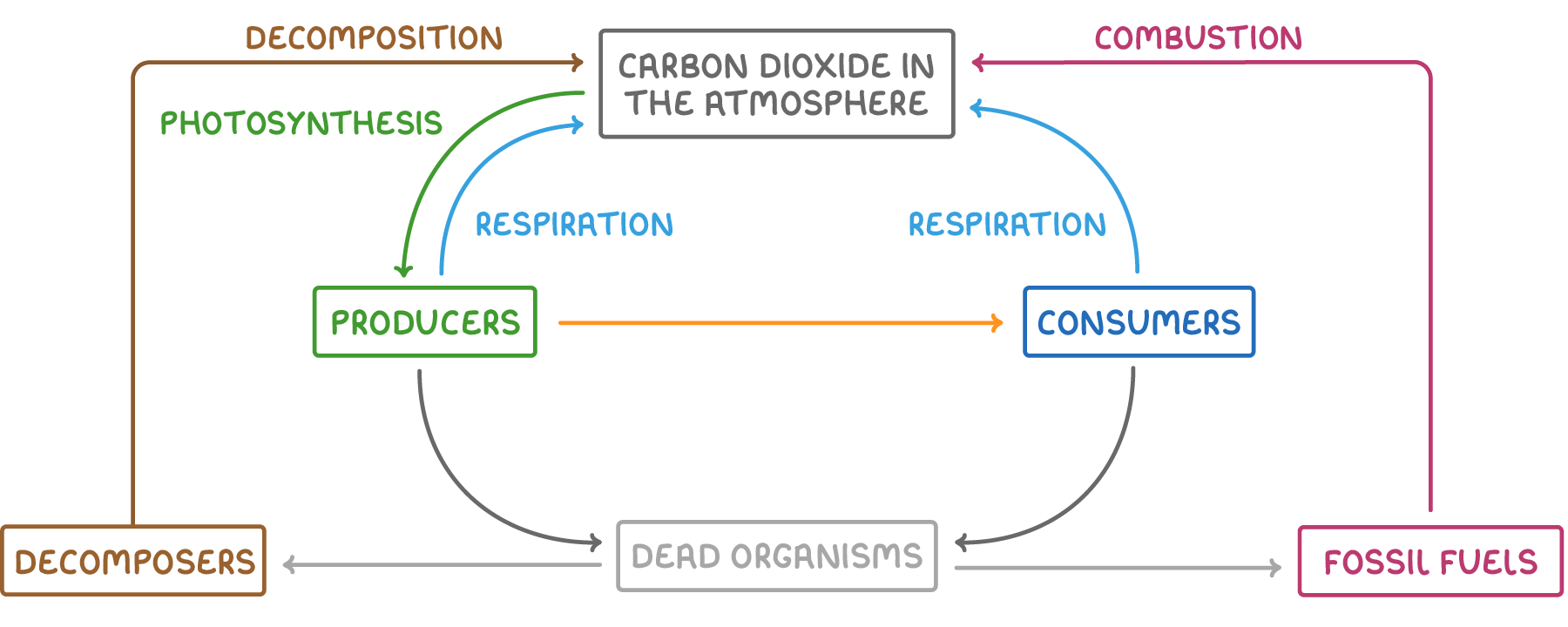
The carbon cycle recycles carbon atoms through Earth's biosphere, sustaining life by providing the backbone for organic molecules.
Reservoirs:
- Atmosphere (as carbon dioxide, CO2)
- Oceans
- Soil
- Fossil fuels
- Living organisms (as carbohydrates and other molecules)
Key processes:
- Photosynthesis - Plants and other autotrophs convert CO2 and water into carbohydrates using sunlight, storing carbon in biomass. The equation is:
- Cellular respiration - Organisms break down carbohydrates to release energy, returning CO2 to the atmosphere. The equation is:
- Decomposition - Decomposers break down dead organic matter, releasing CO2 back into the environment.
- Combustion - Burning fossil fuels or biomass releases stored carbon as CO2 into the atmosphere.
The nitrogen cycle
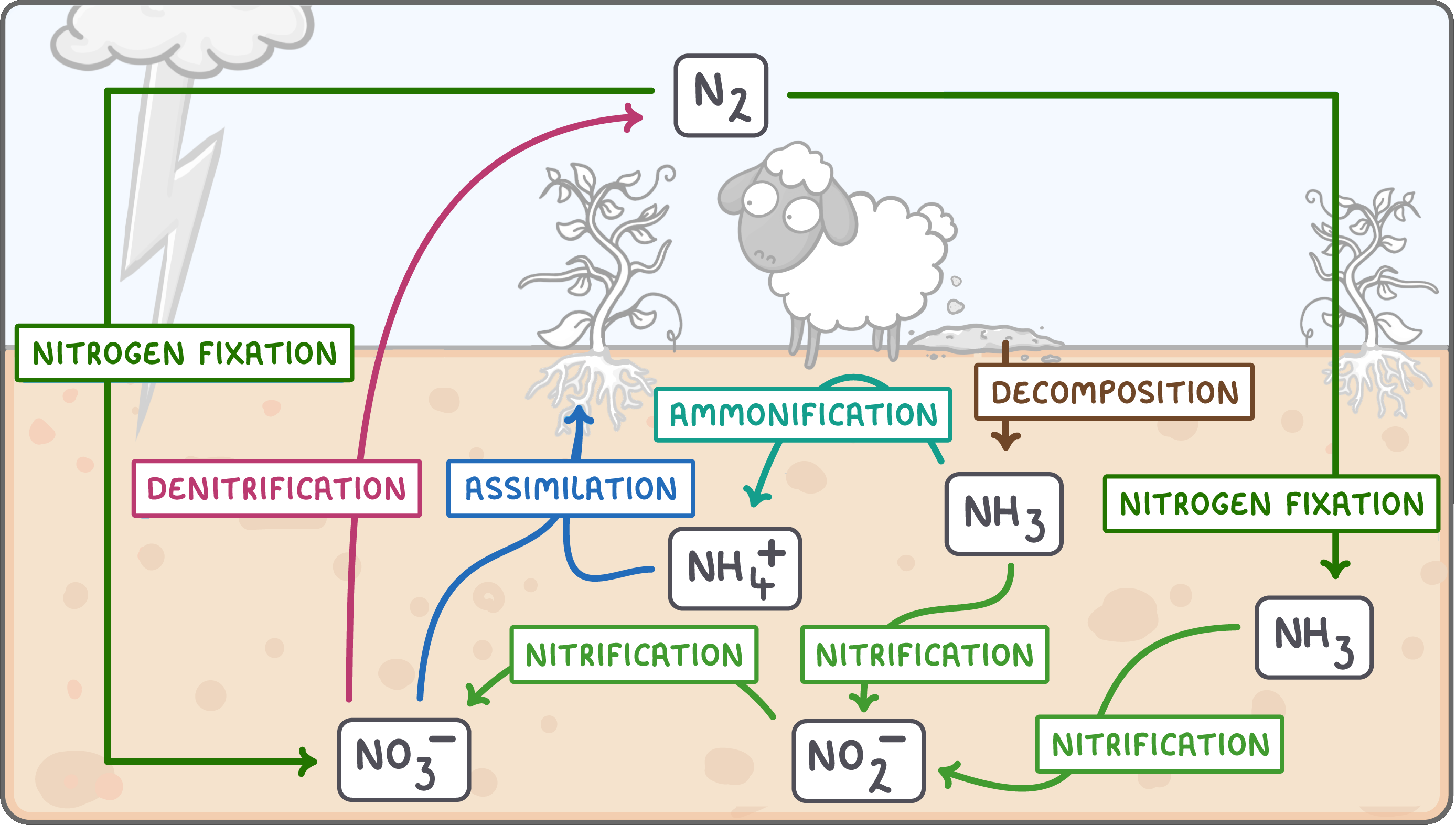
The nitrogen cycle transforms nitrogen into forms usable by organisms, despite most nitrogen existing as an inert gas in the atmosphere.
Reservoirs:
- Atmosphere (as nitrogen gas, N2, the largest reservoir)
- Soil
- Water
- Living organisms
Key processes:
- Nitrogen fixation - Microorganisms convert N2 into ammonia (NH3), which ionizes to ammonium (NH4+) by acquiring hydrogen ions from soil. This makes nitrogen accessible to plants.
- Assimilation - Plants absorb ammonium or nitrates and incorporate nitrogen into biological molecules like proteins.
- Ammonification - Decomposers convert organic nitrogen from dead organisms back into ammonium.
- Nitrification - Soil bacteria convert ammonia into nitrites (NO2-) and then nitrates (NO3-), which plants can also use.
- Denitrification - Bacteria convert nitrates back into N2, returning it to the atmosphere.
The phosphorus cycle
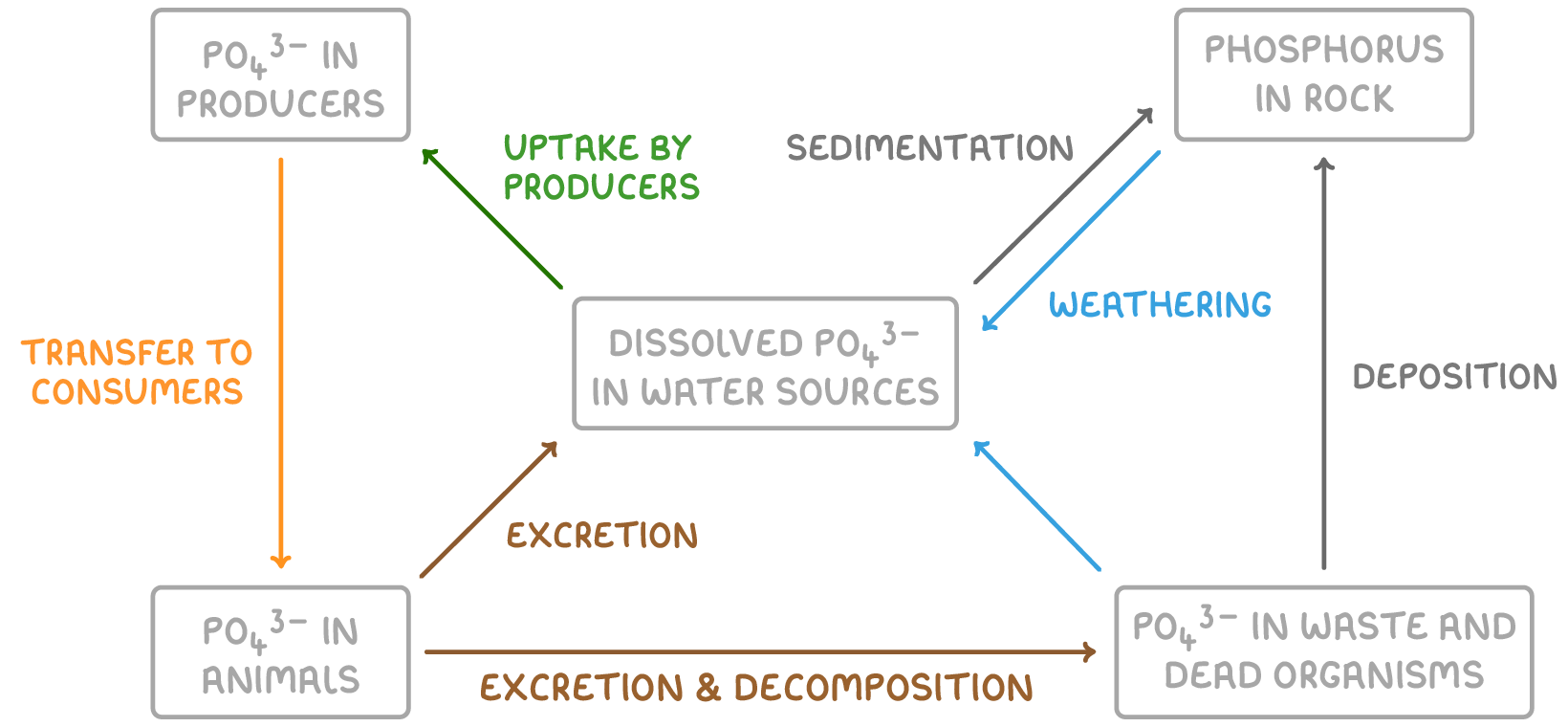
The phosphorus cycle recycles phosphorus, a critical component of DNA, RNA, and energy molecules like ATP, through ecosystems.
Reservoirs:
- Rocks and soil (as phosphate, PO43-)
- Water
- Living organisms
Key processes:
- Weathering - Rocks release phosphate into soil and water through physical and chemical breakdown.
- Uptake by producers - Plants absorb phosphate and incorporate it into biological molecules.
- Transfer to consumers - Animals obtain phosphorus by eating plants or other animals.
- Return to environment - Phosphorus returns to soil or water through excretion and decomposition of dead organisms.
- Deposition and sedimentation - The phosphorous from waste, dead organisms, and dissolved in water sources returns to phosphorous in rock.
Effects of energy availability changes on populations and ecosystems
Energy availability is a fundamental driver of ecological dynamics. Changes in energy resources can ripple through populations, communities, and entire ecosystems, altering their structure and function.
Effects of energy changes on population size
- Increased energy availability - Abundant energy resources, such as more sunlight or food, can lead to population growth as organisms have more resources for reproduction and survival.
- Decreased energy availability - Limited energy, due to factors like drought or reduced sunlight, often results in population decline as individuals struggle to meet basic energy needs.
Disruptions to ecosystems
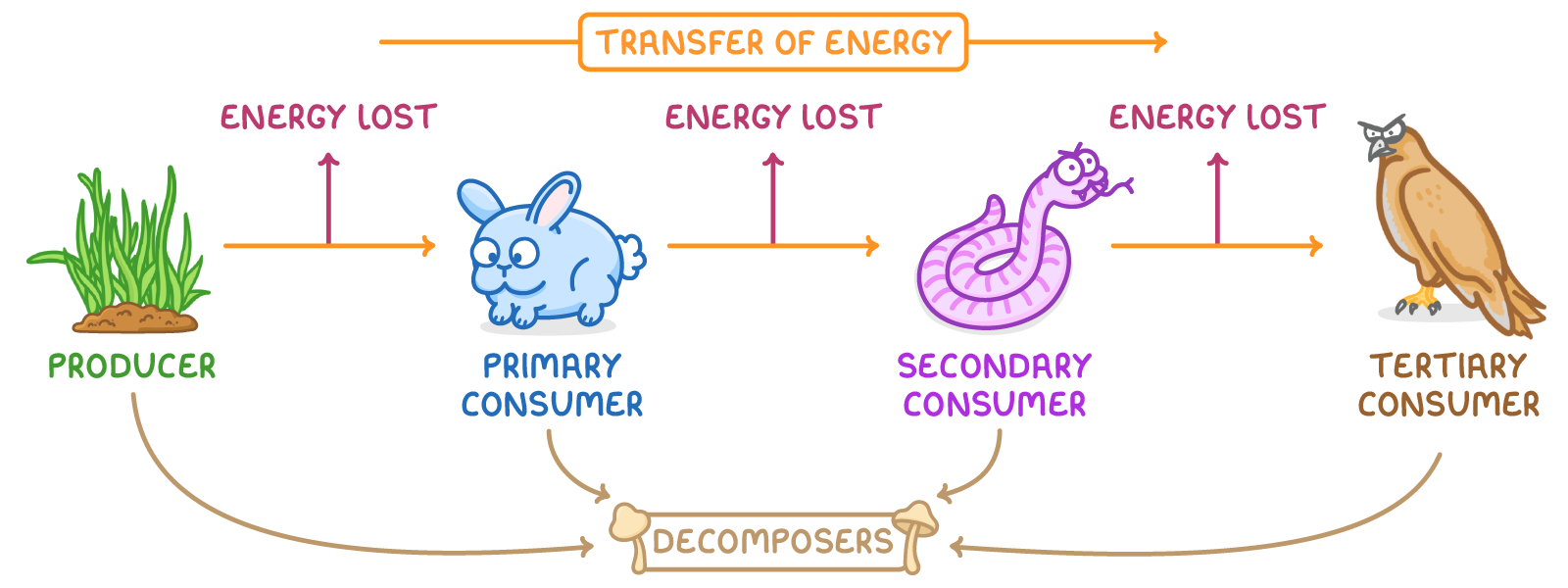
Changes in energy availability can destabilize ecosystems by affecting the balance between trophic levels, which are feeding levels in a food chain or web.
Trophic levels:
- Producers - Organisms like plants that create their own food using energy from sunlight or chemicals.
- Primary consumers - Herbivores that eat producers.
- Secondary consumers - Carnivores or omnivores that eat primary consumers.
- Tertiary and quaternary consumers - Higher-level predators that feed on lower consumers.
- Decomposers - Organisms like fungi and bacteria that break down dead matter, recycling nutrients.
Effects of energy changes on ecosystems:
- A change in sunlight availability can alter the biomass (total mass of living matter) of producers, which impacts the number and size of higher trophic levels. For instance, less sunlight reduces plant growth, leading to fewer herbivores and subsequently fewer predators.
- A decrease in the number of producers in a region can cascade through the food web, shrinking populations at each trophic level due to reduced energy transfer.
Roles of autotrophs and heterotrophs in energy flow
Energy flow within ecosystems begins with organisms capturing energy from the environment and passing it through trophic levels. Two main groups, autotrophs and heterotrophs, play distinct roles in this process.
Autotrophs: Capturing environmental energy
Autotrophs are organisms that produce their own food by harnessing energy from physical or chemical sources, forming the base of the food chain.
Types of autotrophs:
- Photosynthetic autotrophs - These organisms, such as plants, algae, and some bacteria, capture sunlight energy through photosynthesis, converting it into chemical energy stored in carbohydrates. This process contributes to primary productivity (the rate at which energy is converted into biomass by producers).
- Chemosynthetic autotrophs - Found in environments like deep-sea vents, these organisms capture energy from inorganic molecules (like hydrogen sulfide) to produce food, often in the absence of oxygen. This allows ecosystems to thrive in extreme conditions where sunlight is unavailable.
Heterotrophs: Utilizing energy from organic matter
Heterotrophs are organisms that cannot produce their own food and instead obtain energy by consuming organic matter derived from autotrophs or other heterotrophs.
Characteristics of heterotrophs:
- Energy acquisition - Heterotrophs, including animals, fungi, and many bacteria, consume autotrophs or other organisms to access the energy stored in carbon compounds.
- Matter incorporation - As heterotrophs digest food, they incorporate matter into their own tissues for growth and maintenance, passing energy up the trophic levels.
- Energy transfer inefficiency - Only a small fraction of energy (typically about 10%) is transferred from one trophic level to the next, as much is lost as heat or used in metabolic processes, limiting the length of food chains.