5.3 - Endocrine System: Glands & Hormones
The structure and function of the endocrine system
The endocrine system, often referred to as the hormonal system, is a network of glands and hormones that play a vital role in regulating numerous bodily functions.
Core components of the endocrine system
- Glands - These are specialised groups of cells that produce and release hormones. For example, the pancreas is a gland that secretes insulin.
- Hormones - Known as chemical messengers, hormones are substances like proteins, peptides (e.g., insulin), or steroids (e.g., progesterone).
- Target cells and organs - Hormones bind to specific receptors on the membranes of target cells, which are located in target organs, initiating a response in those cells.
How the endocrine system operates
- Stimulation of glands - Glands release hormones in response to triggers such as changes in the concentration of certain substances (including other hormones) or electrical signals.
- Transportation via blood - Once secreted, hormones diffuse into the bloodstream and are carried throughout the body by the circulatory system.
- Specific binding - Hormones diffuse out of the blood across the body but only bind to specific receptors on target cells, ensuring targeted effects.
- Response initiation - Upon binding, hormones trigger specific responses in the target cells, known as effectors, to regulate bodily functions.
The role of hormones as chemical messengers
Hormones act as the primary means of communication within the endocrine system, delivering instructions to specific parts of the body to maintain balance and respond to changes.
Key characteristics of hormones
- Selective action - Hormones only affect cells with the appropriate receptors, ensuring precise control over bodily responses.
- Diverse functions - They regulate a wide range of processes, including metabolism, sleep patterns, growth, and reproductive functions.
- Circulatory distribution - Hormones travel through the bloodstream, reaching all parts of the body, but only target cells respond to their signals.
Major glands and their functions in the endocrine system
The endocrine system comprises several key glands, each with specific roles in maintaining the body's balance and supporting essential functions.
Key glands and their functions
- Hypothalamus - Produces hormones that regulate the pituitary gland, acting as a control centre for many endocrine activities.
- Pituitary gland - Often called the 'master gland', it releases hormones that influence other endocrine glands, coordinating widespread bodily functions.
- Pineal gland - Secretes melatonin, which helps regulate sleep-wake cycles.
- Thyroid gland - Produces thyroxine, controlling metabolic rate, growth, and maturation processes.
- Parathyroid glands - Release parathyroid hormone to manage mineral levels, such as calcium, in the body.
- Thymus gland - Plays a crucial role in regulating the immune system.
- Adrenal glands - Produce hormones like adrenaline, essential for the 'fight or flight' response to stress or danger.
- Pancreas - Secretes insulin and glucagon to control blood sugar levels.
- Gonads (ovaries and testes) - Produce sex hormones such as oestrogen and testosterone, vital for reproduction and the development of secondary sexual characteristics.
The nature of endocrine communication compared to nervous communication
The endocrine system uses chemical signals for communication, which differs significantly from the electrical signals used by the nervous system.
Comparing endocrine and nervous communication
- Speed of response - Endocrine communication is slower than nervous communication because hormones must travel through the bloodstream to reach their target cells, unlike the rapid electrical impulses of nerves.
- Duration of effect - Hormones are not broken down as quickly as neurotransmitters, resulting in longer-lasting effects compared to the short-lived responses of the nervous system.
- Spread of impact - Since hormones are distributed throughout the body via the blood, their effects can be widespread, especially if target cells are located in multiple areas, unlike the more localised responses of nerves.
The hypothalamus and the fight or flight response
The hypothalamus is a key player in coordinating the body's response to stress or danger, known as the 'fight or flight' response.
Steps in activating the fight or flight response
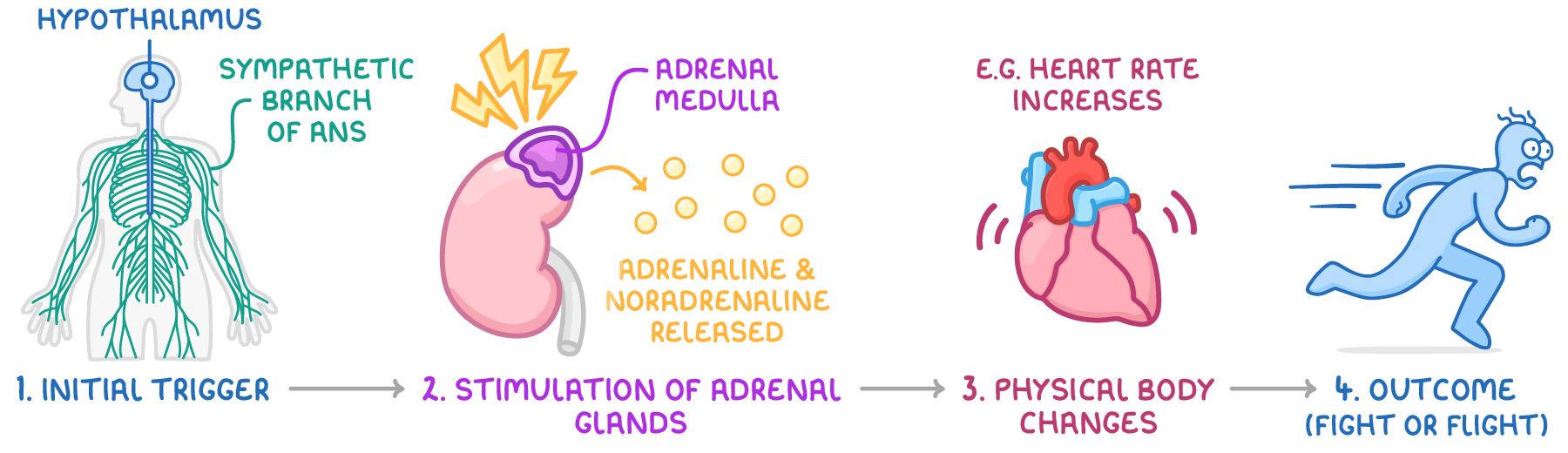
- Initial trigger - When a threat is perceived, the hypothalamus activates the sympathetic branch of the autonomic nervous system (ANS).
- Stimulation of adrenal glands - This activation prompts the adrenal medulla, a part of the adrenal glands, to release hormones such as adrenaline and noradrenaline into the bloodstream.
- Physical changes in the body - These hormones cause several physiological effects to prepare the body for action:
- Increased heart rate and blood pressure - Ensures blood is rapidly delivered to muscles and the brain for quick response.
- Reduced digestion - Diverts blood away from the digestive system to prioritise muscles and brain activity.
- Tensed muscles - Prepares the body for physical exertion.
- Increased perspiration - Helps cool the body during heightened activity.
- Faster breathing rate - Supplies more oxygen to muscles for energy.
- Dilated pupils - Allows more light into the eyes for improved vision.
- Decreased salivation - Reduces non-essential functions like digestion during the crisis.
- Outcome - These changes equip the body to expend energy effectively, whether to confront the danger or flee from it.