5.1 - Nervous System: Neurones & Reflexes
The structure and function of the nervous system
The nervous system is a complex network that plays a critical role in how the body responds to the environment and coordinates actions. It enables detection of changes, known as stimuli, and facilitates appropriate reactions through communication between various parts of the body.
Core functions of the nervous system
- Detecting stimuli - Specialised cells called receptors identify changes in the environment.
- Coordinating responses - The nervous system processes information from receptors and directs suitable actions.
- Effecting responses - Cells known as effectors, including muscle cells and gland cells (like those in the pancreas), carry out responses to stimuli.
Information travels between receptors and effectors via the nervous system or the endocrine system (which involves hormones), ensuring a coordinated reaction.
The divisions of the nervous system: central and peripheral
The nervous system is divided into two main parts, each with distinct roles in managing bodily functions and responses. These are the central nervous system (CNS) and the peripheral nervous system (PNS), which further subdivide into specialised systems.
Components of the nervous system
- Central nervous system (CNS) - Comprises the brain and spinal cord and acts as the control centre for processing and integrating information.
- Peripheral nervous system (PNS) - Consists of neurons that link the CNS to the rest of the body, facilitating communication with limbs and organs.
Functional divisions of the nervous system
- Somatic nervous system - Manages conscious activities, such as voluntary movements like running or playing video games, and connects the CNS to sensory inputs.
- Autonomic nervous system - Oversees unconscious processes, such as digestion, and splits into two opposing branches:
- Sympathetic nervous system - Prepares the body for action in stressful situations, often referred to as the 'fight or flight' response.
- Parasympathetic nervous system - Promotes relaxation and recovery, known as the 'rest and digest' state, calming the body after stress.
The role and structure of neurons in transmitting information
Neurons are the fundamental cells of the nervous system, responsible for carrying information as electrical impulses throughout the body. Their unique structure supports the rapid transmission of signals necessary for quick responses.
Key features of neuron structure
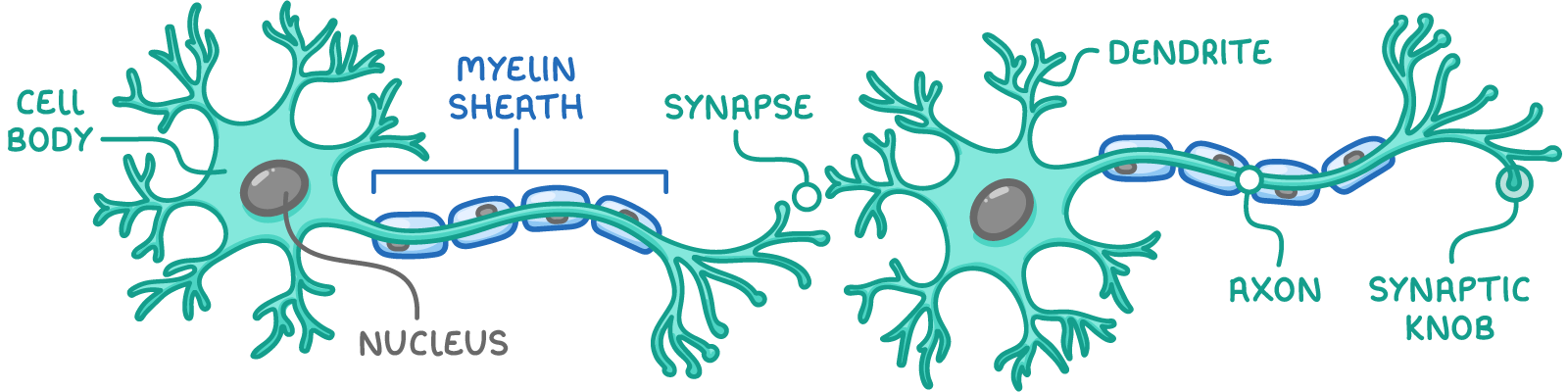
- Cell body - Contains the nucleus and is the central part of the neuron, processing incoming signals.
- Dendrites - Branch-like extensions that receive information from other neurons or receptors.
- Axon - A long fibre that carries electrical impulses, also called action potentials, away from the cell body towards other neurons or effectors.
- Myelin sheath - A protective layer of fatty tissue around the axon, made by Schwann cells, which insulates the axon and speeds up signal transmission.
- Synaptic knob - The terminal end of the axon where signals are passed to the next neuron or effector.
- Synapse - A small gap between neurons where communication occurs via chemical messengers called neurotransmitters, which are released from the synaptic knob and cross the synapse to bind with the dendrites of the next neuron.
Importance of neurotransmitters
Neurotransmitters are crucial for relaying signals across synapses. Biopsychologists study their effects on behaviour, exploring how factors like diet, exercise, and drugs can alter neurotransmitter activity. For instance, developing medications that adjust neurotransmitter levels related to stress could help manage anxiety or related conditions.
Different types of neurons and their functions
Neurons are specialised based on their role in the transmission of information to and from the CNS. Each type has a distinct structure tailored to its function within the nervous system.
Categories of neurons and their roles
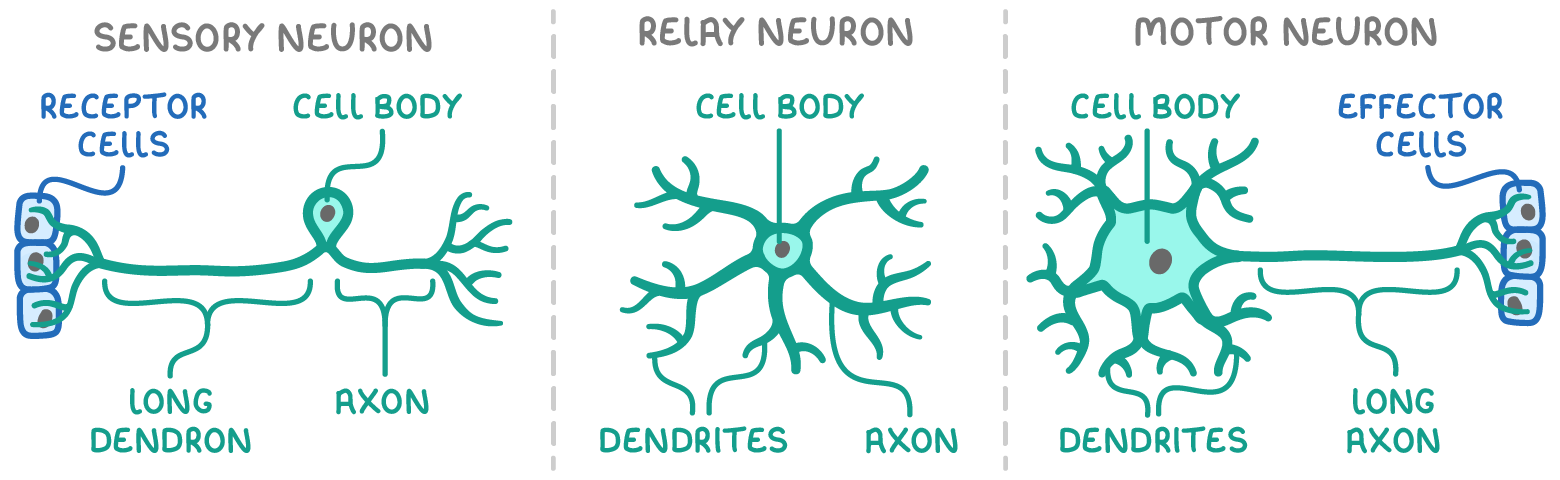
- Sensory neurons - Transmit electrical impulses from receptors (e.g., in the skin) to the CNS. They feature a long dendron connecting receptor cells to the cell body, with an axon extending to relay or motor neurons.
- Relay neurons - Found within the CNS, these neurons connect sensory and motor neurons. They have a central cell body with numerous branching dendrites and a short axon, facilitating communication between other neurons.
- Motor neurons - Carry electrical impulses from the CNS to effectors (e.g., muscles or glands). They possess a cell body with dendrites at one end and a long axon that terminates at effector cells via the axon terminal.
Pathway of information transmission
- A stimulus is detected by receptors.
- Sensory neurons transmit the signal to the CNS.
- Relay neurons within the CNS process and transfer the signal.
- Motor neurons carry the signal from the CNS to effectors.
- Effectors produce a response to the original stimulus.
The importance of reflexes in preventing injury
Reflexes are automatic, rapid responses to specific stimuli that help protect the body from harm. These responses occur without conscious thought, ensuring swift action in potentially dangerous situations.
Mechanism and significance of reflexes
- Bypassing conscious control - Reflexes do not involve the conscious brain; instead, they are processed through the spinal cord or unconscious brain regions, allowing for immediate reaction.
- Protective function - These quick responses prevent injury by enabling instant withdrawal from harmful stimuli.
- Examples of reflex actions - Common reflexes include the knee-jerk response or blinking when an object approaches the eye, both of which safeguard the body from damage.