3.1 - Biological Responses to Stress
Defining stress as a response to environmental stimuli
Stress is a complex concept often experienced in everyday situations, but in psychological terms, it requires a clear scientific definition. It can refer to both the external triggers in the environment and the internal reactions they provoke. Fundamentally, stress is understood as the response that arises when individuals perceive that they cannot manage the demands placed upon them by their surroundings.
Understanding stress and cognitive appraisal
- Dual meaning of stress - Stress can be the environmental factor causing a reaction, such as a looming deadline, or the reaction itself, like feeling overwhelmed.
- Cognitive judgement - The perception of stress hinges on a personal assessment of whether one can handle the environmental pressures. If the demands seem greater than the ability to cope, stress is experienced.
- Subjective nature - This judgement varies between individuals; some may overestimate challenges or underestimate their own capabilities, but the resulting stress is real regardless of accuracy.
- Physical impact - When stress is perceived, it triggers noticeable physiological changes within the body.
The role of the hypothalamus in stress responses
The brain plays a central role in initiating the body's response to stress, with the hypothalamus being a key structure in this process. Located in the brain, it acts as a control centre for physiological reactions to stressors, coordinating responses based on the nature and duration of the stress.
How the hypothalamus manages stress
- Signal reception - The higher brain areas, specifically the cerebral cortex, evaluate environmental stimuli as potential stressors and send signals to the hypothalamus.
- Dual response activation - Depending on whether the stressor is immediate or prolonged, the hypothalamus triggers two distinct bodily systems to manage the response.
- Coordination of physiology - It oversees the release of hormones and activation of nervous system branches to prepare the body for action.
The sympathomedullary pathway and immediate stress
When faced with an immediate stressor, the body activates a rapid response mechanism to deal with the threat. This is managed through the sympathomedullary pathway, which prepares the body for quick action, often referred to as the 'fight or flight' response.
Steps in the sympathomedullary pathway
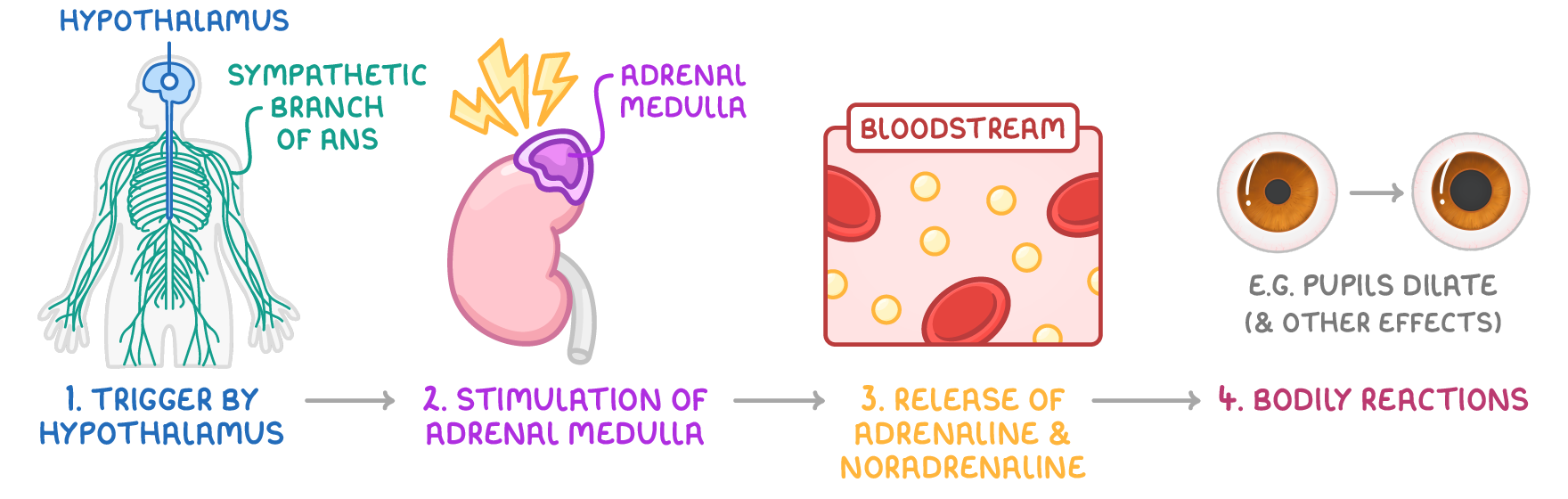
- Trigger by hypothalamus - Upon detecting an immediate stressor, the hypothalamus activates the sympathetic branch of the autonomic nervous system (ANS).
- Stimulation of adrenal medulla - The sympathetic branch signals the adrenal medulla, the inner part of the adrenal gland located near the kidneys, to release hormones.
- Release of adrenaline and noradrenaline - These hormones enter the bloodstream, causing several physiological changes.
- Bodily reactions - Effects include increased heart rate, dilated pupils, faster breathing, and reduced digestion, all of which prepare the body to either confront or escape the threat.
The hypothalamic pituitary-adrenal system and long-term stress
For stressors that persist over time, the body engages a different mechanism to sustain its response. The hypothalamic pituitary-adrenal (HPA) system provides additional energy resources to cope with ongoing demands, acting as a countershock to the initial reaction.
Steps in the HPA system activation
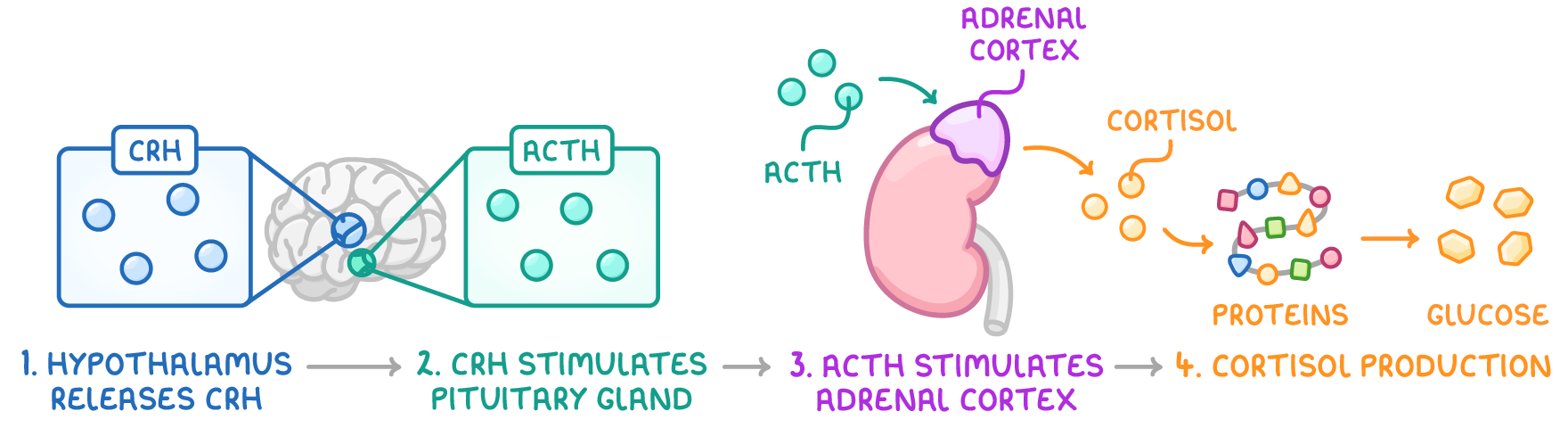
- Hypothalamus releases CRH - The hypothalamus secretes corticotropin-releasing hormone (CRH) in response to prolonged stress.
- Stimulation of pituitary gland - CRH prompts the anterior pituitary gland to release adrenocorticotropic hormone (ACTH).
- Activation of adrenal cortex - ACTH travels through the bloodstream and stimulates the adrenal cortex, the outer layer of the adrenal gland.
- Cortisol production - The adrenal cortex releases cortisol, which converts proteins into glucose to elevate blood sugar levels, supplying energy for sustained stress response.
- Long-term consequences - While cortisol helps replenish energy, prolonged high levels can impair immune function and negatively affect memory.
The evolutionary significance and modern implications of stress responses
The body's stress responses have deep roots in human evolution, designed to protect against immediate physical dangers. However, the nature of stressors in contemporary life often differs, leading to potential mismatches between ancient mechanisms and modern challenges.
Evolutionary basis of stress responses
- Survival mechanism - Historically, stress responses like 'fight or flight' provided energy to confront predators or escape danger, enhancing survival chances.
- Physical adaptation - Physiological changes such as increased heart rate and energy mobilisation were critical for dealing with tangible threats in ancestral environments.
Modern context and challenges
- Psychological stressors - Today, stressors are more likely to be mental or emotional, such as work pressures or social conflicts, rather than physical threats.
- Mismatch with response - The physical activation triggered by stress is often unnecessary for modern issues, potentially causing harm if sustained.
- Positive stress (eustress) - Not all stress is negative; certain experiences, like thrilling activities, can produce a beneficial form of stress known as eustress, which can be motivating and exhilarating.