5.2 - Nervous System: Synapses & Neurotransmitters
The structure and function of a synapse
A synapse is a specialised junction where communication occurs between a neuron and another cell, which could be another neuron or an effector cell such as a muscle or gland cell. This connection allows signals to be transmitted across cells, playing a crucial role in the nervous system.
Components of a synapse
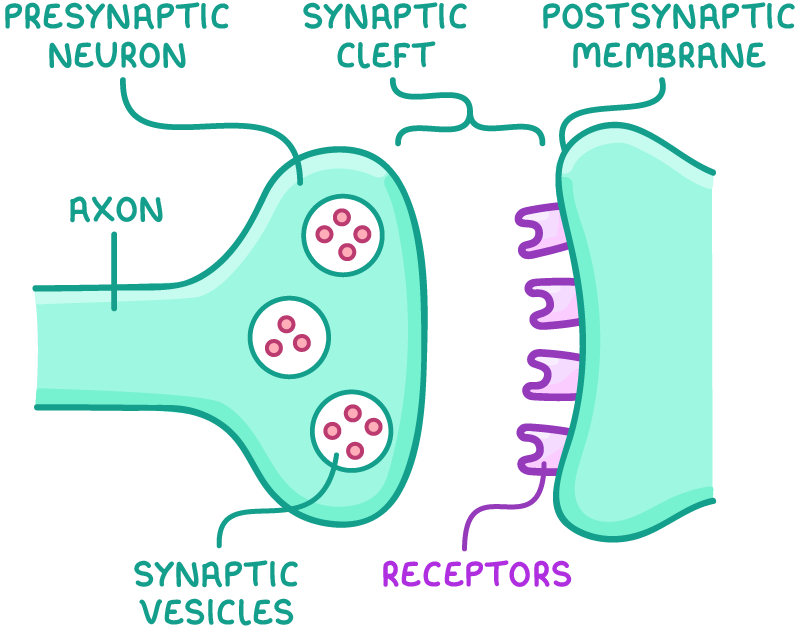
- Synaptic cleft - A small gap separating the two cells at the synapse.
- Presynaptic neuron - The neuron before the synapse, which sends the signal. It features a rounded end called the synaptic knob, containing synaptic vesicles filled with neurotransmitters.
- Postsynaptic membrane - The receiving surface of the cell after the synapse, equipped with specific receptors to detect neurotransmitters.
- Synaptic vesicles - Small sacs within the synaptic knob that store neurotransmitters, ready for release into the synaptic cleft.
- Receptors - Proteins on the postsynaptic membrane that bind to neurotransmitters, initiating a response in the receiving cell.
Purpose of synapses in signal transmission
- Communication point - Synapses enable the transfer of signals from one neuron to another or to effector cells like muscles or glands.
- Unidirectional flow - Since receptors are located only on the postsynaptic membrane, signals can only travel in one direction, ensuring a controlled and precise transmission pathway.
The process of synaptic transmission between neurons
Synaptic transmission is the mechanism by which an electrical impulse is passed from one neuron to another across a synapse. This process relies on chemical messengers to bridge the gap between cells.
Stages of synaptic transmission
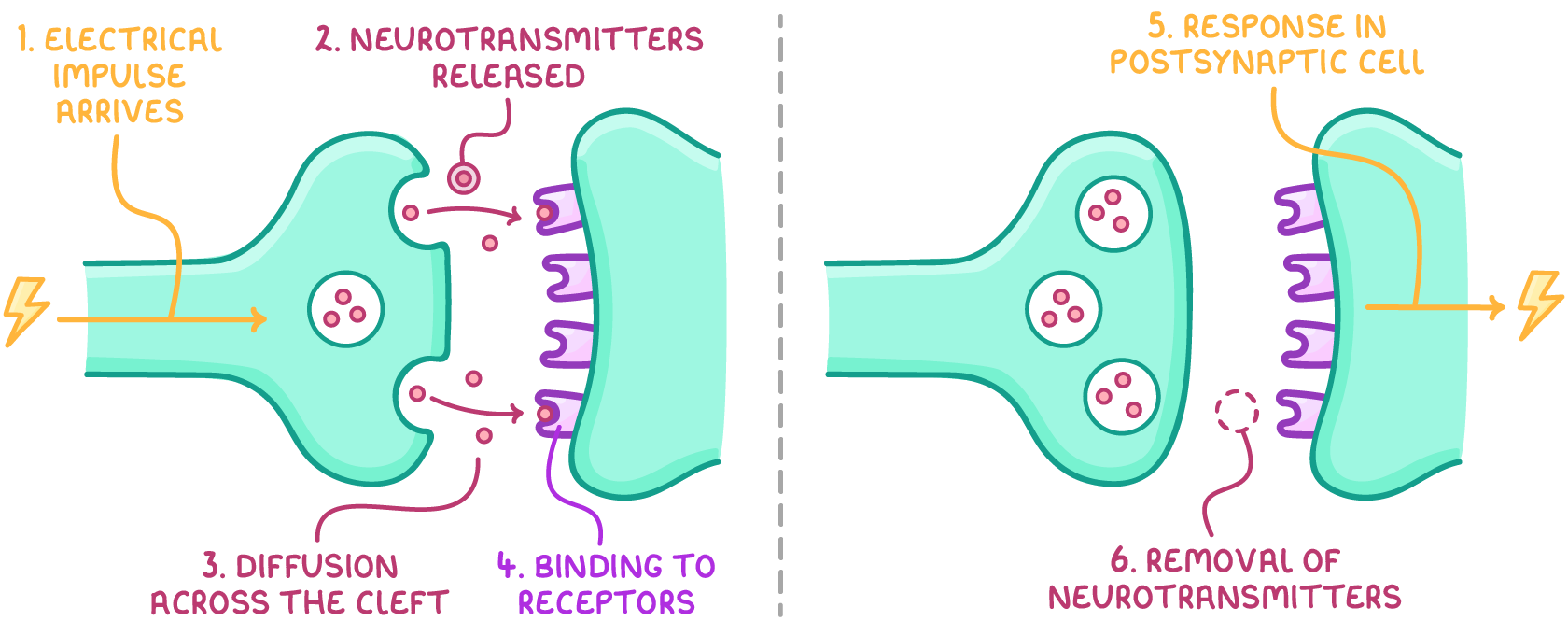
- Arrival of electrical impulse - An electrical signal travels along the presynaptic neuron and reaches the synaptic knob at the end of the axon.
- Release of neurotransmitters - The impulse triggers synaptic vesicles to fuse with the presynaptic membrane, releasing neurotransmitters into the synaptic cleft.
- Diffusion across the cleft - Neurotransmitters move across the tiny gap of the synaptic cleft towards the postsynaptic membrane.
- Binding to receptors - Neurotransmitters attach to specific receptors on the postsynaptic membrane, which may initiate a new electrical impulse in the receiving neuron if enough receptors are activated.
- Response in the postsynaptic cell - Depending on the cell type, this binding can trigger different outcomes:
- In a neuron, it may start a new electrical impulse.
- In a muscle cell, it can cause contraction.
- In a gland cell, it may stimulate hormone secretion.
- Removal of neurotransmitters - To prevent continuous stimulation, neurotransmitters are cleared from the synaptic cleft either by being reabsorbed into the presynaptic neuron or broken down by enzymes, with the by-products taken back into the neuron.
Factors influencing transmission
- Type of neurotransmitter - The specific chemical released determines whether the signal is passed on or modified in the postsynaptic neuron.
- Threshold for activation - A sufficient number of receptors must be stimulated for a new impulse to be triggered in the next neuron.
The role of excitatory and inhibitory neurotransmitters
Neurotransmitters are chemical messengers that influence whether a signal is passed on to the next cell. They can have different effects based on their nature, either promoting or reducing the likelihood of a response.
Types of neurotransmitters by effect
- Excitatory neurotransmitters - These increase the chance of an electrical impulse being generated in the postsynaptic neuron by making it more likely to fire.
- Inhibitory neurotransmitters - These decrease the chance of an electrical impulse occurring in the postsynaptic neuron, acting to calm or reduce activity.
Key neurotransmitters and their impact on behaviour
Different neurotransmitters play significant roles in regulating various aspects of human behaviour and physiological functions. Imbalances in these chemicals can lead to a range of psychological and physical conditions.
Important neurotransmitters and associated functions
- Acetylcholine - An excitatory neurotransmitter linked to voluntary movement, memory, learning, and sleep. Excess levels are associated with depression, while a deficiency may contribute to dementia.
- Dopamine - Involved in movement, attention, and learning. High levels are linked to schizophrenia, whereas low levels can result in depression and Parkinson's disease.
- Noradrenaline - Related to adrenaline and tied to the 'fight or flight' response. Excessive amounts are connected to schizophrenia, and insufficient levels may cause depression.
- Serotonin - Regulates emotion, mood, sleep, and eating behaviours. Low levels are often associated with depression.
- GABA (Gamma-Aminobutyric Acid) - An inhibitory neurotransmitter that helps reduce neuronal activity. A deficiency is linked to anxiety disorders.