2.4 - Obesity & Dieting
Defining obesity and its causes
Obesity is classified as an eating disorder due to the abnormal and harmful pattern of overeating that leads to significant health issues. It is typically identified by an excessive accumulation of adipose (fatty) tissue in the body.
Criteria and impact of obesity
- Body Mass Index (BMI) - A person is generally considered obese if their BMI, which measures weight relative to height, is 30 kg/m² or above. A normal BMI range is between 18.5 and 25.
- Energy imbalance - Obesity often results from consuming more calories through food than are expended through physical activity, leading to fat storage.
- Risk factors - While lifestyle choices play a major role, certain genetic conditions and medications can also heighten the likelihood of becoming obese.
- Prevalence - Projections suggest that by 2050, more than half of the UK population could be classified as obese.
- Treatment approaches - The most sustainable method to address obesity involves a balanced diet combined with regular exercise. However, some opt for rapid solutions like weight-loss pills or surgical interventions such as gastric banding or bypass surgery.
Biological explanations for obesity
Biological factors can contribute significantly to obesity, with research pointing to genetic and neural influences that affect body weight regulation and eating behaviour.
Genetic influences on obesity
Stunkard et al (1986) - Adoption studies:
- Method - This study examined the weights of 359 adult adoptees in Denmark, comparing them with both their biological and adoptive parents. The adoptees were categorised into four weight groups: thin, median, overweight, and obese.
- Results - A clear correlation was observed between the weight of adoptees and their biological parents, but no such link was found with their adoptive parents across any weight category.
- Conclusions - Genetic factors appear to play a crucial role in determining adult weight, with environmental influences having minimal impact.
- Evaluation - These findings align with other studies comparing biological and adoptive relatives, as well as some twin studies. However, attributing obesity solely to genetics may oversimplify the issue. Additionally, as the study was conducted in Denmark, its applicability to other cultural contexts is limited.
Montague et al (1997) - Leptin's role in obesity:
- Method - Research focused on two severely obese children, who were cousins, with a high percentage of their body weight consisting of adipose tissue.
- Results - A genetic mutation was identified in the DNA segment responsible for leptin production, resulting in insufficient levels of this protein. Leptin, produced by fat tissue, signals the brain when fat reserves are adequate, helping to curb appetite.
- Conclusions - The lack of leptin in these children contributed to their inability to control appetite, leading to obesity.
- Evaluation - While this study highlights a specific genetic cause, trials administering leptin to other obese individuals have shown limited success, suggesting that leptin deficiency may not be a widespread explanation for obesity.
Neural explanations for obesity
- Hypothalamus role - Eating behaviour is regulated by the hypothalamus in the brain. The ventromedial hypothalamus (VMH), often referred to as the 'satiety centre', signals when to stop eating.
- Animal studies - Research, such as that by Hetherington and Ranson (1940), demonstrated that creating lesions in the VMH of rats resulted in uncontrolled overeating and subsequent obesity, indicating a neural basis for weight gain in some cases.
Psychological explanations for obesity through the boundary model and restraint theory
Psychological theories provide insight into how mental processes and behaviours contribute to obesity, focusing on the interplay between biological needs and cognitive factors.
The boundary model
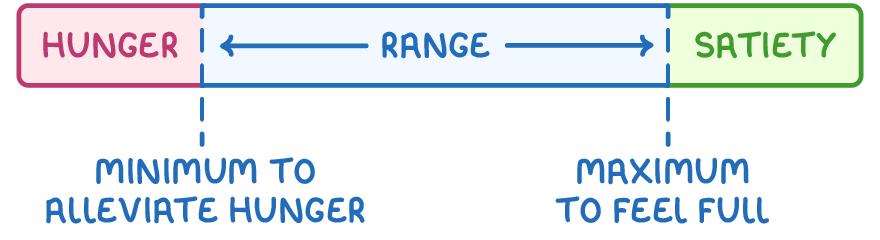
Developed by Herman and Polivy (1983), the boundary model explains eating behaviour through the interaction of biological and external influences.
These influences are:
- Biological drivers - Hunger and satiety are natural boundaries that dictate the minimum food needed to alleviate hunger and the maximum to feel full.
- Range of intake - The space between hunger and satiety varies due to social, environmental, and psychological factors, influencing how much food a person consumes.
- Impact on eating - Normally, biological signals keep food intake within this range, but external cues can push consumption beyond these limits, potentially leading to overeating.
Restraint theory

Restraint theory suggests that attempts to limit food intake can paradoxically result in overeating, particularly among dieters.
This paradox is:
- Cognitive boundary - Dieters set a mental limit on food intake, distinct from biological hunger and satiety boundaries.
- Disinhibition effect - If this cognitive boundary is breached, dieters often experience disinhibition, abandoning restraint and overeating until or beyond feeling full.
- Loss of cues - Frequent dieting can dull the recognition of natural hunger and satiety signals, widening the intake range and contributing to weight gain.
Herman and Mack (1975) - Disinhibition in restrained eaters:
- Method - This study used an independent measures design with dieting and non-dieting students. Participants were assigned to three conditions: consuming either one glass, two glasses, or no milkshake before being offered unlimited ice cream.
- Results - Non-dieters consumed less ice cream as their milkshake intake increased, while dieters ate more ice cream with higher milkshake consumption.
- Conclusions - The milkshake intake broke the dieters' resolve, leading to disinhibition and overindulgence, a phenomenon termed the 'counter-regulation effect'.
- Evaluation - These results reflect a common 'all-or-nothing' dieting mentality, where breaking a diet is seen as failure, prompting excessive eating. Follow-up research supports this pattern, showing many dieters adopt a 'diet starts tomorrow' mindset after lapses.
Limitations of restraint theory
- Successful dieters - Restraint theory does not account for individuals who manage to diet effectively without overeating.
- Contrasting disorders - People with anorexia nervosa may also restrict food intake or experience overeating episodes, yet they do not become obese, indicating other factors at play.
Challenges and factors in successful dieting
Dieting is often seen as a straightforward solution to obesity, but achieving and maintaining weight loss is complex and influenced by multiple factors beyond simply reducing food intake.
Barriers to effective weight loss
- Individual differences - Success in dieting varies based on motivation, willpower, genetic predispositions, lifestyle habits, and underlying medical conditions such as diabetes or thyroid dysfunction.
- Physiological responses - The body adapts to extreme dieting by lowering metabolic rate to conserve fat stores, a survival mechanism from times of food scarcity. This can result in fewer calories burned.
- Post-diet effects - Returning to normal eating after a strict diet often leads to excess calorie intake, which is stored as fat. Overeating post-diet can exacerbate weight gain, initiating a cycle of 'yo-yo' dieting where each subsequent diet further slows metabolism.
Role of social support in dieting
- Social interaction - Eating is inherently social, and involving others in dieting efforts can enhance success. Sharing weight loss goals with friends or family can reduce food temptations and provide positive reinforcement.
- Group dynamics - Joining weight loss groups or dieting with a partner often helps maintain motivation through shared accountability.
- Potential drawbacks - Not everyone benefits from social oversight; for some, constant monitoring induces stress, leading to secretive binge eating as a coping mechanism.
Wing and Jeffrey (1999) - Social support in weight loss:
- Method - Participants were enrolled in a four-month weight loss programme either individually or with three friends or family members, with the latter group encouraged to use social support to aid their efforts.
- Results - Six months post-programme, 71% of those with social support maintained their weight loss, compared to only 29% of those who participated alone.
- Conclusions - Social support significantly improves the likelihood of sustaining weight loss, highlighting the importance of communal encouragement in dietary success.
- Evaluation - This study underscores the value of a supportive network, though individual responses to social involvement vary, suggesting tailored approaches may be necessary for optimal outcomes.