6.1 - Nervous System: Neurones & Reflexes
The structure and function of the nervous system
The nervous system plays a central role in biopsychology, which examines how biological factors shape behaviour. Biopsychologists focus on elements such as the nervous system, neurotransmitters, and hormones to understand these influences.
The nervous system enables individuals to detect changes in their surroundings, known as stimuli, and to organise appropriate responses. It works alongside the endocrine system to coordinate these actions, ensuring the body adapts effectively to environmental demands.
Key components involved in nervous system responses:
- Receptors - Specialised cells that identify stimuli, such as light, sound, or pressure.
- Effectors - Structures that produce responses, including muscle cells for movement and gland cells, like those in the pancreas, for secreting substances.
- Communication pathways - Receptors send signals to effectors through the nervous system, the endocrine system, or a combination of both, facilitating coordinated bodily reactions.
The organisation of the nervous system
The nervous system is divided into two main parts: the central nervous system (CNS) and the peripheral nervous system (PNS). This organisation allows for efficient processing and transmission of information throughout the body.
Divisions of the nervous system:
- Central nervous system (CNS) - Comprises the brain and spinal cord, acting as the main processing centre for incoming information and decision-making.
- Peripheral nervous system (PNS) - Consists of neurons that link the CNS to the rest of the body, transmitting signals to and from organs and tissues.
- Autonomic nervous system (ANS) - Manages involuntary processes, such as heart rate and digestion.
- Sympathetic division: Activates the body for high-energy responses, often called the "fight or flight" system, increasing alertness and energy.
- Parasympathetic division: Promotes relaxation and conservation of energy, known as the "rest and digest" system, slowing heart rate and aiding recovery.
- Somatic nervous system - Controls voluntary actions, such as walking or manipulating objects, by directing signals to skeletal muscles.
- Autonomic nervous system (ANS) - Manages involuntary processes, such as heart rate and digestion.
The structure and function of neurons
Neurons are specialised cells that carry information in the form of electrical impulses, forming the basic units of the nervous system. They enable rapid communication between different parts of the body.
Main components of a neuron:
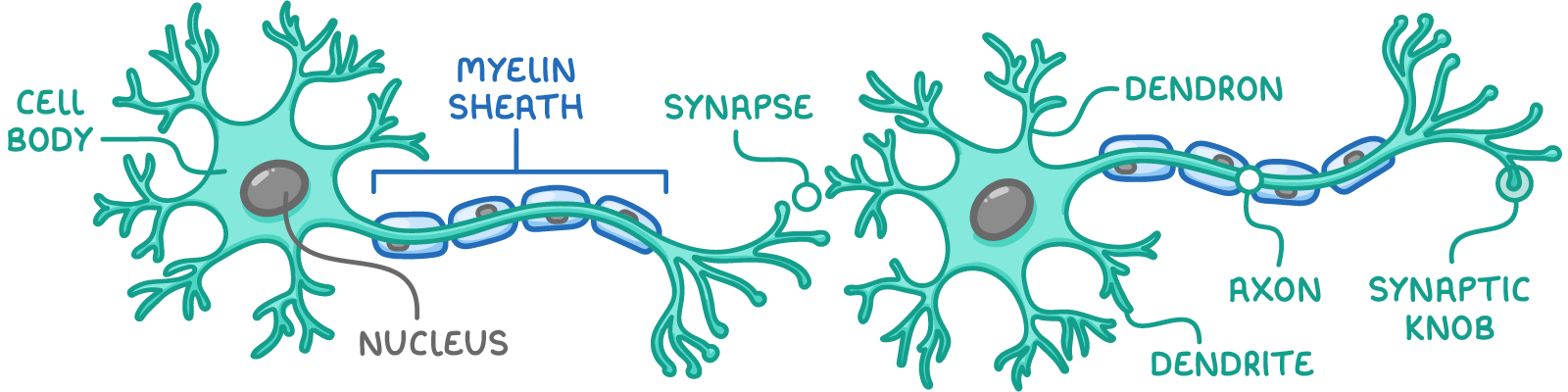
- Dendrites - Branch-like extensions that pick up signals from adjacent neurons.
- Dendrons - Structures that transport incoming signals towards the central part of the neuron.
- Cell body - Contains the nucleus and controls the neuron's overall function.
- Axon - A long fibre that conducts the electrical impulse away from the cell body.
- Myelin sheath - An insulating layer around the axon that accelerates signal transmission.
- Synaptic knob - The terminal end of the axon, responsible for releasing chemicals to pass signals to the next neuron.
- Synapse - A tiny junction between neurons where information is transferred.
Neurons release neurotransmitters, which are chemical messengers that bridge the synapse to continue the signal. Factors like nutrition, physical activity, substances, and treatments can affect neurotransmitter levels and function.
Types of neurons and their roles
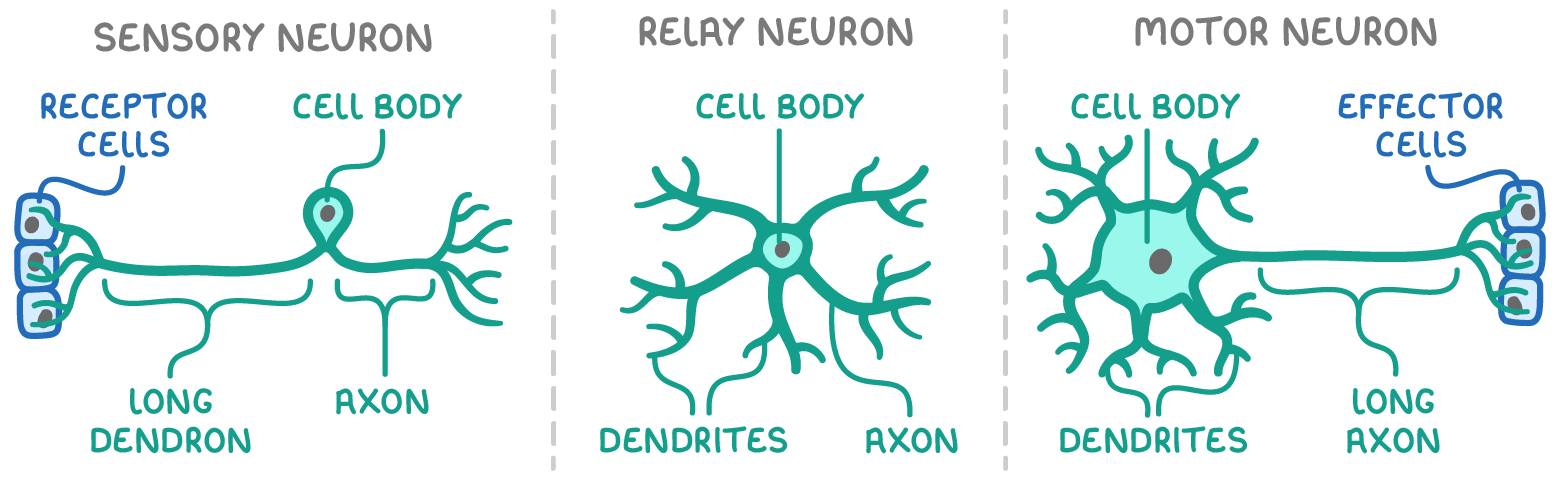
Neurons vary in structure and purpose, each contributing to the flow of information from detection to response. The three primary types work together to ensure efficient neural communication.
| Neuron type | Role | Direction of signal transmission |
|---|---|---|
| Sensory neurons | Carry signals from receptors to the CNS, detecting environmental changes | From body peripherals to CNS |
| Relay neurons | Connect sensory and motor neurons within the CNS, processing and integrating information | Within the CNS |
| Motor neurons | Transmit signals from the CNS to effectors, triggering actions like muscle contractions | From CNS to body peripherals |
Transmission of information in the nervous system
Information travels through the nervous system in a structured sequence, allowing the body to react to stimuli effectively. This process involves multiple neuron types and ensures responses are coordinated.
Pathway of information transmission:
- A stimulus is detected by receptors.
- Sensory neurons convey the signal to the CNS.
- Relay neurons within the CNS process and relay the information.
- Motor neurons send the signal from the CNS to effectors.
- Effectors produce a response, such as movement or secretion.
The nature of reflex actions
Reflex actions are quick, involuntary responses to specific stimuli that help protect the body from harm. They occur without conscious thought, bypassing higher brain centres for speed.
Characteristics of reflexes:
- Automatic and rapid - Responses happen instantly, routed through the spinal cord or lower brain areas, avoiding delays from conscious processing.
- Protective function - These actions prevent injury, such as pulling a hand away from a hot surface.
- Involvement of neuron types - Sensory neurons detect the stimulus, relay neurons process it in the CNS, and motor neurons activate effectors, all in a streamlined circuit known as a reflex arc.