6.2 - Nervous System: Synapses & Neurotransmitters
The structure and function of synapses
Synapses form connections within the nervous system, enabling communication between cells.
Components of a synapse
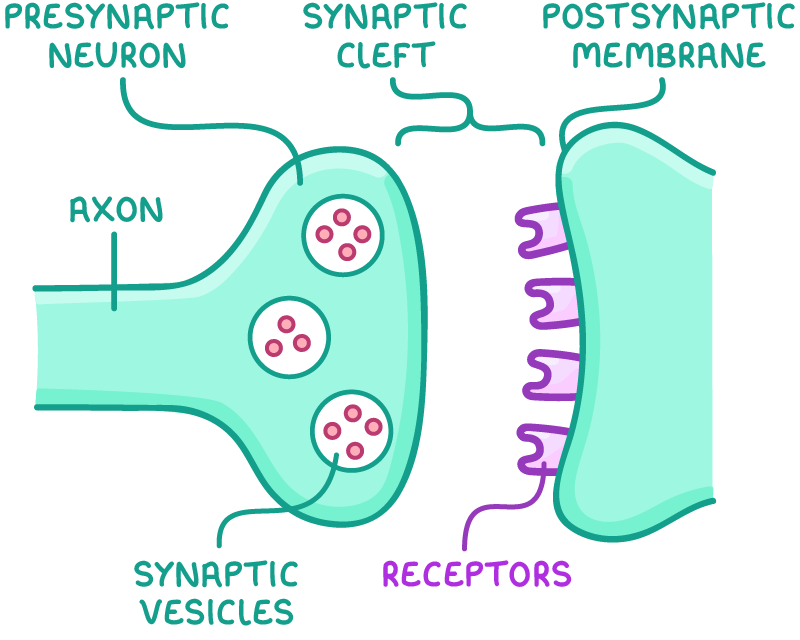
- Synaptic cleft - A small space separating the cells at the junction.
- Presynaptic neuron - The neuron before the synapse, featuring a synaptic knob that contains vesicles packed with neurotransmitters.
- Postsynaptic membrane - The receiving side after the synapse, which may belong to another neuron or an effector cell like a muscle or gland.
- Receptors - Specialised sites on the postsynaptic membrane where neurotransmitters attach.
Functions of synapses
Synapses link a neuron to another neuron or to an effector cell, such as a muscle or gland. They allow neurotransmitters to diffuse across the cleft and bind to receptors, potentially triggering actions like generating a new electrical impulse, initiating muscle contraction, or prompting hormone release from a gland.
Synapses enforce unidirectional signal flow because receptors are located only on the postsynaptic membrane, ensuring impulses move in one direction only.
The process of synaptic transmission
Synaptic transmission involves the transfer of signals across the synapse through chemical messengers.
Steps in synaptic transmission between neurons
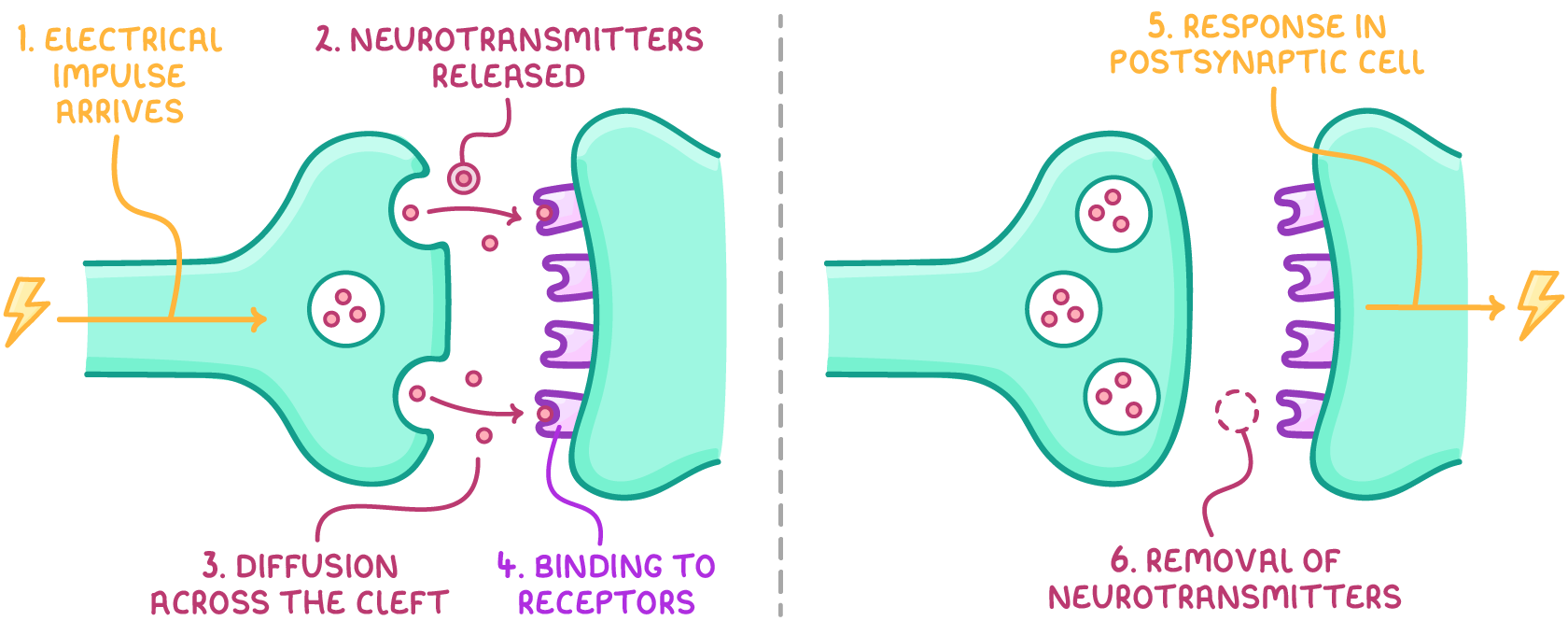
- An electrical impulse reaches the end of the presynaptic neuron.
- This triggers the release of neurotransmitters from vesicles in the synaptic knob into the synaptic cleft.
- Neurotransmitters diffuse across the cleft and bind to specific receptors on the postsynaptic membrane.
- Binding stimulates receptors, which may generate a new electrical impulse in the postsynaptic neuron if sufficient stimulation occurs.
- To prevent continuous response, neurotransmitters are cleared from the cleft, either by reuptake into the presynaptic neuron or by enzymatic breakdown with products absorbed back into the neuron.
Excitatory and inhibitory neurotransmitters and summation
Neurotransmitters influence whether a signal continues across the synapse.
Types of neurotransmitters
- Excitatory neurotransmitters - These heighten the chance of an electrical impulse firing in the postsynaptic neuron.
- Inhibitory neurotransmitters - These lower the chance of an electrical impulse firing in the postsynaptic neuron.
Summation
Summation combines the effects of neurotransmitters from many neurons or repeated stimulation from one neuron over a brief time. The overall net effect decides if the postsynaptic neuron triggers an impulse.
Key neurotransmitters and their psychological significance
Certain neurotransmitters are particularly relevant in psychology due to their roles in behaviour, cognition, and mental health.
Important neurotransmitters in psychology
- Acetylcholine - An excitatory neurotransmitter linked to voluntary movement, memory, learning, and sleep. Excess levels are associated with depression, while deficiencies may contribute to dementia.
- Dopamine - Involved in movement, attention, and learning. High levels are connected to schizophrenia, whereas low levels can lead to depression or Parkinson's disease.
- Noradrenaline - Related to adrenaline and key in the 'fight or flight' response. Elevated levels are linked to schizophrenia, and reduced levels may cause depression.
- Serotonin - Regulates emotion, mood, sleep, and eating. Low levels are associated with depression.
- GABA - An inhibitory neurotransmitter that helps control anxiety. Insufficient levels are linked to anxiety disorders.