E.M.F. & Internal Resistance - exam practice
E.M.F. & Internal Resistance
Question 1 of 7
This question is about the internal resistance of a power supply.
A student has four resistors of known resistance.
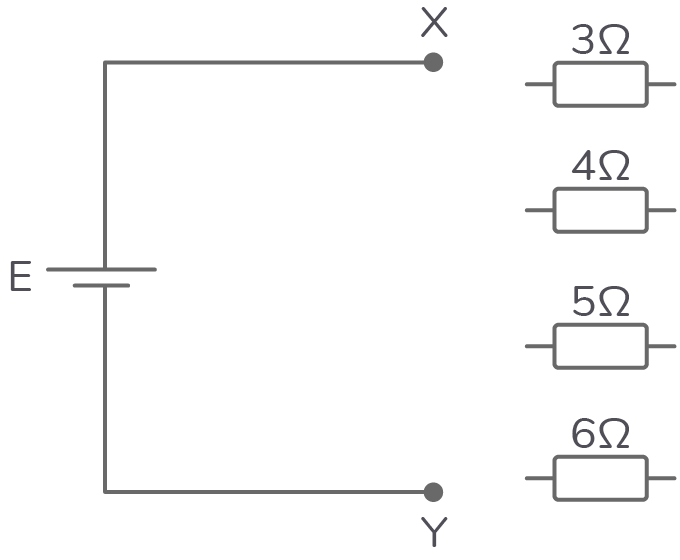
The student arranges the four resistors so that the effective resistance between X and Y is 4.4 .
Draw the arrangement of the 4 resistors that would give this effective resistance.
State how the student could connect a voltmeter to measure the e.m.f of the power supply.
Explain why the voltmeter reading drops when the network of resistors is added between X and Y.
The emf of the power supply is 3 V and the terminal potential is 2.7 V.
Calculate the internal resistance of the power supply.
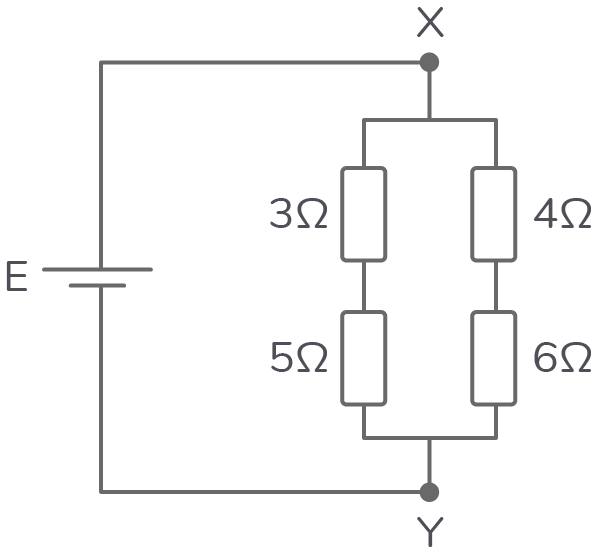
A battery has an internal resistance of 0.54 and an emf of 3 V.
State what is meant by an emf of 3 V.
The battery is connected to a resistor of resistance 5 .
Calculate the power dissipated in the internal resistor.
The battery stores 26 kJ of energy when it is fully charged.
Calculate the maximum time during which the fully-charged cell can deliver energy to the 5 resistor. You may assume the current remains constant throughout.
A student powers an electrical motor using three batteries of emf 3 V and internal resistance 0.54 .
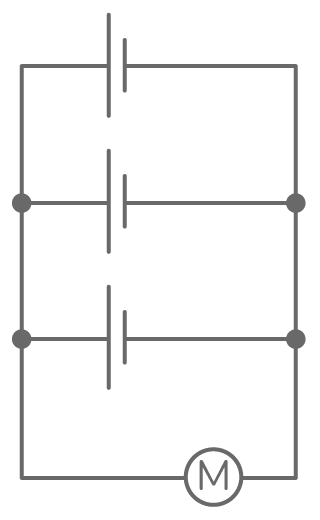
The motor is rated at 2.91 V, 1.57 W.
Deduce whether the circuit provides the lamp with 1.57 W of power at a potential difference of 2.91 V.
A student is trying to identify the internal resistance of a cell.
The diagram below shows the circuit used.
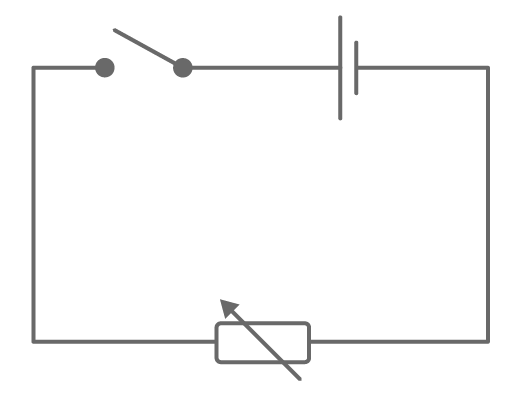
Describe how the student can measure the emf of the cell.
Draw a voltmeter and an ammeter on the diagram to measure the terminal potential difference and current flowing through the variable resistor.
The student closes the switch and varies the resistance of the variable resistor. The table below shows the students results.
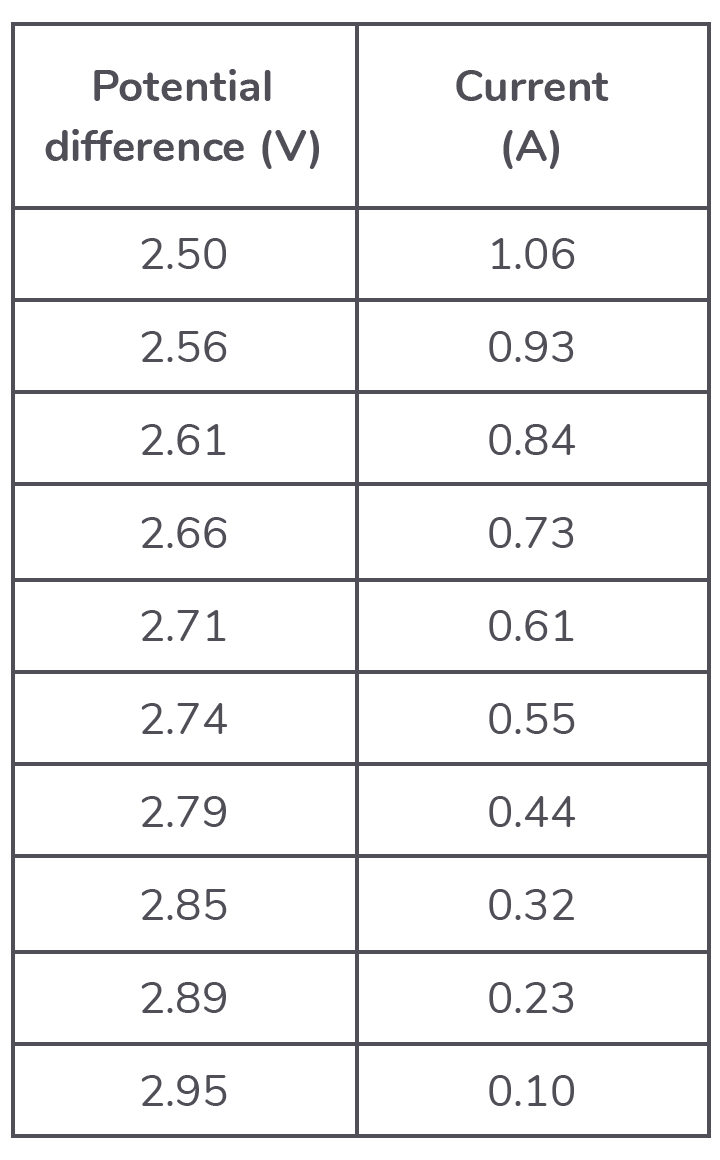
Plot a graph of the students results and draw a line of best fit.
State the emf of the cell.
Calculate the internal resistance of the cell.
The back windscreen of a car has heating elements to prevent the window from misting up.
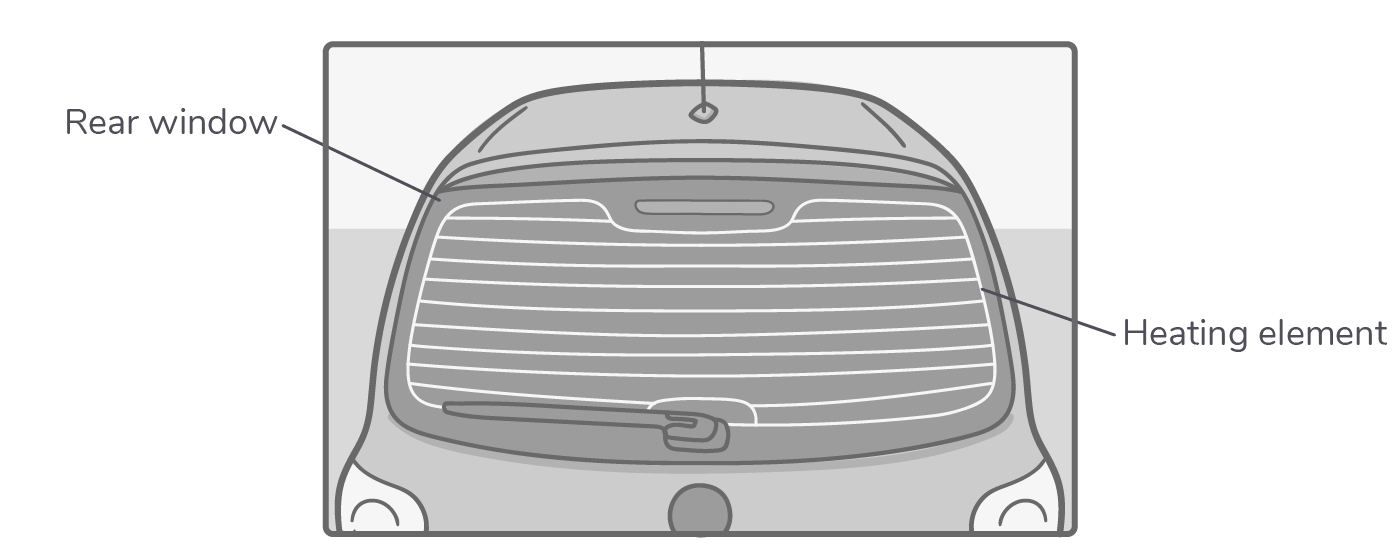
A 12 V battery powers the 10 heating elements connected in parallel.
State one advantage of connecting the heating elements in parallel.
Each heating element measures 120 cm by 3 mm. The heating element thickness is 50 m.
The heating element is made from nichrome which has a resistivity of 100 x 10-8 m.
Calculate the resistance of each heating element.
Calculate the combined resistance of the 10 heating elements.
When the heating elements are turned on, the terminal potential of the battery is 10.97 V.
Explain why the terminal potential is lower than the emf of the battery.
Calculate the internal resistance of the battery.
A battery with an emf of 12 V and an internal resistance of 2 is connected to a circuit with a resistance of 5 .
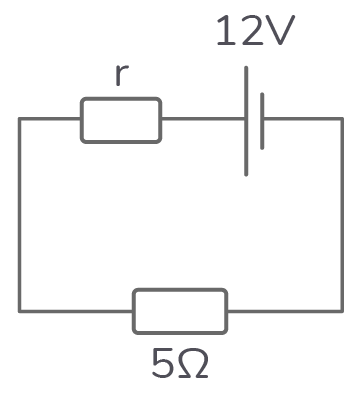
Calculate the terminal potential of the battery when connected to the external resistor.
Calculate the current flowing through the external resistor.
Calculate the lost voltage across the internal resistance of the battery.
Calculate the ratio of the power dissipated in the internal resistance to the power dissipated in the external resistor.
Two identical batteries of emf 6 V and internal resistance 2 are connected in parallel to supply current to an external circuit.
State the equivalent emf of the two batteries connected in parallel.
Calculate the equivalent internal resistance of the two batteries in parallel.
The batteries supply a total current of 4 A to the external circuit.
Calculate the terminal potential across the batteries.
Calculate the power dissipated in the internal resistance of each battery.
Three identical cells of emf 3 V and internal resistance 0.6 are used to power a circuit containing two bulbs.
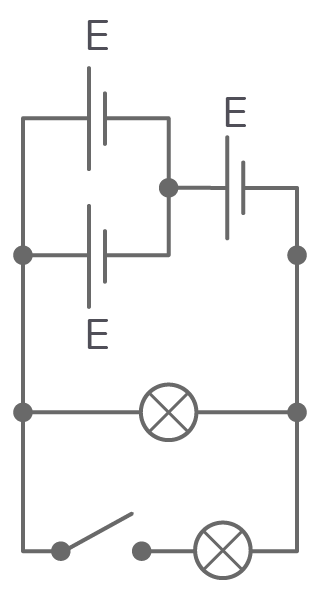
Calculate the effective emf of the cell network.
Calculate the internal resistance of the cell network.
Each lamp is rated at 0.55 A, 3.03 W.
Deduce if the cell network is sufficient for the lamp to operate at 0.55 A, 3.03 W when the switch is open.
The switch is closed.
Calculate the potential difference across each lamp.