Superposition, Interference & Stationary Waves - exam practice
Superposition, Interference & Stationary Waves
Question 1 of 6
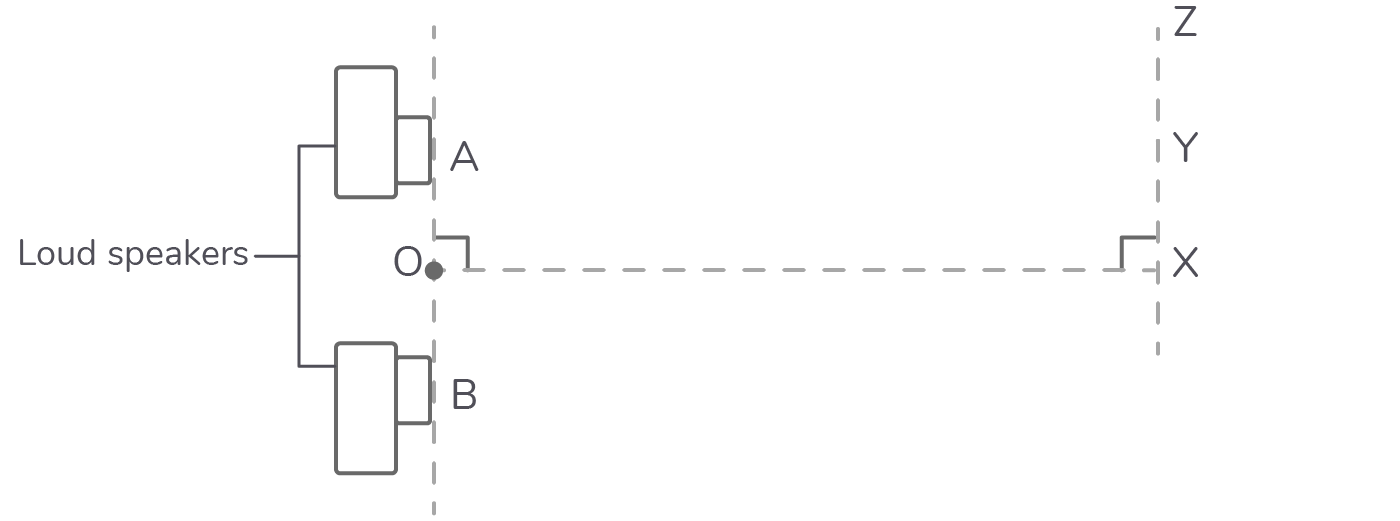
A student is investigating the interference produced by two coherent sound waves.
Point O is the midpoint between the two speakers A and B.
Explain what is meant by a coherent source of sound.
The student stands at point X and hears a loud sound.
Explain why the volume of the sound at X is loud.
The student walks from X towards Y. At Y the student hears a quiet sound from the loudspeakers.
Explain why the student hears a quiet sound at Y.
The speed of sound in air is 340 ms-1. Loudspeakers A and B are connected to a signal generator of frequency 136 Hz.
Calculate the distance from X to Y.
The sound is loud again at Z.
State the distance from X to Z.
This question is about the superposition of waves.
Explain what is meant by a progressive wave.
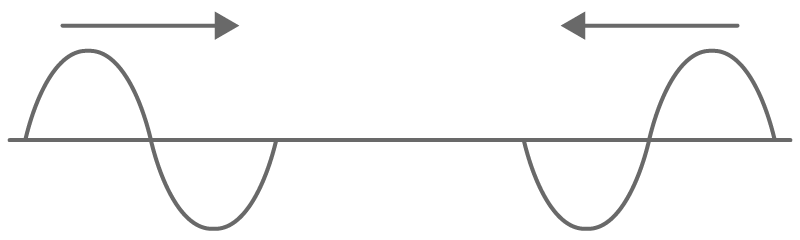
The diagram below shows two transverse waves travelling towards each other.
When the waves meet they will superpose.
State the principle of superposition.
The diagram below shows two waves at the same point.
Draw the resultant waveform formed when they superpose.
This question is about the formation of stationary waves.
Describe the difference between a progressive wave and a stationary wave.
Describe how a stationary wave is formed.
A guitar string is attached to two fixed points. A student plucks the guitar string and a stationary wave is formed.
The diagram below shows the stationary wave on the string.
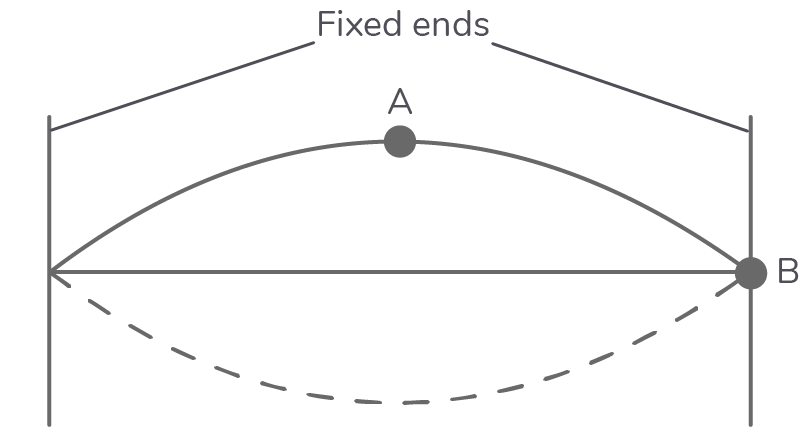
State the name of the point labelled A.
State the name of the point labelled B.
The distance between the two fixed ends is 0.75 m.
Calculate the wavelength of the stationary wave.
A student is investigating stationary waves. The diagram below shows the student's equipment.
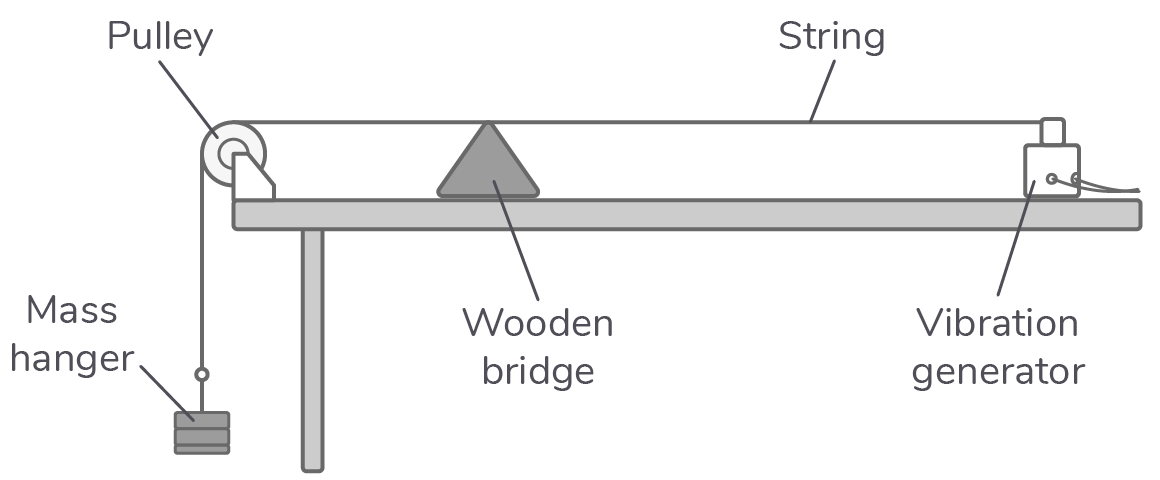
Explain how a stationary wave is formed when the vibration generator is connected to a signal generator.
The student increases the frequency on the signal generator and observes the waveform shown below.
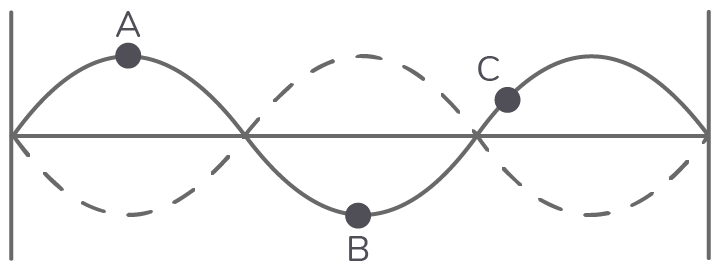
State the phase difference between points A and B.
State the phase difference between A and C.
Compare the motion of A and C.
The signal generator is set to 75 Hz and the student observes the pattern in the diagram below.
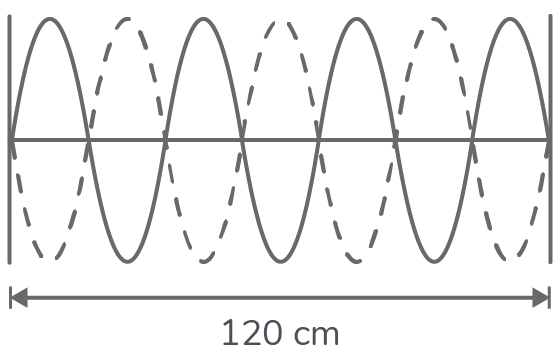
Calculate the speed of the wave.
A student is investigating stationary waves on a string using a vibration generator.
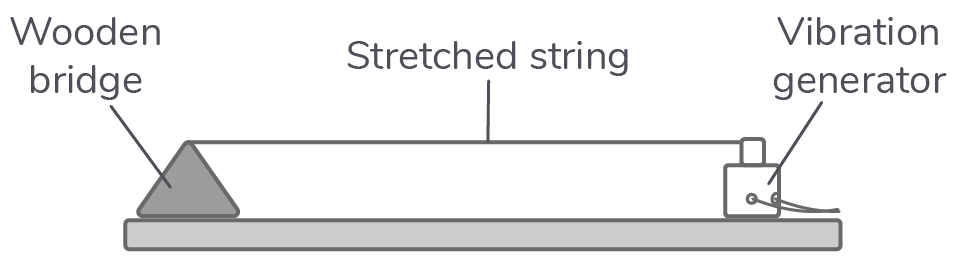
Describe how a stationary wave is formed on a string.
The student adjusts the frequency of the vibration generator until the first harmonic is observed.
Draw the pattern observed by the student at the first harmonic.
The length of the vibrating string is 80 cm. The signal generator was set to 150 Hz when the first harmonic was observed.
Calculate the speed of the progressive waves on the string.
Stationary waves are formed in microwave ovens.
Describe how stationary waves are formed in microwave ovens.
The turntable is removed from the microwave oven.
A student places a chocolate bar in the microwave and switches it on for a minute.
The diagram below shows the location where the chocolate melted.
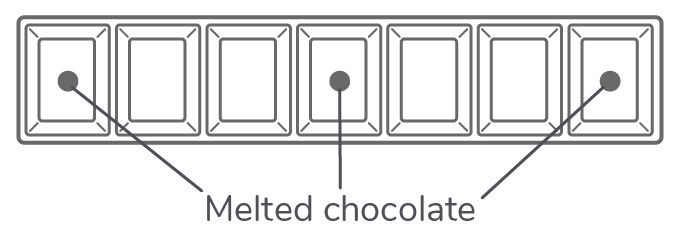
State what feature of a standing wave the melted areas represent.
The student measures the distance between melted spots to be 6.1 cm.
Calculate the frequency of the microwaves in the microwave oven.